

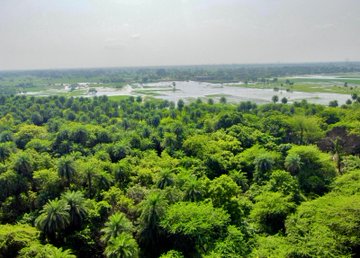
India has strengthened its global conservation footprint with the addition of two new wetlands to the Ramsar List of Wetlands of International Importance, further expanding the country’s network of protected ecosystems ahead of World Wetlands Day on 2 February 2026.
Union Minister for Environment Forest and Climate Change Shri Bhupender Yadav announced that Patna Bird Sanctuary in Etah district of Uttar Pradesh and Chhari Dhand in Kutch district of Gujarat have been accorded international recognition under the Ramsar Convention. The announcement was made through a public message highlighting India’s sustained focus on wetland conservation.
Shri Bhupender Yadav said that under the leadership of Prime Minister Shri Narendra Modi, India’s Ramsar network has witnessed a historic expansion of over 276 percent, growing from 26 sites in 2014 to 98 sites at present. He noted that the inclusion of the two new wetlands reflects India’s firm commitment to environmental protection and biodiversity conservation through globally recognised frameworks.
The Minister emphasised that both Patna Bird Sanctuary and Chhari Dhand are ecologically significant landscapes that support rich biodiversity. These wetlands provide crucial habitat for hundreds of migratory and resident bird species and play a vital role in maintaining regional ecological balance. In addition to avian diversity, the areas support wildlife such as chinkara, wolves, caracal, desert cats and desert foxes, along with several endangered bird species.
India is a Contracting Party to the Convention on Wetlands, popularly known as the Ramsar Convention, which was adopted in Ramsar, Iran, in 1971. India became a signatory to the Convention on 1 February 1982 and has since steadily expanded its participation by identifying and protecting wetlands of high ecological value.
Wetlands designated as Ramsar sites are recognised for their international importance in terms of biodiversity, ecosystem services and sustainable use. These sites serve as model examples of conservation and management, demonstrating national commitment to safeguarding wetlands in line with internationally accepted standards.
With the addition of Patna Bird Sanctuary and Chhari Dhand, India continues to reinforce its leadership in wetland conservation while highlighting the role of wetlands in climate resilience, wildlife protection and sustainable development.