
Open cast coal mines in Jharkhand have yielded compelling evidence of a long lost ecosystem that existed nearly 300 million years ago, well before the emergence of humans and even dinosaurs. A new multidisciplinary study has reconstructed a dense swampy forest landscape intersected by river systems that once formed part of the southern supercontinent Gondwanaland.
The research, led by the Birbal Sahni Institute of Palaeosciences, an autonomous institute under the Department of Science and Technology, focused on the Ashoka Coal Mine in the North Karanpura Basin of Jharkhand. By combining palaeobotanical analysis with advanced geochemical techniques, scientists have pieced together a detailed picture of an ancient environment periodically influenced by marine incursions during the Permian period.
The study provides fresh clarity on the long debated question of sea incursions into inland Gondwanan basins. Earlier research had proposed multiple hypotheses based on faunal and sedimentary evidence collected from scattered outcrops and coalfields across India. However, documentation of prehistoric marine flooding events, particularly the Permian Sea transgression, remained limited and sporadic, leaving significant gaps in understanding the pathways and extent of marine influence.
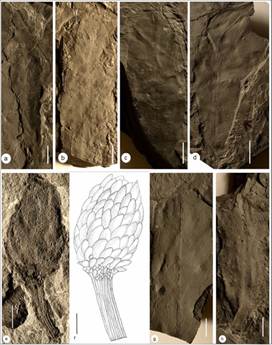
At the Ashoka Coal Mine, researchers uncovered an exceptional fossil assemblage preserved in shale layers. The findings revealed the abundance of Glossopteris, an extinct group of seed plants that dominated the southern continents during the Permian period. Fossils of at least 14 distinct species of Glossopteris and related taxa were identified, preserved as delicate leaf impressions, roots, spores and pollen grains.
Among the most significant discoveries was the first ever juvenile male cone of Glossopteris recorded in the Damodar Basin. This rare botanical find is considered a crucial missing link in understanding the reproductive biology of these ancient trees, which played a defining role in the ecology of Gondwanaland.
Microscopic examination of coal and shale samples further revealed petrographic constituents including collotelinite, corpogelinite, sporinite, fusinite, semifusinite, funginite and inertodetrinite. Of particular importance was the presence of framboidal pyrite, tiny raspberry shaped mineral clusters typically associated with marine or brackish water conditions. The coal and shale samples also exhibited unusually high sulphur levels, an uncommon feature in coal deposits of the basin. These indicators collectively point to episodes of brackish water influence and marine incursion.
To strengthen the evidence, the team conducted chemical analysis of organic molecules using Gas Chromatography Mass Spectrometry. The geochemical signatures supported the occurrence of a marine incursion into the Damodar Basin approximately 280 to 290 million years ago. The results suggest that the Permian Sea advanced from Northeast India into Central India, periodically influencing sedimentation and ecological conditions in the region.
The findings, published in the International Journal of Coal Geology, contribute valuable insights into the sedimentation history of coal bearing strata in the North Karanpura Coalfield. By establishing clear marine signatures within the coal succession at Ashoka Coal Mine, the study enhances scientific understanding of Gondwanan palaeoenvironments and the dynamics of ancient sea level fluctuations.
Beyond reconstructing a vanished world, the research holds contemporary relevance. By drawing parallels between past marine incursions and present day sea level rise driven by polar ice melt and global warming, the study offers a geological perspective on how rising seas can reshape continental landscapes. Understanding the scale, pathways and ecological impact of ancient transgressions may help scientists anticipate the long term consequences of current climate change trends.
The coalfields of Jharkhand, once primarily associated with industrial energy resources, have thus emerged as critical archives of Earth’s deep past, preserving evidence of prehistoric forests, shifting shorelines and the environmental transformations that shaped the planet long before the rise of modern life.