
The Department of Science and Technology has established 15 Inclusive Technology Business Incubators across universities and higher educational institutions in different parts of the country, marking a major step towards democratising innovation and entrepreneurship beyond metropolitan centres. The initiative aims to transform academic campuses into active engines of startup creation, technology development and inclusive economic growth, with a special focus on reaching youth, women entrepreneurs and innovators from smaller towns.
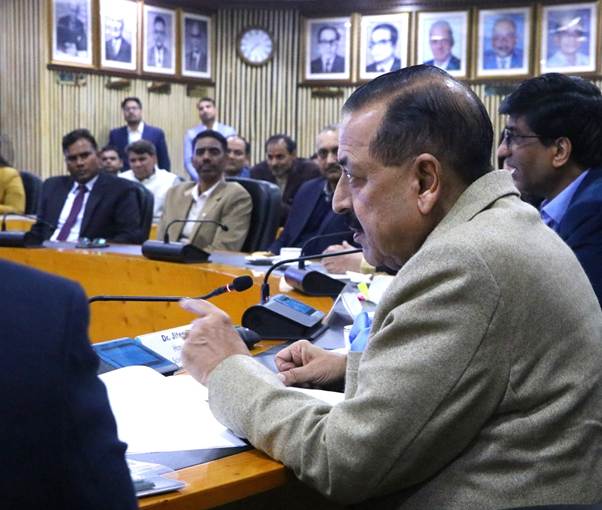
This was highlighted during a review visit to Delhi Technological University, which houses one of the 15 DST supported Inclusive Technology Business Incubators set up under the National Initiative for Developing and Harnessing Innovations programme. The visit focused on assessing how effectively public funding and institutional support are being converted into tangible startup outcomes, market ready technologies and employment generation.
During the interaction with faculty members, student innovators and startup founders, it was noted that the Inclusive Technology Business Incubator at Delhi Technological University has already incubated 15 startups, reflecting the growing entrepreneurial capability within the university ecosystem. These startups span knowledge driven and technology intensive domains, with a strong emphasis on inclusivity and women led innovation. To further accelerate early stage innovation, three startups were awarded Startup Ignition Grants of ₹5 lakh each, designed to help them progress from idea stage to prototype development and early commercialisation. The grants are intended as catalytic support to encourage risk taking, experimentation and translation of research into viable products and services.
The Inclusive Technology Business Incubator at Delhi Technological University operates under the DTU Innovation and Incubation Foundation and provides end to end support to startups. This includes access to modern infrastructure, mentoring by academic and industry experts, assistance in product development, and facilitation of funding and market linkages. Special emphasis is placed on nurturing women entrepreneurs and ensuring that innovation opportunities are accessible to a diverse pool of talent.
At the national level, the network of 15 Inclusive Technology Business Incubators represents a structured effort by the government to strengthen university based innovation ecosystems. The approach is designed to move universities beyond their traditional roles of teaching and research, positioning them as hubs for entrepreneurship, industry collaboration and technology driven solutions to societal challenges. By embedding incubators within academic institutions, the programme seeks to create a continuous pipeline from classroom learning and laboratory research to startups and scalable enterprises.
The broader policy vision underpinning this initiative reflects a decade long focus on science, technology and innovation as drivers of national development. Structured support mechanisms now span the entire innovation lifecycle, from research infrastructure and academic excellence to incubation, startups and industry partnerships. Government schemes such as FIST, PURSE and NIDHI are being leveraged to strengthen institutional capabilities, attract private investment and diversify funding sources, while maintaining transparency and merit based selection processes.
The emphasis on inclusivity ensures that innovation is not concentrated only in large cities, but reaches smaller towns and aspirational districts. This has helped build confidence among young innovators across the country, contributing to the democratisation of both scientific capability and entrepreneurial aspiration. Universities are being encouraged to deepen engagement with industry, align research with real world needs and generate measurable outcomes in terms of startups, employment and societal impact.
The expansion of Inclusive Technology Business Incubators underscores the government’s commitment to building a robust, inclusive and self sustaining innovation ecosystem. By strengthening university led incubation and supporting early stage startups, the initiative aims to create long term economic value, promote technology led growth and position India as a nation of innovators and entrepreneurs.