
India has registered landmark progress in organ donation and transplantation, with the National Organ and Tissue Transplant Organization at the forefront of a nationwide transformation that has significantly expanded access to life saving procedures.
The total number of organ transplants in the country has increased fourfold from less than 5000 in 2013 to nearly 20000 in 2025. Of these, around 18 percent are now being performed using organs donated by deceased donors, reflecting a steady rise in cadaveric donation.
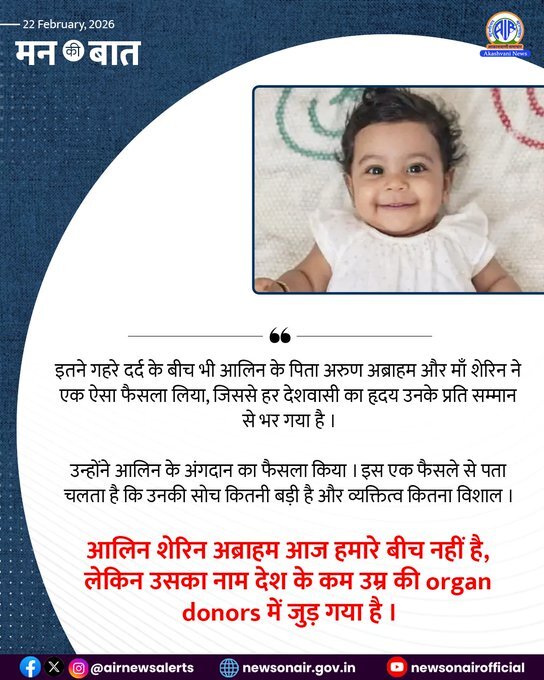
The momentum gained further impetus after Prime Minister Narendra Modi highlighted the importance of organ donation in his Mann Ki Baat address, catalysing greater public participation in the movement. In 2025 alone, more than 1200 families consented to donate the organs of their loved ones after death, saving thousands of lives and improving the quality of life for many others. Each deceased donor is now increasingly contributing multiple organs, maximizing the life saving impact of every donation.
Since September 17, 2023, more than 4.8 lakh citizens have registered to donate organs and tissues after death through an Aadhaar based verification system, strengthening authenticity and traceability in the process. India has also achieved competence in performing complex transplants such as heart, lung and pancreas procedures. The country currently leads the world in hand transplants, performing more such procedures than any other nation.
Officials attribute these achievements to sustained policy support and institutional strengthening under the stewardship of NOTTO. Over the past year, the country has witnessed a historic rise in deceased organ donations, improved transplant coordination and enhanced national level organ sharing, ensuring more equitable and timely allocation of organs to patients in need.
A comprehensive government strategy has underpinned these gains. NOTTO has been strengthened as the national coordinating authority, enabling real time organ allocation and seamless inter state cooperation. The National Organ and Tissue Transplant Registry has been expanded and modernised to ensure transparency, traceability and fairness. Capacity building initiatives have reinforced State Organ and Tissue Transplant Organizations and Regional Organ and Tissue Transplant Organizations.
Transplant protocols and standard operating procedures have been streamlined and aligned with global best practices. Digital platforms have been expanded for donor and patient registration and hospital connectivity. The promotion of Green Corridors and implementation of standard operating procedures for various modes of transport have enabled rapid and safe organ movement across cities and states, significantly reducing logistical barriers and improving clinical outcomes.
Public awareness campaigns and community engagement have fostered a positive shift in societal attitudes toward organ donation. Outreach efforts have been strengthened through active involvement of Panchayati Raj Institutions, district and block level administrations and educational institutions. Hospitals across the country are now better equipped to identify potential donors, retrieve organs and ensure efficient allocation to waiting patients.
The collaborative effort of central and state governments, transplant hospitals, clinicians, civil society organisations and community volunteers has created a responsive, ethical and technology enabled transplant ecosystem. India now has some of the best transplant professionals and surgeons globally, achieving outcomes comparable to international standards at a fraction of the cost.
The progress under NOTTO’s leadership also supports India’s broader vision of self reliance in advanced healthcare. By strengthening domestic capacity and ensuring ethical and transparent practices, the country is reducing dependence on overseas transplants while expanding equitable access for its citizens.
With nearly five crore beneficiaries under the annual immunization cohort and a health system increasingly driven by digital integration and real time coordination, India’s organ donation framework reflects a people centric model anchored in compassion and governance reform.
The Government has reaffirmed its commitment to further increasing deceased organ donation rates, expanding transplant infrastructure in underserved regions, deepening digital integration and sustaining nationwide awareness campaigns. The transformation in organ donation and transplantation is being seen not merely as an institutional achievement but as a collective national movement placing human life, dignity and solidarity at the centre of public health policy.