

Union Home and Cooperation Minister Amit Shah on 6 March 2026 inaugurated and laid the foundation stones for multiple development projects of the National Dairy Development Board, Odisha State Cooperative Milk Producers’ Federation, and the Government of Odisha in Bhubaneswar. The projects, together valued at more than ₹3,770 crore, span sectors including cooperative development, industrial infrastructure, law enforcement capacity building and rural economic growth.
Amit Shah also inaugurated Sulphuric Acid Plant III at the Indian Farmers Fertiliser Cooperative Paradip unit in Odisha and addressed a Cooperative Development Seminar during the visit. Union Minister Dharmendra Pradhan and Odisha Chief Minister Mohan Charan Majhi were present along with other dignitaries.
Addressing the gathering, Amit Shah described the day as a significant milestone for Odisha’s development. He said that projects worth ₹3,770 crore were inaugurated or had their foundation stones laid in a single day. These included three projects of the Ministry of Home Affairs, four projects of the Ministry of Cooperation and 173 projects undertaken by the Odisha Government.
Among the 173 projects of the state government, 61 projects worth ₹1,230 crore have been completed while 112 projects worth ₹2,116 crore had their foundation stones laid. He said the initiatives reflect a comprehensive development push across sectors in the state.
Two major initiatives of the Ministry of Home Affairs were also launched during the programme. The foundation stone of the National Forensic Sciences University campus in Odisha was laid and a temporary campus was inaugurated. The institution will offer about 30 specialised courses and is expected to train nearly 2,500 students once the permanent campus becomes operational within three years. Amit Shah said these job oriented programmes will expand opportunities for students in forensic science while strengthening India’s law enforcement and criminal justice systems.
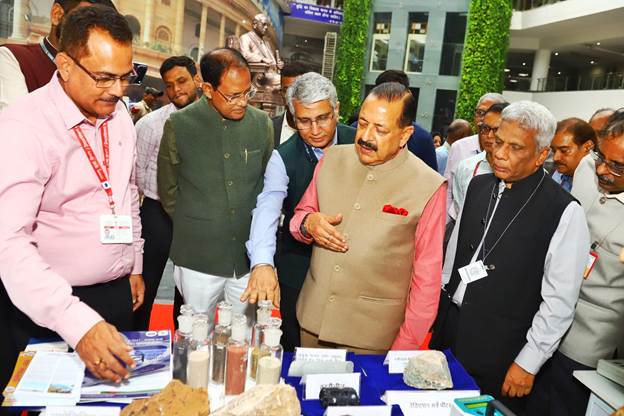
He also inaugurated an exhibition explaining the three new criminal laws in simple language so that citizens, legal professionals, members of the judiciary and police personnel can understand their provisions. He noted that after nearly 150 years India is now governed by criminal laws enacted by the Indian Parliament under the Constitution of India.
According to Amit Shah, the new legal framework aims to ensure that cases registered through First Information Reports are resolved up to the Supreme Court within three years by 2028. He said the laws represent one of the most modern and scientific legal systems globally and mandate visits by Forensic Science Laboratory teams in all crimes punishable with more than seven years of imprisonment.
He also highlighted Odisha’s progress in implementing the new laws, stating that the state has achieved a conviction rate of more than 87 percent in FIRs registered under the new criminal justice framework. He said the increasing use of scientific evidence and forensic investigation will strengthen accountability and improve conviction outcomes.
In the cooperative sector, Amit Shah emphasised the large potential for dairy development in Odisha. He said the Ministry of Cooperation and the Government of Odisha will work together to establish a strong cooperative base in every village in the state, modelled on the Amul system. The initiative aims to integrate dairies across the state, increase milk production and generate sustainable incomes for rural households.
He said Odisha possesses abundant water resources and significant scope for expansion of the dairy sector. A special campaign will be launched to establish dairy cooperatives across villages, helping farmers and rural families, particularly women, participate more actively in the rural economy.
Amit Shah also noted that the Odisha government has implemented several welfare measures including procurement of rice at ₹3,100 per quintal and benefits to one crore women under the Subhadra Yojana.
During the event, he inaugurated the third sulphuric acid plant at the Paradip unit of the Indian Farmers Fertiliser Cooperative. He said the plant will play a major role in strengthening India’s self reliance in sulphuric acid production used in fertiliser manufacturing and chemical industries.
He explained that when the Paradip facility was acquired by the cooperative in 2005 for ₹2,577 crore its production capacity stood at 7.5 lakh metric tonnes. With the commissioning of the new plant the capacity has now expanded to about 22 lakh metric tonnes. Around 15 percent of production is blended fertiliser while about 40 percent contributes to indigenous production of diammonium phosphate fertiliser.
Amit Shah said the expansion will help India reduce import dependence for critical fertiliser inputs. He added that the cooperative sector is playing an important role in transforming agriculture through initiatives such as Nano Urea, Nano DAP and the PM Programme for Restoration Awareness Generation Nourishment and Amelioration of Mother Earth.
He noted that the cooperative represents the interests of nearly five crore farmers across the country. The cooperative has a turnover exceeding ₹41,000 crore, profits of more than ₹3,800 crore and a net worth above ₹28,000 crore, all of which ultimately benefit farmers who are members of the organisation.
On security issues, Amit Shah said the Government of India has launched a decisive campaign to eliminate Naxalism in the country. He expressed confidence that India will become completely free from Naxalism by 31 March 2026. He added that the government is working at accelerated speed to ensure development reaches tribal regions that were previously affected by insurgency.
He also said that both the Government of India and the Government of Odisha are committed to accelerating the state’s development. According to him, a strong cooperative framework combined with industrial growth and rural development programmes will help Odisha emerge among the country’s leading states.