
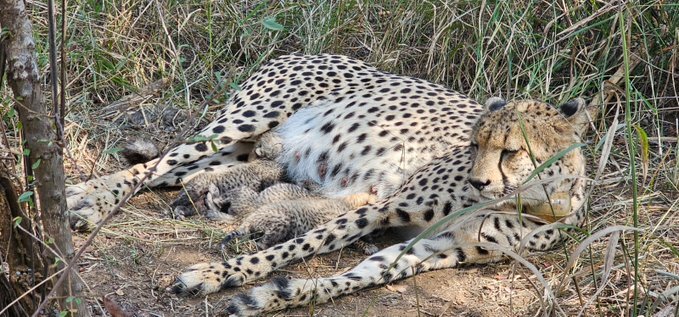
India’s cheetah conservation programme reached another milestone after Jwala, a Namibian cheetah, gave birth to five cubs at Kuno National Park in Madhya Pradesh, raising the country’s total cheetah population to 53.
Bhupender Yadav announced the development, stating that the birth marks the tenth successful cheetah litter on Indian soil since the launch of Project Cheetah. With the new arrivals, the number of cheetah cubs born in India has risen to 33, reflecting growing success in the country’s ambitious wildlife restoration effort.
Jwala, which has previously delivered two litters, has now become a third time mother, further strengthening the cheetah population being reintroduced in the country after the species went extinct in India decades ago.
Bhupender Yadav described the birth as an important moment in India’s conservation journey and said the achievement reflects the dedication, skill and commitment of veterinarians, wildlife experts and field staff who continue to monitor and protect the animals.
Officials associated with the programme said the successful birth of cubs in the wild landscape of Kuno National Park demonstrates that the cheetahs are gradually adapting to their new environment and establishing a stable breeding population.
Project Cheetah, one of the world’s most closely monitored wildlife reintroduction programmes, aims to restore cheetahs to India’s grassland ecosystems and strengthen biodiversity in protected areas. The initiative involves extensive scientific monitoring, habitat management and veterinary support.
Kuno National Park in Madhya Pradesh serves as the primary release site for the cheetahs brought from Africa as part of the reintroduction effort. The park’s grassland and forest landscape has been prepared over several years to support the animals and ensure their long term survival.
In recent developments related to the programme, Gamini, a South African cheetah, also gave birth to four cubs earlier, marking her second litter in India. Wildlife officials said the repeated births are encouraging signs that the animals are adapting successfully to the environment.
Further strengthening the conservation effort, nine cheetahs received from Botswana were recently brought to Kuno National Park. The group includes six females and three males that are currently being kept in quarantine enclosures.
Officials said the animals are undergoing a phase of acclimatisation and health monitoring before being gradually released into the larger landscape of the park. The process is designed to ensure that the cheetahs adapt safely to the new environment while minimising stress and health risks.
Wildlife experts say the increasing number of births and the arrival of new animals are helping build a viable population that could eventually spread to other suitable habitats in India.
Bhupender Yadav expressed hope that Jwala and her cubs would grow strong and contribute to the continued success of India’s cheetah conservation story.
The latest development has been described as a historic and encouraging moment for wildlife conservation in India, reflecting the country’s commitment to restoring endangered species and protecting biodiversity.