
The government convened the Post Budget Webinar 2026 on the theme Sabka Saath Sabka Vikas Fulfilling Aspirations of People, bringing together policymakers, industry leaders, multilateral institutions and private organisations to discuss implementation strategies for key announcements made in the Union Budget 2026–27.
The webinar was organised as part of the government’s annual post budget consultation process aimed at translating policy announcements into actionable implementation frameworks. The event focused on strengthening human capital, expanding the care economy and developing scalable models for workforce development.
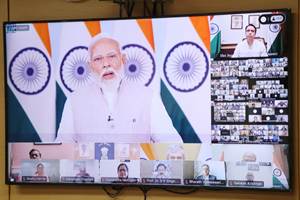
Addressing the gathering, Narendra Modi emphasised that the Union Budget provides a roadmap for building a future ready workforce and strengthening India’s human capital as part of the vision of Viksit Bharat. He highlighted the need for innovation driven growth, scalable solutions and stronger linkages between education systems, skill development and the real economy.
Jayant Chaudhary, Minister of State Independent Charge for Skill Development and Entrepreneurship and Minister of State for Education, participated in the inaugural session and later addressed the concluding session. He highlighted the growing importance of the care economy in India’s development trajectory and described it as both a social priority and an economic opportunity.
Jayant Chaudhary said that the Budget announcement to train 1.5 lakh multiskilled caregivers aims to create a professional ecosystem that combines healthcare, wellness and assistive technologies. He added that the initiative will also create dignified employment opportunities, particularly for women, while strengthening India’s capacity to meet growing domestic and international demand for trained care professionals.
He emphasised that recognising language as a skill and strengthening global mobility pathways will enhance employability in international markets. Through partnerships with countries such as Japan and Israel, India is advancing skill diplomacy and positioning itself as a trusted provider of skilled talent globally.
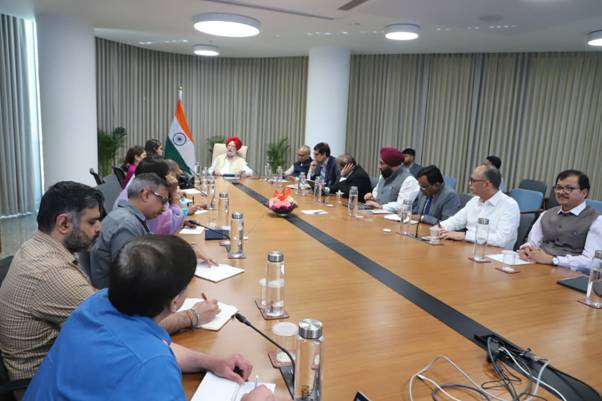
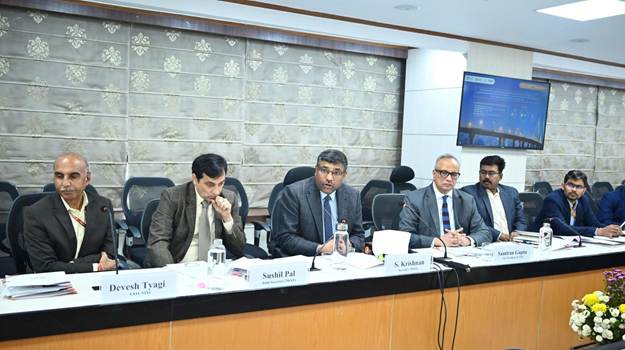
As part of the webinar, the Ministry of Skill Development and Entrepreneurship organised a dedicated breakout session titled Strengthening India Care Ecosystem Skilling 1.5 Lakh Multiskilled Caregivers. The session was conducted in a blended format with both in person and online participation.
In her opening remarks, Debashree Mukherjee, Secretary of the Ministry of Skill Development and Entrepreneurship, highlighted the need for building a strong and quality driven training ecosystem to support the emerging care economy. She emphasised that the focus is on developing structured training frameworks that equip caregivers with multiple skills required to meet emerging healthcare and support service needs.
Debashree Mukherjee said that professional training and standardised certification will help ensure dignity, recognition and credible career pathways for caregivers while improving service quality across the sector.
Manisha Sensarma, Senior Economic Adviser in the Ministry of Skill Development and Entrepreneurship, outlined the strategic vision behind the Budget announcement to train 1.5 lakh multiskilled caregivers. She noted that the initiative aims to address rising domestic demand driven by an ageing population as well as global shortages of care and allied healthcare professionals.
She added that the programme seeks to enable the transition of workers from the informal sector into a structured national caregiver ecosystem by integrating healthcare skills with wellness practices while expanding training opportunities and improving employability.
The session brought together a wide range of stakeholders from government institutions, international organisations, industry and training institutions.
Participants included Prashant Pise, Additional Secretary in the Ministry of External Affairs; Gyanendra Dev Tripathi, Principal Secretary for Skill Employment and Entrepreneurship in the Government of Assam; Jagadish Chelani, Executive Director of the Meghalaya State Skill Development Society; Mia Oka, Country Director of the Asian Development Bank; Bharath Visweswaraya, Executive Director India at the British Asian Trust; Giorgia Varisco, Chief of Youth and Adolescent Development at UNICEF; S P Singh, Director General of Kaushalya The Skill University; Srinivasa Rao Pulijala, Chief Executive Officer of Apollo MedSkills Ltd.; K Ganesh, Promoter and Director of Portea Medical; Sandeep Kumar, Head of Human Resources Operations at Sodexo India; Karthik N, Managing Director of Athulya Senior Care; Sumitra Mishra, Chief Executive Officer of Mobile Creches; Rajit Mehta, Managing Director and Chief Executive Officer of Antara Senior Care; Alexander Thomas, Founding Member of Vyay Vikas; and Sunil Kumar M M, Director of the Trivandrum Institute of Palliative Sciences.
During the discussions, participants identified several key action points to strengthen the care ecosystem and ensure effective implementation of the caregiver training initiative.
These include developing a structured career pathway for caregivers supported by standardised training curricula and multi skill training modules. Another priority identified was strengthening the training of trainers to ensure a sufficient pool of qualified instructors capable of delivering high quality training.
Participants also highlighted the importance of expanding apprenticeship opportunities to provide practical training through hospitals, healthcare institutions and industry partners. Collaboration with state and union territory governments will be strengthened to leverage Skill India International Centres to facilitate international mobility for trained care professionals.
The session also emphasised the need to develop a network of credible training infrastructure by utilising existing institutions such as Industrial Training Institutes, healthcare providers and specialised training centres.
Another key recommendation was to ensure that details of trained caregivers are made available on the Skill India Digital Hub to improve transparency, facilitate employment opportunities and connect skilled professionals with employers.
The webinar witnessed participation from a wide range of stakeholders including representatives from states and union territories, the National Council for Vocational Education and Training, the Directorate General of Training, the National Skill Development Corporation, Sector Skill Councils, awarding bodies, assessment agencies, industry partners and training institutions.
Officials noted that the discussions and recommendations emerging from the webinar will help translate budget announcements into actionable programmes aimed at strengthening India’s workforce, expanding employment opportunities and building a resilient care economy.