
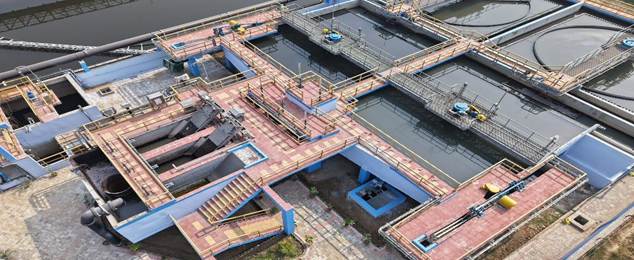
Five key sewerage infrastructure projects were made operational during the third quarter of the financial year 2025–26 under Namami Gange Mission Phase Two, marking a major step forward in pollution abatement and river rejuvenation efforts across multiple states.
With these additions, a total of nine sewerage projects have been commissioned so far in the current financial year, significantly strengthening sewage treatment capacity in key urban centres. Earlier in the year, projects in Udham Singh Nagar in Uttarakhand, Moradabad in Uttar Pradesh, and Maheshtala and Jangipur in West Bengal had already been made operational.
Following the latest commissioning, the cumulative sewage treatment capacity created under the Namami Gange Programme has reached 3,976 million litres per day, while the total number of commissioned sewage treatment plants now stands at 173. These milestones reinforce the mission’s core objective of preventing untreated sewage from entering rivers and improving urban sanitation systems.
In Shuklagunj in Uttar Pradesh, a new 5 MLD sewage treatment plant has been commissioned at a cost of ₹65 crore. Implemented under the hybrid annuity model using sequential batch reactor technology, the project will benefit nearly three lakh people by ensuring effective interception, diversion and treatment of sewage before it reaches the River Ganga.
In Agra, a major city along the Yamuna basin, two sewage treatment plants with capacities of 31 MLD and 35 MLD have been commissioned under the Pollution Abatement Works project. The overall project, sanctioned at ₹842 crore, envisages a total capacity of 177.6 MLD across 13 plants. Implemented using sequential batch reactor technology under the hybrid annuity model, the initiative will benefit about 25 lakh residents and substantially reduce untreated sewage discharge into the River Yamuna.
In Varanasi, a 55 MLD sewage treatment plant at Assi–BHU has been made operational under a project sanctioned at ₹308 crore. Implemented under the design build operate transfer model and based on sequential batch reactor technology, the facility will serve a population of around 18 lakh and play a critical role in protecting the River Ganga from sewage pollution.
In North Barrackpore in West Bengal, a 30 MLD sewage treatment plant has been commissioned under a project sanctioned at ₹154 crore. The project, designed to meet National Green Tribunal norms and implemented under the hybrid annuity model, will ultimately create a total capacity of 38 MLD across two plants and benefit nearly 2.2 lakh people by preventing untreated sewage from entering the Ganga.
In Bihar, the Patna Kankarbagh sewage treatment plant has been expanded from a partially commissioned capacity of 15 MLD to 30 MLD during the same quarter, further strengthening sewage treatment infrastructure in the city and supporting pollution control efforts along the Ganga.
These developments represent significant progress towards cleaner rivers, improved urban sanitation and sustainable, long term river rejuvenation under the Namami Gange Mission.