
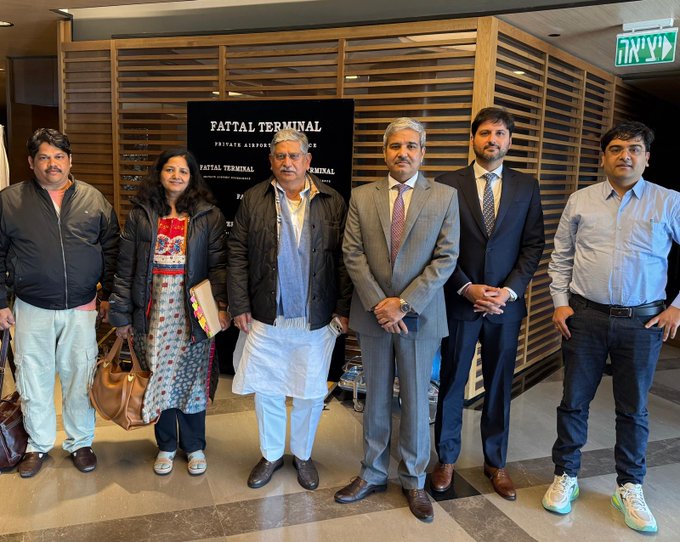
India is set to deepen its global engagement in sustainable fisheries and aquaculture as the Union Minister for Fisheries Animal Husbandry and Dairying undertakes an official visit to Israel from 13 to 15 January 2026 to participate in the Second Global Summit on Blue Food Security Sea the Future in Eilat. The visit comes at a time when India’s fisheries sector is witnessing unprecedented growth in production employment exports and infrastructure development driven by sustained policy focus and large scale public investment.
The ministerial visit at the invitation of the Israeli Minister of Agriculture and Food Security reflects the growing strategic and economic partnership between India and Israel in the areas of fisheries aquaculture innovation and blue economy development. During the summit the Minister will participate in high level discussions on global food security sustainable fisheries climate resilient aquaculture and technological solutions for responsible use of marine and inland water resources. Separate bilateral meetings are scheduled with Israeli counterparts and ministers from other participating countries to explore policy alignment institutional partnerships joint research and innovation capacity building and expanded trade and investment opportunities.
The programme also includes interactions with chief executives of leading Israeli companies and start ups working in agriculture fisheries and aquaculture as well as visits to innovation hubs and research institutions. These engagements are expected to provide insights into Israel’s advanced technological ecosystem particularly in areas such as recirculatory aquaculture systems water efficient farming biosecurity and digital monitoring solutions. The visit is aimed at translating global best practices into scalable solutions for India while opening new avenues for collaboration in sustainable fisheries management.
The international outreach coincides with a decade of transformative growth in India’s fisheries and aquaculture sector. Fish production has more than doubled from 95.79 lakh tonnes in 2013 14 to 197.75 lakh tonnes in 2024 25 registering a growth of 106 percent. India today ranks as the world’s second largest fish producer contributing eight percent of global output holds the second position in aquaculture production leads in shrimp production and exports and is a major player in capture fisheries. The sector supports livelihoods for nearly three crore fishers and fish farmers while generating large scale employment across harvesting processing logistics and exports.
Since 2014 15 the Government of India has approved or announced cumulative investments of more than 38572 crore rupees across flagship schemes including Blue Revolution the Fisheries and Aquaculture Infrastructure Development Fund Pradhan Mantri Matsya Sampada Yojana and Pradhan Mantri Matsya Kisan Samridhi Sah Yojana. Projects worth over 32723 crore rupees have already been approved translating policy intent into ground level assets and services.
The impact of these interventions is reflected in rising productivity improved infrastructure and enhanced incomes. Average aquaculture productivity has increased to 4.77 tonnes per hectare while fisheries now contribute 7.43 percent to agriculture gross value added the highest among allied sectors. Indian seafood exports reached an all time high of 16.98 lakh tonnes valued at 62408 crore rupees in 2023 24 with India exporting more than 350 seafood products to 130 countries. Aquaculture accounts for 62 percent of export value and value added products now contribute nearly 11 percent of the export basket registering a 56 percent growth over the past five years.
Despite external challenges including sharply higher tariffs imposed by the United States on Indian seafood since April 2025 the sector has demonstrated strong resilience. Comparative data for April to October 2025 shows seafood export value rising by 21 percent and volumes by 12 percent over the same period a year earlier with frozen shrimp exports also recording growth in both value and quantity.
Under the Pradhan Mantri Matsya Sampada Yojana significant progress has been made across inland and marine fisheries. Thousands of cages ponds biofloc units recirculatory aquaculture systems hatcheries brood banks and sea cages have been approved. Marine fisheries initiatives include deep sea fishing vessels vessel upgradation open sea cage culture brackish water aquaculture and bio toilets on mechanised vessels. Welfare measures have supported replacement boats nets Sagar Mitras and Matsya Seva Kendras while infrastructure investments span fish transport vehicles ice plants cold storages feed mills retail markets kiosks and value added enterprises.
Financial inclusion and social security have been strengthened through group accident insurance for over 34 lakh fishers extension of 4.49 lakh Kisan Credit Cards amounting to 3569.60 crore rupees nutritional support during fishing ban periods and targeted assistance for tribal and aspirational districts. Overall 74.66 lakh direct and indirect employment opportunities have been generated since 2014 15.
Strategic initiatives such as notification of 34 fisheries production and processing clusters development of integrated aquaparks support to fisheries startups and farmer producer organisations seaweed pearl and ornamental fisheries promotion and rollout of digital market access through the Open Network for Digital Commerce are reshaping the sector into an organised competitive and technology driven ecosystem. The notification of rules for sustainable harnessing of fisheries in the exclusive economic zone prioritising cooperatives and producer organisations marks a major step towards deep sea fishing and value added exports.
Through these sustained reforms India is positioning fisheries and aquaculture as a pillar of the blue economy combining growth sustainability resilience and global competitiveness. The Minister’s participation in the Global Summit on Blue Food Security is expected to further reinforce India’s leadership role internationally while opening new pathways for cooperation innovation and shared prosperity in the fisheries sector.