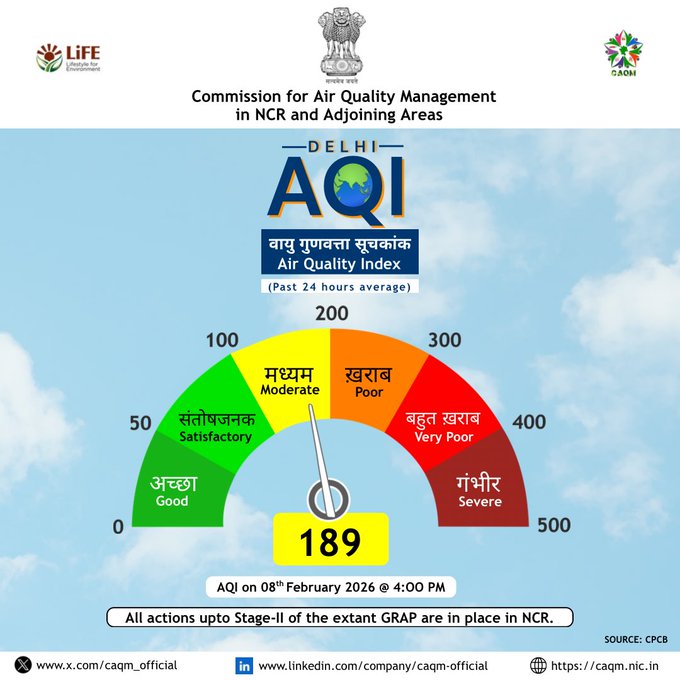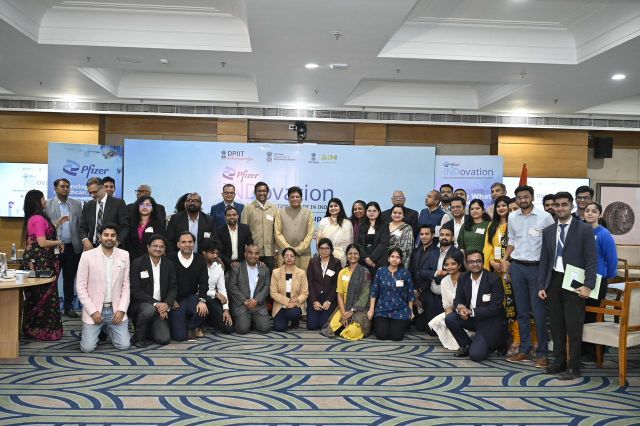

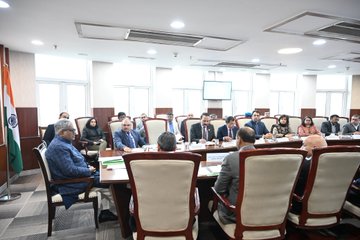
The Union Minister for Environment Forest and Climate Change Bhupender Yadav on Tuesday chaired a high level review meeting to assess and strengthen the action plans of Rajasthan and Punjab aimed at tackling air pollution in the Delhi National Capital Region marking a significant escalation in coordinated inter state efforts to improve air quality.
This was the fifth such review meeting held on prescribed parameters following directions issued earlier in December. Expressing serious concern over the persistently poor air quality in Delhi NCR across seasons the Minister announced that from January 2026 onwards reviews of state action plans will be conducted every month at the ministerial level to ensure sustained oversight and accountability.
The Minister directed that sector wise targeted action plans be finalised with clear responsibilities fixed on concerned departments and agencies. With planning being undertaken nearly eight months in advance the Minister underlined that disciplined and timely execution should lead to visible and measurable improvements in air quality in the next pollution season. He assured that implementation bottlenecks would be resolved through regular inter state coordination meetings at the highest level.
While reviewing Rajasthan’s plan the Minister flagged critical gaps in public transport infrastructure in Alwar Bhiwadi Neemrana and Bharatpur. He directed that electric buses be procured on priority with a time bound proposal and that charging infrastructure be augmented in mission mode across urban centres highways and expressways. Unplanned truck parking along national highways in Bhiwadi and Neemrana was identified as a major contributor to congestion and dust pollution with instructions issued for immediate identification of designated parking lots and preparation of comprehensive parking management plans.
The Minister also sought city specific road redevelopment and traffic decongestion plans for the four cities including identification of congestion points and formulation of short term and long term solutions. He emphasised the urgent need for liquidation of legacy municipal waste and immediate deployment of mechanical road sweeping machines wherever gaps exist. Roadside greening was highlighted as a priority with over 600 locations already identified in Alwar and Bhiwadi for plantation using native species and community participation.
Strict enforcement measures were also stressed. The Minister directed immediate issuance of closure notices to industrial units that have failed to install online continuous emission monitoring systems. He further called for focused information education and communication campaigns tailored to specific stakeholders including industries for emission control and resident welfare associations for waste segregation and processing.
Reviewing Punjab’s action plan the Minister laid strong emphasis on effective crop residue management. He directed that all crop residue management machines be certified for working condition through standard operating procedures and utilised optimally. The need for introspection on the effectiveness of existing measures was highlighted with directions to explore innovative solutions in consultation with the Ministry of Agriculture scientists and stakeholders. Pelletisation plants utilisation of crop residue in thermal power plants and brick kilns and rapid expansion of compressed bio gas plants were identified as priority interventions. Drone based surveillance was encouraged to deter stubble burning.
The meeting was attended by senior officials from the Ministries of Environment Agriculture Housing and Urban Development Heavy Industries the Commission for Air Quality Management Central Pollution Control Board and representatives of the governments of Rajasthan and Punjab.
Parallel to the policy level push the Commission for Air Quality Management conducted an extensive ground inspection in Noida on January 5 to assess dust mitigation measures on road stretches maintained by the Noida Authority under the Graded Response Action Plan.
Ten inspection teams comprising officials from the Uttar Pradesh Pollution Control Board and CAQM flying squads surveyed 142 road stretches using geo tagged and time stamped photographic documentation. The findings reflected an encouraging overall scenario with 48 stretches showing no visible dust 66 recording low dust levels and 24 showing moderate dust. Only four stretches were found with high visible dust.
The limited high dust locations were largely linked to accumulation of municipal solid waste and construction and demolition debris particularly under flyovers metro corridors and key arterial roads. CAQM directed targeted corrective action at these hotspots including intensified mechanical sweeping water sprinkling prompt waste removal and strict prevention of dumping and open burning to avoid re accumulation.
The Commission reaffirmed that inspection and enforcement drives under Operation Clean Air will continue regularly across NCR on a war footing in coordination with all agencies to ensure clean dust free and well maintained roads and sustained improvement in regional air quality.