
The Ministry of Tribal Affairs has taken a significant step towards strengthening the digital governance of the Forest Rights Act by advancing the development of an integrated, end to end digital platform through post Smart India Hackathon field engagement in Nashik district of Maharashtra. The initiative is aimed at improving implementation, monitoring and transparency of the Forest Rights Act 2006 through digitisation, geospatial integration and data driven decision support systems.
As part of this effort, the Ministry has aligned with the Ministry of Education Innovation Cell under the eighth edition of the Smart India Hackathon 2025, a national programme designed to channel student innovation into solving complex governance challenges. Under the software category, the Ministry of Tribal Affairs introduced a focused problem statement calling for the creation of an artificial intelligence powered Forest Rights Act Atlas and a WebGIS based Decision Support System. The proposed platform is intended to support integrated monitoring of Individual Forest Rights, Community Rights and Community Forest Resource rights, while enabling geotagging, convergence of records and evidence based decision making across administrative levels.
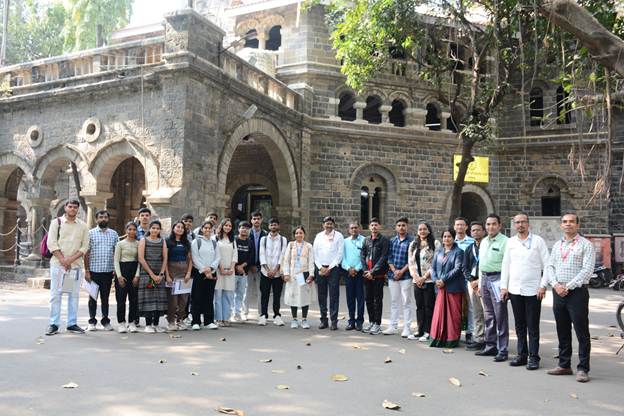
In pursuance of the post Hackathon engagement framework, a high level meeting was convened on 2 January 2026 at the Collector Office in Nashik. The meeting brought together officials from the Ministry of Tribal Affairs, the Maharashtra State Tribal Development Department and student teams participating in the Hackathon from Pune, Kurnool and Indore. During the interaction, the Maharashtra government showcased its existing FRA portal, explaining its architecture, operational workflows and practical application in implementing and tracking forest rights claims across the state.
The State authorities also shared best practices, including success stories of patta holders and district level progress in recognition of forest rights, offering valuable insights into challenges and solutions encountered during on ground implementation. The demonstration provided a live reference model for the student teams, highlighting how digital tools can be leveraged to improve efficiency, accountability and service delivery under the Act.
To ensure that the proposed national platform reflects field realities, a two day field visit has been scheduled for the participating student teams to FRA implemented villages in Nashik district. During these visits, students will interact directly with Gram Sabha members, forest rights holders and district level functionaries. The exercise will enable first hand documentation of workflows, verification processes and implementation challenges, which will be used to refine the design of the AI enabled FRA Atlas and WebGIS based Decision Support System.
Following the field engagement, the student teams will travel to New Delhi for a two day Hackathon at the National Tribal Research Institute. Under the guidance of the Secretary, Ministry of Tribal Affairs, the teams will finalise the functional design, system features and governance framework of the proposed FRA digital portal, integrating policy objectives with ground validated insights.
The initiative reflects the Ministry of Tribal Affairs’ commitment to translating policy intent on FRA digitisation into actionable and field tested digital solutions. It aligns with the national vision of inclusive growth and empowered tribal communities by strengthening transparency, improving data availability and enabling evidence based governance. The exercise also underscores the Ministry’s emphasis on collaborative innovation, bringing together government institutions, academia, students and tribal communities to enhance the effective implementation of the Forest Rights Act and support sustainable tribal development.