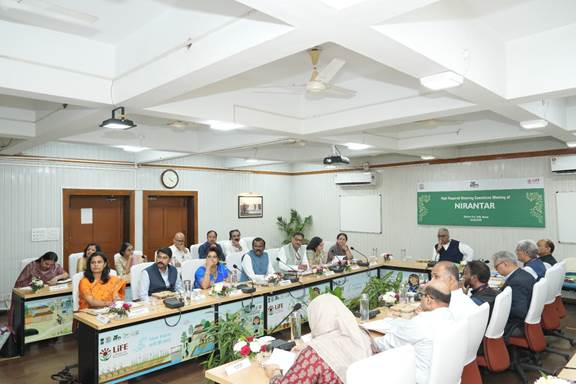

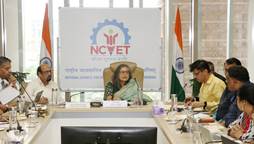
The 48th meeting of the National Skills Qualifications Committee was held on 12 March 2026 under the chairpersonship of Debashree Mukherjee, Secretary Ministry of Skill Development and Entrepreneurship and Chairperson National Council for Vocational Education and Training.
The meeting focused on reviewing skill qualifications, national occupational standards and micro credentials submitted by various awarding bodies recognised by the National Council for Vocational Education and Training. The deliberations were aimed at strengthening the quality and relevance of vocational qualifications and ensuring alignment with evolving industry requirements and national skill development priorities.
Review Of Qualifications Across Multiple Sectors
During the meeting, the committee examined a wide range of qualifications and standards covering several sectors including electronics, tourism, healthcare, agriculture, instrumentation, iron and steel, hydrocarbon, beauty and wellness and environment related occupations.
The committee also considered proposals related to the adoption of new qualifications and the extension of existing qualifications currently being implemented under various government skill development schemes.
Officials stated that the review process plays a critical role in ensuring that vocational education and training frameworks remain relevant to changing labour market demands and technological developments.
Participation From Government And Industry
The meeting was attended by several key representatives from the vocational education and training ecosystem.
Participants included Ashok Kumar Gaba, Executive Member National Council for Vocational Education and Training, and Suhas Deshmukh, Director and Secretary to the Council National Council for Vocational Education and Training.
Members of the National Skills Qualifications Committee representing central ministries and departments also participated in the deliberations. Representatives from the Ministry of Rural Development and the Ministry of Labour and Employment attended the meeting along with sector experts and other stakeholders from the skilling ecosystem.
Presentations By Awarding Bodies
A total of 18 awarding bodies presented their qualifications and standards before the committee.
In all, 43 qualifications, national occupational standards and micro credentials were examined during the meeting. These submissions came from a wide range of institutions and sector skill councils working across the country.
The organisations presenting their proposals included Directorate General of Training, Agriculture Skill Council of India, Beauty and Wellness Sector Skill Council, Electronics Sector Skills Council of India, Ganpat University, Healthcare Sector Skill Council, Hydrocarbon Sector Skill Council, Indian Iron and Steel Sector Skill Council, Instrumentation Automation Surveillance Communication Sector Skill Council, Leather Sector Skill Council, Skill Council for Green Jobs, Skill Council for Mining Sector, Tourism and Hospitality Skill Council, West Bengal State Council of Technical and Vocational Education and Skill Development, Haryana Knowledge Corporation Limited, National Institute of Rural Development and Panchayati Raj, Tamil Nadu Skill Development Corporation and Bharatiya Engineering Science and Technology Innovation University.
The committee reviewed the technical content, training standards and industry relevance of these qualifications to ensure they meet national skilling objectives.
Focus On Industry Alignment
The discussions during the meeting highlighted the need to continuously update vocational qualifications so that they remain aligned with emerging technologies, new occupational roles and changing industry requirements.
Officials noted that the review of national occupational standards and micro credentials is essential to maintain consistency and quality within the national skill development framework.
The process also ensures that training programmes delivered under government initiatives produce a workforce equipped with practical and industry relevant competencies.
Building A Future Ready Workforce
Addressing the meeting, Debashree Mukherjee, Secretary Ministry of Skill Development and Entrepreneurship and Chairperson National Council for Vocational Education and Training, emphasised the importance of strengthening the regulatory framework governing vocational education and training in India.
Debashree Mukherjee said that sustained efforts by the Ministry of Skill Development and Entrepreneurship and the regulatory oversight of the National Council for Vocational Education and Training must continue to promote innovation within the skilling ecosystem while ensuring compliance with national standards.
She highlighted that vocational training programmes must remain closely aligned with industry needs in order to build a globally competitive and future ready workforce.
Debashree Mukherjee also stressed the importance of equipping workers with multiple skill sets so they can adapt more effectively to rapid changes in the labour market and technological landscape.
Strengthening India Skill Ecosystem
Officials said that the regular meetings of the National Skills Qualifications Committee play an important role in maintaining the integrity and credibility of the National Skills Qualification Framework.
By systematically reviewing and approving qualifications across sectors, the committee helps ensure that training programmes remain standardised, relevant and responsive to the needs of industry and the economy.
The Ministry of Skill Development and Entrepreneurship said such reviews are essential for strengthening India’s skill ecosystem and preparing a workforce capable of supporting economic growth and global competitiveness.