
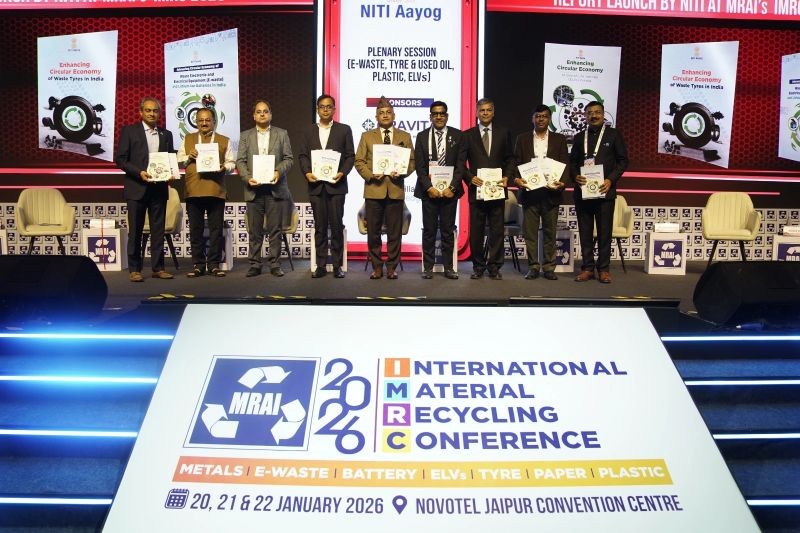
NITI Aayog on Wednesday launched three comprehensive reports aimed at accelerating India’s transition towards a robust circular economy in key high-impact sectors. The reports, unveiled at the International Material Recycling Conference organised by the Material Recycling Association of India in Jaipur, focus on enhancing circularity in End of Life Vehicles, waste tyres, electronic waste and lithium ion batteries.
The three reports examine the existing challenges in India’s circular economy ecosystem and lay out a detailed roadmap for infrastructure development, sector formalisation, strengthening of the Extended Producer Responsibility framework and unlocking economic potential through improved material recovery and recycling. Together, they provide actionable policy and industry recommendations to support sustainable growth while addressing emerging environmental and resource security concerns.
The reports underline that the vision of Viksit Bharat by 2047 is intrinsically linked to India’s shift towards a low carbon and resource efficient development pathway. Large scale deployment of clean energy systems, digital technologies and sustainable mobility solutions will significantly increase the use of electronic equipment, electric vehicles and lithium ion batteries, making effective end of life management a strategic necessity.
India’s electric vehicle ecosystem has expanded rapidly, with EV sales rising from about 50,000 units in 2016 to more than 2.08 million units in 2024. The government has set a target of achieving a 30 percent share of electric vehicles in total vehicle sales by 2030. As a result, demand for lithium ion batteries is projected to rise sharply from around 29 gigawatt hours in 2025 to nearly 248 gigawatt hours by 2035.
At the same time, the number of End of Life Vehicles in the country is expected to grow from approximately 23 million in 2025 to about 50 million by 2030. India’s e waste generation is also projected to increase steeply from 6.19 million metric tonnes in 2024 to nearly 14 million metric tonnes by 2030. Waste tyres, e waste and spent batteries present significant environmental and safety risks if not managed sustainably, while also representing valuable sources of secondary raw materials.
The reports emphasise that developing an efficient circular economy for these sectors is not only an environmental imperative but also a critical enabler of sustainable and inclusive economic growth. Improved recycling and recovery can enhance material security, reduce dependence on imports, create green jobs and support domestic manufacturing under the broader vision of Atmanirbhar Bharat.
Prepared through extensive consultations with line ministries, regulators, industry stakeholders and knowledge partners, the reports provide a holistic assessment of existing regulatory frameworks, market structures and technological gaps. They recommend measures to improve collection and segregation systems, expand recycling infrastructure, formalise informal operations, promote advanced recycling technologies and strengthen compliance under Extended Producer Responsibility.
NITI Aayog said the findings and recommendations contained in the reports will help policymakers, industry and investors work together to fast track India’s transition to a resilient and economically viable circular economy, while aligning growth with environmental sustainability and long term national priorities.