
Oil and Natural Gas Corporation Limited has taken a significant step towards advancing education and social equity by signing a Memorandum of Understanding with the National Scheduled Tribes Finance and Development Corporation for the execution of corporate social responsibility funded infrastructure and capacity building projects in Eklavya Model Residential Schools across the country.
The agreement marks a major collaborative initiative between a leading public sector enterprise under the Ministry of Petroleum and Natural Gas and an autonomous body of the Ministry of Tribal Affairs, with the shared objective of empowering tribal students through improved educational infrastructure, digital learning, career mentorship and holistic development support.
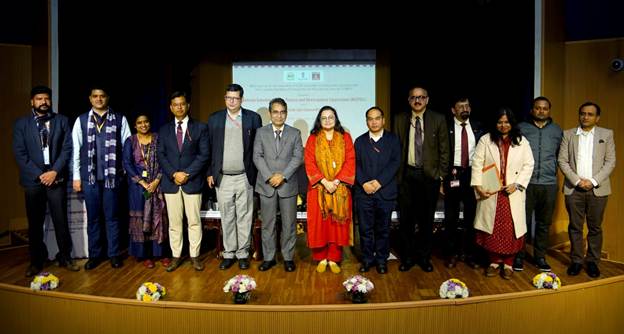
The MoU was signed and exchanged on 5 January 2026 at the Dr Ambedkar International Centre in New Delhi. The signing took place in the presence of senior officials from the Ministry of Tribal Affairs, ONGC and NSTFDC, including Secretary of Tribal Affairs Ranjana Chopra, who described education as the foundation of lasting development and an empowered society. Senior leadership from both organisations underlined the importance of sustained public sector and corporate collaboration to bridge educational and opportunity gaps for tribal youth.
Under the agreement, ONGC has sanctioned ₹28 crore for the implementation of a comprehensive development package covering 144 Eklavya Model Residential Schools located across 11 states and union territories, including Andhra Pradesh, Dadra and Nagar Haveli and Daman and Diu, Gujarat, Himachal Pradesh, Jammu and Kashmir, Kerala, Rajasthan, Tamil Nadu, Uttar Pradesh and Uttarakhand. The initiative is expected to benefit more than 35,000 tribal students by providing them with access to modern learning tools, improved facilities and structured guidance for future careers.
The CSR funded programme focuses on strengthening digital learning infrastructure, enabling schools to integrate technology into classroom instruction and learning management. Special emphasis has been placed on health and hygiene interventions for girl students through the installation of sanitary pad vending machines and incinerators, addressing a critical aspect of student well being and retention. The project also includes capacity building of teachers to enhance instructional quality, along with career counselling and entrepreneurship training aimed at equipping students with skills and awareness for higher education, employment and self enterprise.
The Ministry of Tribal Affairs continues to steer the central sector scheme of Eklavya Model Residential Schools with the objective of providing quality education to tribal children in remote and underserved areas. As of now, 499 EMRS are functional across the country, serving as residential centres of learning that combine academics, technology and all round development to nurture a confident and capable generation of tribal youth.
The partnership between ONGC and NSTFDC reflects a broader national effort to align corporate social responsibility with public policy goals for inclusive growth. By investing in education, digital access and skill development, the initiative seeks to create equal opportunities for tribal students and contribute meaningfully to their socio economic advancement.
This collaboration is part of a wider strategy to accelerate the development of tribal communities and ensure their active participation in the journey towards a developed and self reliant India. By reinforcing the educational ecosystem of Eklavya schools, the initiative aims to create long term impact through knowledge, capability and empowerment.