
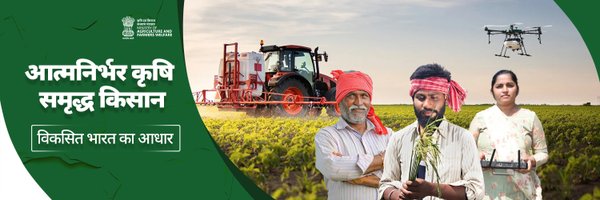
India’s rabi sowing has registered robust progress during the 2025–26 season, with total area coverage reaching 644.29 lakh hectares as of January 9, 2026, reflecting an increase of 17.65 lakh hectares over the corresponding period of the previous year. Data released by the Ministry of Agriculture and Farmers’ Welfare indicates steady advancement across key foodgrain, pulse and oilseed crops, underscoring positive seasonal momentum and farmer confidence.
Wheat, the principal rabi crop, continues to anchor the season’s performance. Area sown under wheat has reached 334.17 lakh hectares, marking an increase of 6.13 lakh hectares compared to the same period last year. The expansion reflects favourable sowing conditions, timely field operations and sustained farmer preference for wheat cultivation in major producing states.
Rabi rice has also shown growth, with area coverage rising to 21.71 lakh hectares from 19.49 lakh hectares in the corresponding period of 2024–25, recording an increase of 2.22 lakh hectares. The improvement points to better water availability and crop planning in select regions traditionally supporting rabi rice cultivation.
Pulses have recorded a notable expansion, reinforcing efforts to strengthen domestic protein availability. Total pulses area has increased by 3.74 lakh hectares, reaching 136.36 lakh hectares. Gram has emerged as a major contributor to this growth, with area sown rising by a significant 4.66 lakh hectares to 95.88 lakh hectares. Lentil cultivation has also expanded modestly by 0.45 lakh hectares, reaching 18.12 lakh hectares. Minor increases have been observed in lathyrus, while field pea, kulthi, urdbean, moongbean and other pulses have shown marginal declines, reflecting crop-specific regional adjustments.
Coverage under shri anna and coarse cereals has increased by 2.03 lakh hectares to 55.20 lakh hectares. Within this category, maize and barley have shown strong gains. Maize area has expanded by 1.75 lakh hectares to 25.24 lakh hectares, while barley has recorded an increase of 1.28 lakh hectares, reaching 7.36 lakh hectares. Ragi and small millets have also registered incremental growth, although jowar area has declined by 1.30 lakh hectares, indicating shifting sowing patterns among coarse cereals.
Oilseeds have continued their upward trend, with total area coverage rising by 3.53 lakh hectares to 96.86 lakh hectares. Rapeseed and mustard, the dominant rabi oilseed, has increased by 2.79 lakh hectares to 89.36 lakh hectares, reinforcing its central role in edible oil production. Linseed, safflower, sunflower and groundnut have also posted gains, while sesamum has recorded a marginal decline. The expansion in oilseeds aligns with national efforts to enhance domestic oilseed output and reduce import dependence.
Overall, total rabi crop coverage has increased from 626.64 lakh hectares during the corresponding period last year to 644.29 lakh hectares in the current season. The data reflects steady progress in sowing operations across regions, supported by favourable weather conditions, improved irrigation availability and ongoing policy support for farmers. The Ministry of Agriculture and Farmers’ Welfare continues to closely monitor crop progress to ensure food security, price stability and sustained agricultural growth during the rabi season.