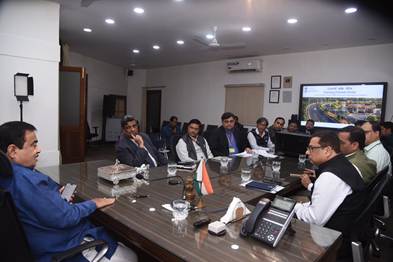

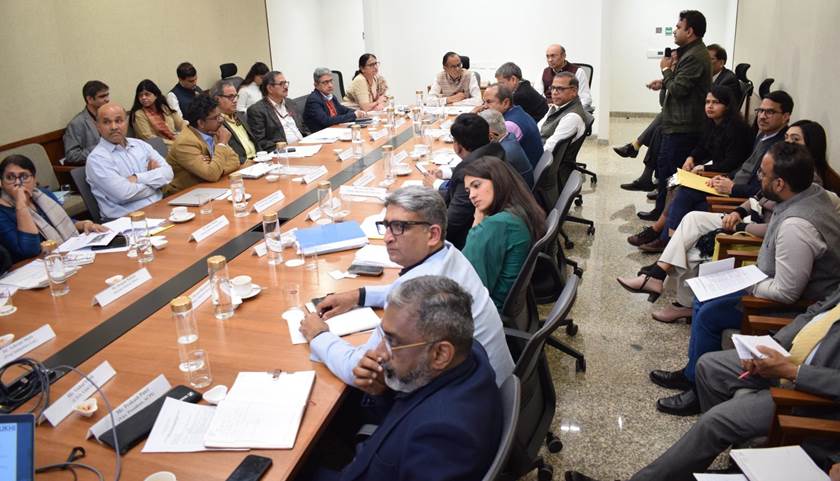
A high-level stakeholder consultation on the use of bio-plastics in sachets for the packing and storage of paan masala and gutkha was chaired by Prof Ajay Kumar Sood, Principal Scientific Adviser to the Government of India, in New Delhi on January 22, 2026. The meeting focused on reviewing progress made so far and charting a coordinated, time-bound pathway towards environmentally sustainable packaging solutions for products that generate large volumes of single-use plastic waste.
The consultation brought together senior policymakers, regulators, scientists, industry leaders and academic experts. Those present included Dr Parvinder Maini, Scientific Secretary in the Office of the Principal Scientific Adviser; Dr Rajesh Gokhale, Secretary, Department of Biotechnology; Shri Tanmay Kumar, Secretary, Ministry of Environment, Forest and Climate Change; and Shri Rajit Punhani, Chief Executive Officer, Food Safety and Standards Authority of India. Senior officials from the Ministry of Consumer Affairs, Department for Promotion of Industry and Internal Trade, Department of Chemicals and Petrochemicals, Bureau of Indian Standards, and the Indian Institute of Packaging also participated, along with representatives from academia, industry and research institutions.
In his opening remarks, Prof Ajay Kumar Sood recalled earlier deliberations held with the Prime Minister’s Office and the Department of Consumer Affairs, and stressed that sachet waste from paan masala and gutkha represents a significant environmental challenge due to its scale, multilayer composition and poor recyclability. He emphasised the need to move decisively from discussion to action, calling for a clearly defined, time-bound roadmap that aligns policy intent, regulatory standards, scientific validation and industry readiness.
Dr Rajesh Gokhale highlighted that sachet plastics pose a disproportionate environmental burden because they are widely littered and rarely collected or recycled. He identified PolyLactic Acid as a promising biodegradable alternative that could potentially replace conventional plastics without imposing prohibitive costs on manufacturers. Dr Gokhale underlined that success would depend on close coordination among government departments, research institutions and industry, with clear milestones and accountability.
Shri Tanmay Kumar informed the meeting that the Ministry of Environment, Forest and Climate Change is revisiting the current definition of bioplastics and is in the process of framing a clear and unambiguous definition of biodegradable materials. He noted that a precise definition is critical to enable the Bureau of Indian Standards to develop scientifically robust and standardised testing protocols. Such clarity, he said, would also help prevent greenwashing and ensure that only genuinely biodegradable materials are approved for use.
From the regulatory perspective, Shri Rajit Punhani emphasised that any alternative packaging solution must balance environmental goals with consumer safety and product integrity. He stated that the cost of biodegradable packaging must remain lower than the cost of the product itself, while ensuring effective protection of flavour and aroma. He also stressed strict compliance with migration limits prescribed by FSSAI and made it clear that plastic and aluminium foil must be completely eliminated from all layers of sachet packaging.
Officials from the Bureau of Indian Standards pointed out that many materials currently described as biodegradable degrade only under industrial composting conditions, which poses practical challenges in collection, segregation and processing. This highlighted the need for realistic standards that take into account India’s waste management infrastructure.
The consultation featured academic inputs from IIT Madras, IIT Bombay and Ravenshaw University, alongside industry presentations by Balrampur Chini Mills Limited, UKHI Ltd and Praj Industries. These presentations showcased emerging material options, technological approaches and early pilot efforts. Regulators and industry associations provided feedback on feasibility, scalability and compliance requirements. The collective discussions underscored the need to transition from exploratory research and pilot projects to a structured validation, testing and certification framework.
Summing up the deliberations, Prof Ajay Kumar Sood noted that several industries already have potentially viable biodegradable material solutions. He emphasised that these materials now need rigorous scientific testing, certification and standardisation before a final regulatory framework can be notified. He directed that the Ministry of Environment, Forest and Climate Change, FSSAI, Bureau of Indian Standards, Central Institute of Petrochemicals Engineering and Technology, and the Indian Institute of Packaging should work in close coordination with industry and academic institutions to develop a clear process flow with defined timelines.
Prof Sood further advised industry representatives to submit proposed material samples to the Central Institute of Petrochemicals Engineering and Technology for evaluation and to prepare a detailed Standard Operating Procedure ahead of the next review meeting. He said the objective is to ensure that environmentally responsible packaging solutions are not only scientifically sound but also economically viable and ready for large-scale adoption.
The consultation marked an important step towards aligning environmental sustainability, regulatory clarity and industry capability in addressing the growing challenge of sachet plastic waste from paan masala and gutkha, with a clear focus on delivering practical outcomes within defined timelines.