
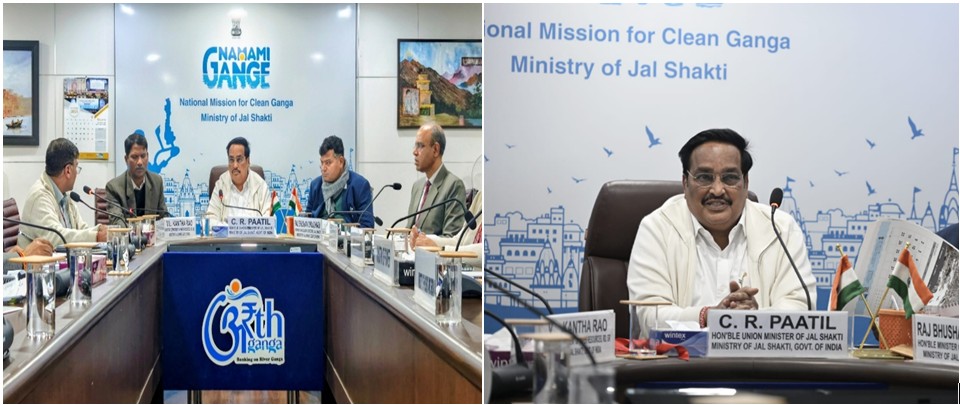
A renewed technology-led thrust to rejuvenate the River Ganga gathered momentum as the 17th meeting of the Empowered Task Force was held under the chairmanship of the Union Minister for Jal Shakti at New Delhi. The meeting reviewed progress under the Namami Gange Programme with a strong focus on data-driven decision-making, comprehensive drain monitoring and enhanced surveillance of sewage treatment infrastructure to ensure sustained improvements in river health.
Senior representatives from central ministries, the National Mission for Clean Ganga and Ganga basin states participated in the deliberations, reflecting a high level of inter-ministerial and inter-state coordination. The review highlighted the completion of 15 pollution abatement infrastructure projects during the current calendar year, a milestone achievement in ongoing river rejuvenation efforts. Uttar Pradesh led with six completed projects, followed by Bihar with four and West Bengal with three, while Uttarakhand and Delhi completed one project each, demonstrating steady progress across the basin.
The meeting emphasised the strategic importance of reusing treated wastewater and scaling up innovative, research-based interventions such as aquifer mapping with a focus on palaeo-channels, bioremediation and advanced sewerage treatment solutions, including common effluent treatment plants. States were directed to expedite the notification of policies for the safe reuse of treated water in alignment with the national framework, with clearly defined targets and enabling regulatory provisions.
A key highlight of the review was the status of the aerial survey and drainage mapping project for Uttar Pradesh, which involves the development of a GIS-based visualisation dashboard with analytical modules and geo-tagged videography of natural and manmade drains along the Ganga. High-resolution aerial surveys along the main stem of the river have been completed, generating precise geospatial datasets now integrated into a live dashboard offering both 2D and 3D visualisation. By combining LiDAR-based scientific data with drone-generated visual inputs, the initiative enables basin-level pollution monitoring, identification of hotspots and prioritisation of targeted remediation measures. District Ganga Committees were urged to ensure timely field validation and close coordination to translate insights into effective on-ground action.
The Empowered Task Force also cleared the annual accounts of the National Mission for Clean Ganga, noting improvements in financial discipline and a reduction in pending utilisation certificates. To further strengthen operational compliance, the Mission is introducing CCTV-based real-time monitoring of sewage treatment plants, integrated with AI-enabled feature extraction and a centralised dashboard. This system will complement existing online continuous effluent monitoring systems that track key water quality parameters and are linked to the publicly accessible Ganga Pulse portal, adding a vital layer of physical and visual oversight.
The meeting also reviewed ongoing public engagement initiatives, including weekly cleanliness drives conducted nationwide under the Ek Din Ek Ghanta Ek Saath campaign launched as part of Swachhata Hi Seva 2025, and activities under the River City Alliance aimed at promoting river-sensitive urban development. Collaborative efforts with international partners are supporting Indian cities in addressing floods, adopting nature-based solutions and building climate-resilient urban futures.
Concluding the deliberations, the chair underscored that coordinated, technology-driven governance remains central to achieving long-term outcomes for Ganga rejuvenation. The integrated use of advanced monitoring tools, policy alignment and stakeholder participation is expected to further strengthen compliance, transparency and effectiveness across the programme