
Union Minister for Electronics and Information Technology, Railways and Information & Broadcasting Shri Ashwini Vaishnaw highlighted the growing global confidence in Bharat and India’s emergence as a trusted and dependable value-chain partner during a series of high-level engagements at the World Economic Forum Annual Meeting 2026 in Davos.
The Minister stated that discussions and interactions at Davos strongly reaffirmed Bharat’s growth story and the sustained interest of global industry leaders in expanding partnerships with India across a wide range of sectors, including infrastructure, digital technologies, logistics, manufacturing, semiconductors, artificial intelligence and critical minerals. He noted that at a time when global economic and geopolitical uncertainties are reshaping traditional alliances, India is increasingly being viewed as a stable, reliable and forward-looking partner.
During his engagements, Mr Teo Chee Hean, Chairman of Temasek, conveyed strong interest in further expanding Temasek’s footprint in India. The discussions reflected Singapore’s continued commitment to invest in India’s physical and digital infrastructure, as well as in deep-tech and innovation-driven startups. Interactions with global leaders in artificial intelligence, robotics and cybersecurity further underscored India’s growing stature as a trusted value-chain partner capable of co-creating and co-developing advanced technologies.
Shri Vaishnaw noted that global confidence in Bharat was evident across multiple sectoral engagements. Maersk is actively working with India to strengthen logistics infrastructure spanning shipping, ports and railways, while also collaborating on semiconductor materials and supply chains. Honeywell, already a key partner in railway modernisation initiatives, expressed interest in further expanding its manufacturing operations in India, reflecting confidence in the country’s industrial ecosystem and policy stability.
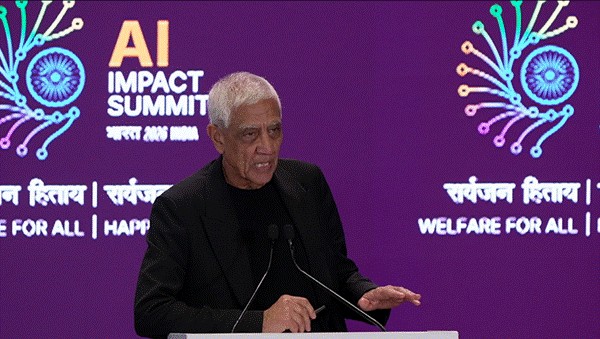
On the sidelines of WEF Davos, the Minister held meetings with Mr Demis Hassabis, CEO and Co-founder of Google DeepMind, and Mr Chris Lehane, Chief Global Affairs Officer of OpenAI. During these interactions, Shri Vaishnaw discussed India’s growing role in shaping artificial intelligence for global good and shared India’s development-focused and inclusive approach to AI. He encouraged global AI leaders to actively participate in the India AI Impact Summit, scheduled to be held in New Delhi in February 2026, which aims to bring together policymakers, industry leaders, researchers and innovators to assess the real-world impact of AI and promote responsible and democratic access to technology.
Speaking about India’s positioning in the global landscape, Shri Vaishnaw observed that in an era of global turbulence, India stands out as a vibrant democracy that delivers on commitments and provides leadership focused on inclusive growth. He said that across meetings and discussions, there was consistent trust in India as a country with which global partners can comfortably work, invest, and build long-term collaborations.
Addressing the issue of critical minerals, the Minister underlined that securing resilient critical mineral value chains is essential for future technologies and energy transitions. He said that the value chain for critical minerals is complex and requires coordinated participation across exploration, refining, processing and manufacturing stages. He emphasised that international collaborations can play a major role in building secure and resilient ecosystems. India, he noted, already has active partnerships with Japan, South Korea, Singapore, Australia, Europe and the United States, and these collaborations can be further leveraged to strengthen critical mineral supply chains.
On artificial intelligence, Shri Vaishnaw outlined India’s comprehensive approach across the entire AI stack, encompassing applications, models, chips, infrastructure and energy. He highlighted that India’s IT industry has successfully pivoted towards delivering AI-driven solutions that enhance productivity, efficiency and value creation across sectors. Referring to the forthcoming India AI Impact Summit, the Minister said the Summit will focus on three key objectives: assessing the real-world impact of AI on productivity and returns; democratising access to AI technologies to ensure inclusive growth; and establishing appropriate guardrails to manage risks while harnessing AI’s transformative potential.
The Minister also shared updates on India’s progress in the semiconductor sector. He said that pilot production has commenced in several approved semiconductor facilities, with commercial production expected to begin shortly. He emphasised that the government is proceeding in a careful and methodical manner to build a robust semiconductor ecosystem and strengthen India’s long-term capabilities in this strategically critical sector. He added that commercial production is expected to begin in February at one of the four semiconductor plants where pilot production is already underway, describing this as a major milestone achieved after six decades of sustained effort, driven by the Prime Minister Narendra Modi’s strong focus on building foundational technologies.
Highlighting India’s rapidly maturing electronics ecosystem, Shri Vaishnaw said that the country is now well-positioned to develop its own indigenous mobile phone brands. Describing the progress as highly encouraging, he said India is expected to see the emergence of domestic mobile phone brands within the next 12 to 18 months, marking a significant step towards self-reliance and global competitiveness in electronics manufacturing.
Summing up his engagements at Davos, the Minister said that interactions with global industry leaders reflected strong optimism about India’s economic trajectory. He noted that almost every major company he met expressed confidence in India’s growth story and enthusiasm about expanding their presence in the country, particularly in areas such as artificial intelligence, semiconductors, advanced electronics manufacturing and digital infrastructure. He added that India’s consistent economic growth, reform momentum and strong digital public infrastructure are increasingly being recognised worldwide, positioning India as a trusted global partner for innovation, investment and co-development of future technologies.