
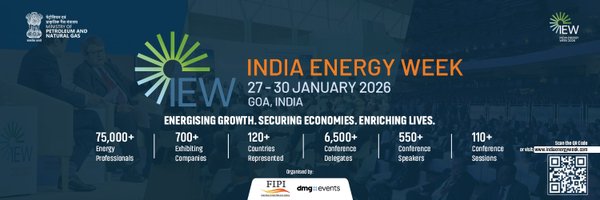
India and Canada on Tuesday signed a Joint Statement on Energy Cooperation during India Energy Week 2026 in Goa, marking a renewed phase of bilateral engagement in the energy sector and the formal relaunch of the India–Canada Ministerial Energy Dialogue.
The Joint Statement was issued following a bilateral meeting between Union Minister of Petroleum and Natural Gas Shri Hardeep Singh Puri and Canada’s Minister of Energy and Natural Resources Timothy Hodgson, who attended India Energy Week 2026 at the invitation of the Indian side. The visit marked the first participation of a Canadian Cabinet Minister at India Energy Week and underscored the growing strategic importance of energy cooperation between the two countries.
The two Ministers emphasised that energy security and diversity of supply are central to the safety, economic vitality and long-term wellbeing of both nations. The engagement followed directions given by the Prime Ministers of India and Canada during their interaction on the sidelines of the G7 Summit held in June 2025 in Kananaskis, Canada, where both leaders had stressed the need to restart senior ministerial and working-level engagements.
The Ministries of Petroleum and Natural Gas of India and Energy and Natural Resources of Canada recognised the strong complementarities between their respective energy sectors. Canada reiterated its objective of becoming an energy superpower in both clean and conventional energy, with export diversification as a national priority. India, positioned as the epicentre of global energy demand growth, was described as a natural and long-term partner offering scale, stability and predictable demand.
Canada highlighted its expanding portfolio of current and upcoming liquefied natural gas projects, increasing crude oil exports to Asian markets through the Trans Mountain Expansion pipeline, and the advancement of liquefied petroleum gas exports from Canada’s west coast. India, as the world’s third largest oil consumer, fourth largest LNG importer, third largest LPG consumer and home to the fourth largest refining capacity globally, is expected to account for more than one third of global energy demand growth over the next two decades. Against this backdrop, both sides acknowledged significant scope for collaboration across the full spectrum of energy fuels.
The Ministers affirmed their intent to deepen bilateral energy trade, including the supply of Canadian LNG LPG and crude oil to India, as well as the supply of refined petroleum products from India to Canada. They also recognised the importance of joint commercial and investment partnerships, noting Canada’s recent launch of the Major Projects Office and the acceleration of energy and resource projects valued at over 116 billion dollars. India, in turn, highlighted policy reforms and investment opportunities of around 500 billion dollars across the energy value chain.
Climate and sustainability objectives formed a key part of the discussions. The Ministers acknowledged the need to reduce emissions in conventional energy value chains, including through carbon capture utilisation and storage, while supporting the deployment of cleaner technologies as global energy demand continues to rise. They identified strong potential for cooperation in renewable energy, hydrogen, biofuels, sustainable aviation fuel, battery storage, critical minerals, clean technologies, electricity systems, supply chain resilience and the application of artificial intelligence in the energy sector.
The Ministers also took note of ongoing collaboration under the Global Biofuels Alliance, where Canada participates as an observer, and recognised the value of multilateral platforms in advancing the global energy transition.
Building on the deliberations, both sides affirmed the following:
The importance of energy security and diverse energy supply chains, with India as a major consumer and Canada as a safe, secure and reliable supplier, working in partnership to deepen trade and ensure stable energy supplies
Their commitment to sustained Government to Government engagement through mechanisms such as the India–Canada Ministerial Energy Dialogue and regular expert-level collaboration
The intention to actively support Business to Business and Business to Government partnerships across the energy value chain
Their shared resolve to continue cooperation through bilateral and multilateral frameworks, including engagement with industry partners, to advance climate objectives for the benefit of the global community
The Joint Statement signals a renewed momentum in India–Canada energy relations, anchored in energy security, long-term investment, climate responsibility and mutually beneficial growth.