
A nationwide campaign to strengthen community participation in rural water management began on 8 March 2026 with the launch of Jal Mahotsav 2026 and the observance of Jal Arpan Diwas across the country. The initiative, organised by the Department of Drinking Water and Sanitation under the Ministry of Jal Shakti, coincided with International Women’s Day and was observed as Sujalam Shakti Diwas to highlight the central role of women in water governance and conservation.
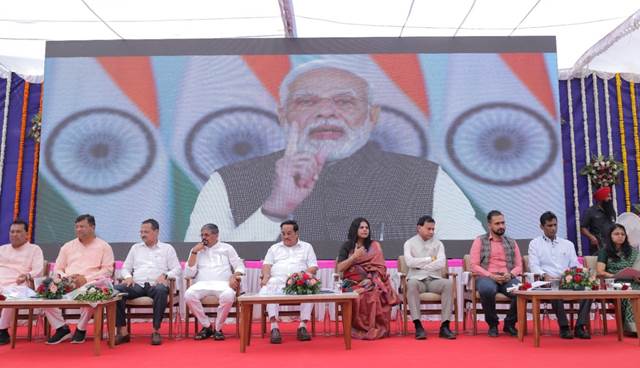
The national launch of the campaign was marked in Rahej village of Gandevi block in Navsari district of Gujarat. C R Paatil formally inaugurated Jal Mahotsav 2026 and participated in Jal Arpan ceremonies that symbolise the transfer of ownership of drinking water infrastructure to Gram Panchayats. The initiative aims to strengthen community ownership and long term sustainability of rural drinking water systems developed under the Jal Jeevan Mission.
Jal Mahotsav 2026 will be observed nationwide from 8 March to 22 March and will be organised annually during the same period in the coming years. The campaign seeks to deepen people’s participation in water management and promote responsible water use through local governance institutions.
Parallel events were organised in different parts of the country. V Somanna participated in Jal Arpan celebrations in Parulebajar Gram Panchayat of Karli village in Sindhudurg district of Maharashtra. Raj Bhushan Choudhary joined Jal Mahotsav activities in Fakuli Panchayat of Kudhani block in Muzaffarpur district of Bihar. These programmes marked the beginning of coordinated nationwide activities under the campaign.
The campaign is being conducted under the theme Gaon Ka Utsav Desh Ka Mahotsav, highlighting the idea that village level water conservation efforts collectively contribute to a nationwide movement for sustainable water management.
The launch event in Navsari began with the reception of the Union Minister by village women, Gram Panchayat representatives and students. The Minister visited exhibition stalls set up by various departments showcasing initiatives related to the Jal Jeevan Mission and rural water management. He also interacted with women members of water quality testing groups who demonstrated the use of Field Testing Kits used to monitor drinking water quality at the village level.
A key highlight of the programme was the Jal Arpan ceremony in which rural drinking water supply schemes were formally handed over to Gram Panchayats and Village Water and Sanitation Committees. The ceremony symbolised the strengthening of community ownership and accountability in the operation and maintenance of village water infrastructure.
The programme also included Jal Bandhan activities at water infrastructure sites where symbolic threads were tied to signify community commitment to protecting and maintaining village water systems. These activities emphasised the importance of collective responsibility in sustaining rural water supply services.
Addressing the gathering, C R Paatil congratulated women across the country on the occasion of International Women’s Day and highlighted their leadership in local water governance. He noted that more than 24 lakh women are currently engaged in water quality testing using Field Testing Kits under the Jal Jeevan Mission.
He emphasised the need to promote water conservation practices such as rainwater harvesting, groundwater recharge and responsible water use. He also called upon citizens to actively participate in Jal Mahotsav activities and contribute to the national movement for sustainable water management.
The event also featured addresses by Ishvarsingh Patel and Nareshbhai Patel who shared perspectives on strengthening water supply infrastructure and enhancing community participation in water management.
Kamal Kishore Soan accompanied the Union Minister during the launch event and highlighted the importance of strengthening local institutions to ensure the long term sustainability of rural drinking water systems.
A Kalash Poojan ceremony was performed during the programme to symbolise respect for water and collective commitment to conservation. A short film was also screened highlighting the role of women in water management and the transformative impact of household tap water connections under the Jal Jeevan Mission.
The film showcased how access to tap water has reduced the burden on women who previously spent long hours fetching water from distant sources. Improved water supply has strengthened household wellbeing and contributed to the empowerment of rural women.
The programme also recognised community contributors who play an important role in managing rural water systems. These included members of Self Help Groups, Village Water and Sanitation Committees, youth volunteers, women engaged in water quality testing and pump operators responsible for maintaining village water infrastructure.
Villagers also participated in a collective Jal Sankalp pledge reaffirming their commitment to conserving water and protecting drinking water assets. The pledge emphasised responsible water use and the importance of maintaining rural water infrastructure for future generations.
Similar Jal Mahotsav events were organised simultaneously in Maharashtra and Bihar. In Sindhudurg district, activities included Jal Walk campaigns, community interactions, Jal Pujan ceremonies, demonstrations of water quality testing using Field Testing Kits and awareness programmes on water conservation. Nitesh Rane and Deepak Kesarkar also participated in the event.
During the programme in Maharashtra, V Somanna drank water directly from a tap connection to demonstrate the quality of treated drinking water supplied under the Jal Jeevan Mission. He praised the community for maintaining water quality and encouraged villagers to adopt rainwater harvesting practices.
In Muzaffarpur district of Bihar, Raj Bhushan Choudhary participated in Jal Chaupal dialogues and community interactions focusing on water conservation and rural water management. Activities included Jal Bandhan ceremonies, Jal Sapath pledges and recognition of women pump operators and community members who help maintain local water infrastructure. Kedar Prasad Gupta also joined the event.
Raj Bhushan Choudhary highlighted the role of women in water governance and said the campaign aims to promote people’s participation through Gram Panchayats. He noted that expanded tap water coverage under the Jal Jeevan Mission has significantly improved health, dignity and quality of life in rural households.
Jal Mahotsav programmes will be conducted at national, state, district and Gram Panchayat levels during the campaign period. A national level event will be held on 11 March 2026 at Vigyan Bhawan in New Delhi in the presence of Droupadi Murmu to recognise grassroots water leaders.
The campaign will conclude on 22 March, which is observed globally as World Water Day, with nationwide Jal Arpan ceremonies.
Through activities such as Jal Chaupal dialogues, water conservation awareness programmes, water quality demonstrations and recognition of community volunteers, Jal Mahotsav seeks to build a nationwide movement for sustainable water management.
The initiative aims to strengthen people’s participation through Gram Panchayats, promote community ownership of drinking water infrastructure and support the vision of building Sujal Gram across rural India while contributing to the broader goal of Viksit Bharat.