
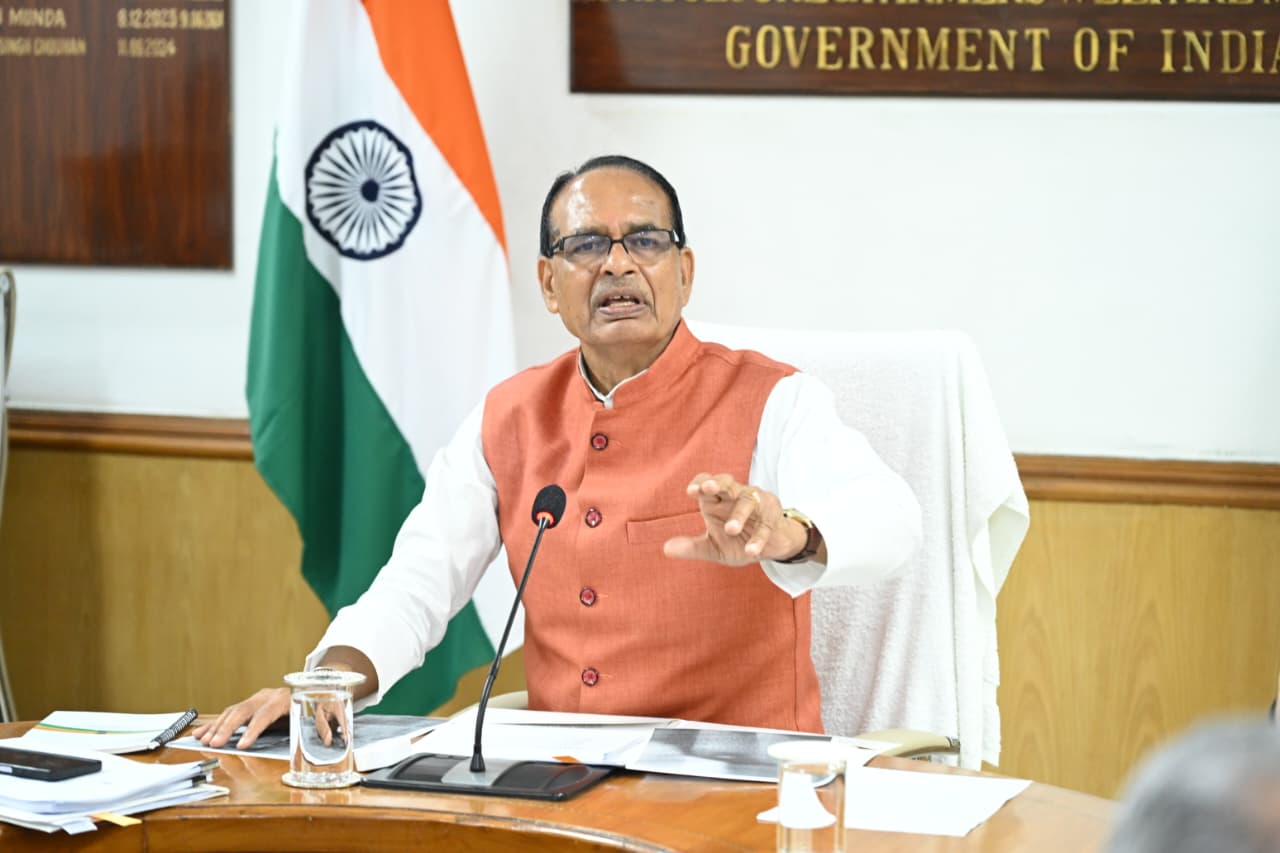
The government has approved a major ₹200 crore Banana Cluster project in Jalgaon, Maharashtra, aimed at strengthening agricultural infrastructure, boosting farmer incomes and enhancing export potential, Union Minister for Agriculture and Farmers Welfare and Rural Development Shivraj Singh Chouhan announced during an interaction with banana cultivators.
Addressing farmers on the occasion of Gudi Padwa, Shivraj Singh Chouhan highlighted Jalgaon’s prominence as a leading horticulture hub, often referred to as the Banana City, and reaffirmed the government’s commitment to transforming the agriculture sector through targeted infrastructure development and policy support.
Integrated Banana Cluster To Strengthen Value Chain
The newly approved Banana Cluster will focus on developing end to end infrastructure to improve production, post harvest management and market access. Key components of the project include promotion of Good Agricultural Practices, mechanisation, bio control measures, fruit covering techniques and pre cooling facilities.
The project will also create essential post harvest infrastructure such as cold storage units, ripening chambers, refrigerated transport systems, processing units and export enabling facilities. These interventions are expected to reduce post harvest losses, improve quality standards and enhance the global competitiveness of banana produce from the region.
Financial support for these facilities will be extended under the Mission for Integrated Development of Horticulture and the Agriculture Infrastructure Fund, ensuring that farmers directly benefit from subsidies and improved access to modern infrastructure.
Addressing Price Disparity Between Farmers And Markets
Shivraj Singh Chouhan expressed concern over the persistent gap between farm gate prices and retail prices in urban markets. He noted that farmers are often forced to sell produce at low rates while consumers pay significantly higher prices, indicating inefficiencies in the supply chain.
He assured that both the central and state governments will work together to develop mechanisms that ensure fair price realisation for farmers by improving market linkages, strengthening infrastructure and reducing intermediary inefficiencies.
Alternative Price Support Model Under Consideration
The minister stated that perishable crops such as bananas cannot be effectively covered under traditional Minimum Support Price mechanisms due to storage limitations. To address this, the government is exploring alternative models to protect farmer incomes.
Under the proposed approach, farmers would receive compensation if market prices fall below a predetermined benchmark or cost level. He noted that similar pilot models have already been implemented for crops such as chillies and mangoes, and further refinements are being developed under the PM AASHA scheme.
Call For Natural Farming To Protect Soil Health
Highlighting the long term risks associated with excessive use of chemical fertilisers and pesticides, Shivraj Singh Chouhan urged farmers to adopt natural farming practices. He pointed out that declining organic carbon levels, loss of beneficial insects and deterioration in soil quality are emerging challenges for sustainable agriculture.
He encouraged farmers to begin with small scale adoption of natural farming methods, expressing confidence that properly implemented practices can maintain or even improve productivity while restoring soil health.
Roadmap For Global Recognition Of Jalgaon Bananas
The minister said a comprehensive roadmap will be prepared to address the concerns raised by farmers and to strengthen Jalgaon’s position in global markets. Efforts will be made to enhance branding, quality standards and export linkages to give Jalgaon bananas a stronger international identity.
He reiterated the government’s commitment to ensuring prosperity and self reliance for farmers through infrastructure development, policy innovation and sustainable agricultural practices.