
India’s largest electricity focused global event, Bharat Electricity Summit 2026, commenced at Yashobhoomi in New Delhi with a strong focus on accelerating clean energy transition, strengthening infrastructure and unlocking large scale investment opportunities in the power sector.
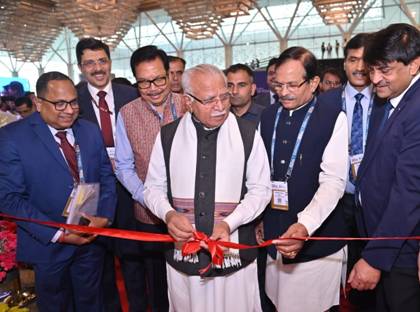
The four day conference cum exhibition was inaugurated by Union Minister of Power and Housing and Urban Affairs Manohar Lal in the presence of Pralhad Joshi Minister of New and Renewable Energy and Consumer Affairs Food and Public Distribution, Shripad Naik Minister of State for Power and New and Renewable Energy, Pankaj Agarwal Secretary Ministry of Power and Ghanshyam Prasad Chairperson Central Electricity Authority.
Major Policy Reports Unveiled For Future Energy Planning
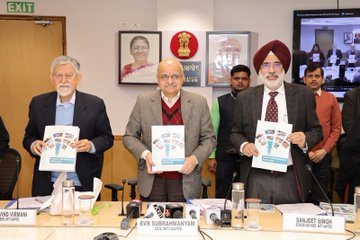
During the inaugural session, the Ministry of Power released two key strategic documents that outline India’s long term energy roadmap.
The National Resource Adequacy Plan provides a comprehensive framework to meet rising electricity demand through a balanced mix of energy sources, while the Transmission Plan charts integration of over 900 gigawatt of non fossil fuel capacity by 2035 36.
The transmission blueprint includes development of 137500 circuit kilometers of transmission lines and 827600 MVA of substation capacity, with an estimated investment of 7.93 lakh crore. These measures are aimed at ensuring seamless evacuation of renewable energy and enhancing grid resilience.
Power Sector Transformation Gains Momentum
Manohar Lal highlighted India’s rapid progress in the energy sector, noting that the country has already achieved its Nationally Determined Contribution target of 50 percent cumulative non fossil fuel capacity ahead of schedule.
He pointed to key achievements including expansion of transmission infrastructure by 72 percent to over 5 lakh circuit kilometers, meeting peak power demand of 250 gigawatt in 2024 25 and readiness to handle demand of 270 gigawatt and beyond.
India’s solar capacity has grown significantly from 2.8 gigawatt to more than 143 gigawatt, reflecting the country’s shift towards renewable energy. The minister also underlined investment opportunities of around 200 lakh crore in the power sector over the next two decades.
He emphasised that India is positioning itself as a future global exporter of affordable energy, supported by initiatives such as cross border electricity connectivity and undersea transmission networks.
Balanced Transition Between Thermal And Renewable Energy
Pralhad Joshi stated that while thermal power continues to provide stability to the grid, renewable energy represents the long term sustainable pathway. He stressed the need for a balanced transition driven by scale, speed and skill.
Shripad Naik highlighted that India’s installed power capacity has more than doubled since 2014, with renewable energy witnessing rapid growth. He noted that over 32 lakh households and 23 lakh farmers are actively contributing to clean energy generation, indicating a shift towards a decentralised and participatory energy ecosystem.
Strong Grid Infrastructure And Technology Push
Pankaj Agarwal said India now operates one of the world’s largest synchronised power grids, supported by advanced balancing systems, smart meter deployment and robust policy frameworks.
He noted that the transformation of the power sector has been driven by policy clarity, innovation and large scale infrastructure development, positioning India as a global model in energy transition.
Global Platform For Collaboration And Innovation
The Bharat Electricity Summit 2026 is expected to host more than 100 high level sessions, over 300 speakers and representatives from more than 80 countries. The event includes over 500 exhibitors, including more than 100 startups, and is expected to attract over 25000 visitors.
The summit serves as a key platform for policymakers, industry leaders, investors and technology providers to collaborate on shaping the future of the electricity sector, with a focus on innovation, affordability and global partnerships.
The event underscores India’s commitment to building a resilient, sustainable and investment ready power ecosystem aligned with its vision of becoming a developed nation by 2047.