
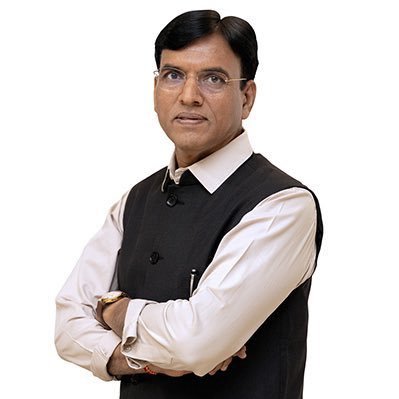
The proposed National Youth Policy 2026 seeks to align the aspirations, capabilities and participation of India’s youth with the national vision of Viksit Bharat 2047, marking a shift towards a structured and outcome driven framework for youth development, Minister of Youth Affairs and Sports Mansukh Mandaviya informed the Rajya Sabha.
The policy builds upon the foundation of the National Youth Policy 2014 and introduces a more targeted and measurable approach, focusing on holistic human capital development that integrates economic productivity with leadership, civic responsibility and sustainability.
Six Core Focus Areas Defined
The policy outlines six key domains to guide youth development across the country:
Youth leadership and volunteerism
Education
Skilling and employment readiness
Entrepreneurship and innovation
Health and well being
Sports and recreation
Environment and climate action
These focus areas are designed to ensure balanced development by addressing both economic and social dimensions, while fostering responsible and engaged citizenship among young people.
MY Bharat Platform Anchors Youth Engagement
A major institutional feature of the policy is the MY Bharat platform, which serves as a digital ecosystem for youth participation and engagement.
The platform enables registration, profiling and active involvement of youth in experiential learning programmes, volunteering initiatives and multi stakeholder activities. By integrating opportunities across ministries and organisations, it acts as a central interface for capacity building and youth empowerment.
MY Bharat also functions as a data driven governance tool by capturing real time indicators such as participation levels, registrations and institutional collaborations. This enables evidence based policymaking and improves programme design and implementation.
The platform promotes a culture of Seva Bhav and positions youth as active contributors to national development rather than passive beneficiaries.
Inclusive And Consultative Policy Framework
The formulation of the National Youth Policy 2026 has followed a consultative approach, incorporating feedback from citizens through platforms such as MY Gov and MY Bharat, along with inputs from ministries and State and Union Territory level consultations.
This inclusive process ensures that the policy reflects diverse regional, social and demographic perspectives, making it more responsive to the needs of India’s youth population.
Strengthened Monitoring And Evaluation Mechanisms
The policy framework is supported by analytical tools such as the Youth Development Index 2017 prepared by Rajiv Gandhi National Institute of Youth Development, which provides comparative insights on education and health indicators aligned with global benchmarks.
Monitoring and evaluation systems have been strengthened through real time dashboards integrated with the MY Bharat platform and through the Output Outcome Monitoring Framework of NITI Aayog. These mechanisms enable systematic tracking of youth engagement and programme outcomes.
Towards Participatory And Data Driven Youth Governance
The National Youth Policy 2026 represents a transition towards a digitally enabled, participatory and outcome oriented governance model. It aims to harness the demographic potential of India by equipping young people with skills, opportunities and platforms for active engagement.
By positioning youth as key stakeholders in the development process, the policy seeks to contribute to long term economic growth, social transformation and national progress in line with the vision of Viksit Bharat 2047.