
India has strengthened its energy supply management and public outreach measures amid ongoing developments in West Asia, with increased PNG adoption, stable fuel availability and intensified enforcement actions to curb hoarding and black marketing, according to an inter ministerial briefing held at the National Media Centre.
Senior officials from the Ministries of Petroleum and Natural Gas, Ports Shipping and Waterways, and External Affairs reviewed the situation and outlined coordinated steps to ensure uninterrupted fuel supply, maritime safety and support to Indian nationals in the region.
PNG Expansion And Decline In Panic Buying
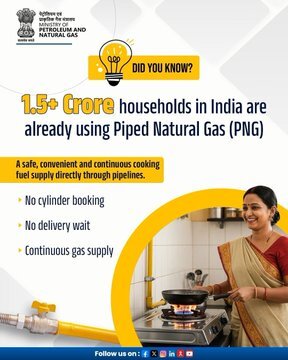
The government reported a significant increase in the shift towards piped natural gas, with over 13700 new PNG connections issued in recent days and more than 7300 consumers transitioning from LPG to PNG. This has helped reduce pressure on LPG demand.
Panic bookings of LPG have declined sharply from 89 lakh on March 13 to around 55 lakh, indicating stabilisation of consumer behaviour. Domestic LPG deliveries continue without disruption, and no dry outs have been reported at distributorships.
Domestic LPG production from refineries has been increased by around 40 percent compared to pre crisis levels, while petrol and diesel supplies remain stable with adequate inventories across the country.
Measures To Ensure Energy Security
The government has prioritised supply to key sectors, ensuring 100 percent supply of PNG and CNG to households and transport, while regulating supply to industrial and commercial users at around 80 percent.
City Gas Distribution entities have been directed to accelerate PNG expansion, prioritise commercial establishments and reduce timelines for new connections. Incentives are being offered by companies including IGL, MGL, GAIL Gas and BPCL to encourage adoption.
States and Union Territories have been urged to expedite approvals for CGD expansion and facilitate the transition from LPG to PNG, with an additional 10 percent allocation of commercial LPG linked to reform measures.
Alternate fuels such as kerosene and coal are also being made available, with the Ministry of Coal supporting increased supplies to States. An additional allocation of 48000 kilolitres of kerosene has been provided, with 15 States and Union Territories issuing allocation orders.
Enforcement Intensified To Prevent Malpractices
Authorities have stepped up enforcement actions across the country to curb hoarding and black marketing. In the past 24 hours alone, over 4500 raids have been conducted and around 4000 cylinders seized.
Public sector oil marketing companies have carried out more than 1800 surprise inspections at retail outlets and LPG distributorships to ensure compliance and smooth supply.
States and Union Territories have been directed to maintain strict vigilance under relevant laws, conduct regular inspections and ensure uninterrupted movement of LPG tankers and cylinders.
Maritime Operations Remain Stable
Despite the evolving situation in the Persian Gulf, India’s maritime sector continues to function smoothly with no congestion reported across ports.
Currently, 22 Indian flagged vessels with 611 Indian seafarers are operating in the western Persian Gulf region. The Directorate General of Shipping is monitoring operations round the clock and has handled 3550 calls and 6748 emails since activation of its control room.
More than 513 Indian seafarers have been safely repatriated so far, including 25 in the past 24 hours. Ports across Gujarat, Maharashtra, Goa, Kerala, Andhra Pradesh and Puducherry are functioning normally, with additional storage capacity created at major ports to handle cargo efficiently.
Diplomatic Outreach And Evacuation Efforts
The Prime Minister held discussions with leaders of Oman, Malaysia, France, Jordan and Qatar, emphasising dialogue and diplomacy to de escalate tensions and restore peace and stability in West Asia.
He reiterated India’s position on ensuring safe navigation through the Strait of Hormuz and condemned attacks on energy infrastructure.
The Ministry of External Affairs continues to monitor the situation closely, with Indian missions operating round the clock to assist citizens. Since February 28, around 300000 passengers have returned to India from the region.
Evacuation efforts include movement of 913 Indian nationals from Iran to neighbouring countries and safe return of 284 Indian pilgrims. Special flight operations continue from multiple locations despite airspace restrictions in some countries.
Public Advisory And Ongoing Measures
Citizens have been advised to rely on official information, avoid panic buying and use digital booking platforms for LPG services. The government has encouraged the use of alternate fuels such as PNG and electric or induction cooktops to conserve energy.
The coordinated response across ministries highlights the government’s focus on maintaining supply stability, safeguarding citizens and ensuring continuity of essential services during the evolving geopolitical situation.