
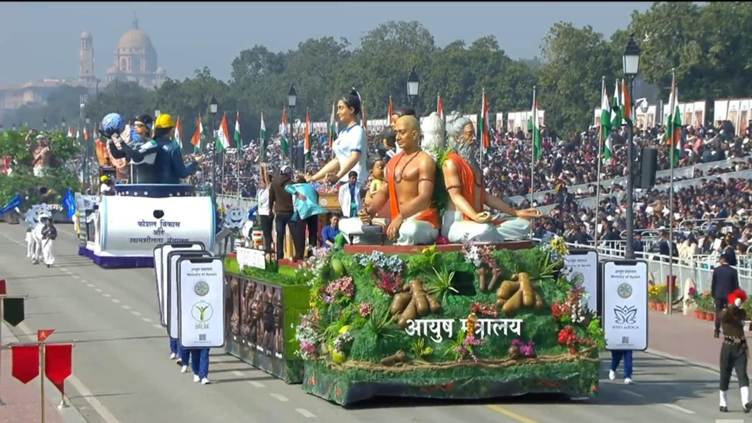
The Ministry of Ayush tableau featured at the 77th Republic Day Parade at Kartavya Path in New Delhi presented a comprehensive narrative of India’s traditional systems of medicine seamlessly integrated with modern technology and last-mile wellness delivery. The tableau, conceptualised under the National Ayush Mission, was based on the theme Ayush ka Tantra Swasthya ka Mantra, reflecting India’s people-centric approach to health and the vision of Aatmanirbhar Bharat.
The presentation highlighted India’s civilisational understanding of health and well-being, demonstrating how traditional knowledge systems including Ayurveda, Yoga, Naturopathy, Unani, Siddha, Sowa Rigpa and Homoeopathy continue to strengthen preventive, promotive and community-based healthcare across the country. The tableau underscored the relevance of these systems in addressing contemporary health challenges through holistic and sustainable practices.
The front section of the tableau symbolically depicted the foundational roots of Ayush, portraying India’s traditional health wisdom in harmony with nature. Sculptural elements and motifs of medicinal plants illustrated the intrinsic link between human health and the natural ecosystem, emphasising sustainability, balance and holistic living as core principles of Ayush.
Progressing along the tableau, visual elements highlighted the structured integration of Ayush into the national healthcare framework through the National Ayush Mission. These included depictions of Ayushman Arogya Mandir Ayush, capacity-building at institutions, and initiatives in education and research aimed at improving access, quality and standardisation of Ayush services nationwide.
The tableau also portrayed India’s emergence as a digitally enabled wellness leader. Technology-driven initiatives under the National Ayush Mission were showcased through visuals representing digital platforms supporting maternal and child health, elderly care and the early introduction of Ayush concepts in schools. These elements conveyed a comprehensive life-cycle approach to healthcare delivery.
An artistic segment representing Arishadvarga, the six inner challenges, symbolised the role of Ayush practices in nurturing mental balance, emotional well-being and inner discipline. This segment highlighted the importance of preventive healthcare and self-care in addressing lifestyle-related disorders prevalent in modern society.
Community participation formed a central theme of the tableau, with visuals of Yoga practices, commonly used Ayush medicines and meditative postures symbolising harmony of body, mind and spirit. These depictions reinforced Ayush as an inclusive and participatory health movement rooted in everyday life.
Digital innovation in wellness delivery was further emphasised through representations of initiatives such as Supraja, Vayomitra and Ayurvidya, supporting maternal and neonatal care, elderly well-being and school-level health education. Together, these elements conveyed a balanced and inclusive approach to healthcare across all stages of life.
The diversity of India’s therapeutic traditions was highlighted through three-dimensional depictions of therapies such as Marma, Shirodhara and Cupping, along with references to pioneers of major Ayush systems who contributed to the global dissemination of traditional medical knowledge. Interactive mascot elements representing key Ayush digital applications including Y Break Pro, WHO mYoga, Namaste Yoga and Prakriti Parikshan illustrated the expanding role of technology in promoting preventive healthcare and citizen engagement.
The tableau concluded with a depiction of an Ayurveda college, symbolising institutional continuity, education and excellence. This closing segment reinforced Ayush as a dynamic and evolving pillar of India’s public health system and a growing contributor to global wellness leadership.