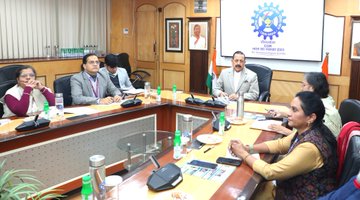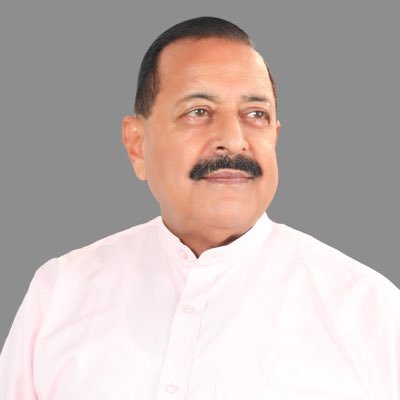

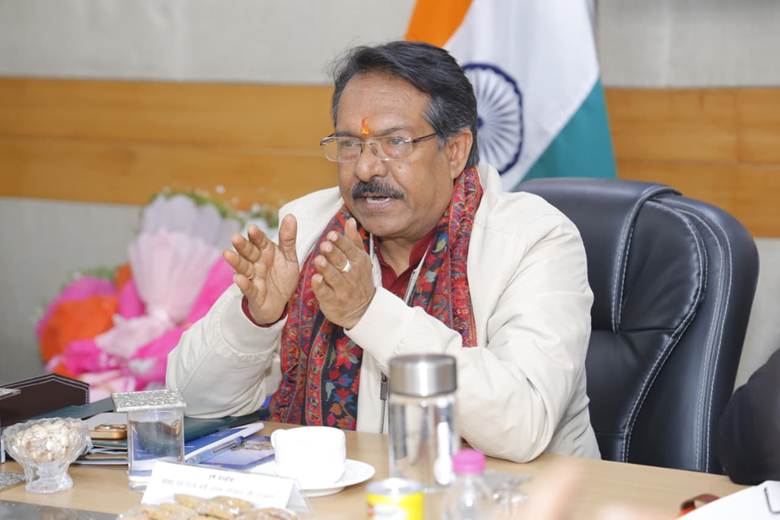
Union Minister of State for Road Transport and Highways and Corporate Affairs Harsh Malhotra on 10 January 2026 chaired a high level review meeting to assess the progress of key road infrastructure projects of the National Highways Authority of India and the Ministry of Road Transport and Highways, along with decongestion initiatives for the National Capital.
The meeting, held in New Delhi, was attended by the Member of Parliament from West Delhi Kamaljeet Sehrawat, the Chief Secretary of Delhi, the Secretary of the Ministry of Road Transport and Highways and senior officials from the Ministry of Housing and Urban Affairs, NHAI, the Government of the National Capital Territory of Delhi, Delhi Development Authority, Delhi Police, Delhi Jal Board, Delhi Transport Department and other concerned agencies.
Opening the discussion, Malhotra said Delhi, as the nation’s capital, must reflect the vision of a developed India through modern, safe, seamless and environment friendly mobility systems. He reiterated that transforming Delhi into a decongested, well connected and future ready city is central to improving the quality of life for citizens and commuters.
The minister outlined four pillars for building a developed and citizen centric Delhi: infrastructure that anticipates future demand, integrated planning linking highways with urban roads and public transport, sustainable mobility to reduce emissions and people first design prioritising safety, accessibility and convenience.
Reviewing secondary service roads along the Urban Extension Road II, officials informed that the project is currently at the detailed project report stage. Taking note of citizen concerns related to local access, safety and integration with nearby colonies, commercial areas and institutions, the minister directed the Delhi Development Authority to take urgent action. He assured that NHAI would complete its responsibilities within stipulated timelines and stressed the need for strong inter agency coordination to ensure safety, durability and effective decongestion.
Traffic congestion in the Dwarka sub city following the opening of UER II was also discussed. While the road has been constructed in line with the DDA Master Plan, the minister noted that traffic dispersal into internal sectors requires immediate planning and execution. He asked DDA, the Municipal Corporation of Delhi, the Public Works Department and other stakeholders to explore measures such as diverting through traffic, strengthening links to airport and Gurugram corridors, integrating metro and public transport nodes and adopting intelligent traffic management systems.
Malhotra reviewed the status of three major road corridors handed over to NHAI from the Public Works Department for maintenance, repair and widening. These include Mathura Road from Ashram to Badarpur Border, Old Delhi Rohtak Road from Punjabi Bagh to Tikri Border and Mehrauli Gurugram Road from Mehrauli to Gurugram, covering a total length of 33 kilometres. He directed officials to expedite these projects within fixed timelines to ease congestion on critical arterial routes.
The minister also reviewed the Delhi Decongestion Plan, underlining that easing congestion leads to reduced emissions, lower travel time and logistics costs, improved road safety and higher economic productivity. Key components of the plan include extension of the Delhi Amritsar Katra Expressway to UER II, extension of UER II to the Delhi Dehradun Expressway to function as a bypass, and construction of a road tunnel from the Dwarka Expressway to Nelson Mandela Marg in Vasant Kunj.
A comprehensive review was also conducted of projects sanctioned for Delhi under the Central Road Infrastructure Fund and Setu Bandhan schemes, which strengthen the secondary road network supporting national highways. Officials presented updates on ongoing and completed works, and the minister directed that all sanctioned projects be completed within stipulated timeframes.
Pending inter agency issues related to land handover, right of way clearances and coordination among DDA, NHAI, PWD, Delhi Police, Delhi Jal Board, Delhi Transport Department and IGL were discussed in detail. The minister directed all agencies to adopt a time bound approach to approvals and maintain continuous coordination, with unresolved issues to be escalated promptly.
The Chief Secretary of Delhi emphasised the importance of coordinated and time bound execution to unlock benefits for citizens and assured full cooperation from the Delhi Government.
Concluding the meeting, Malhotra reaffirmed the Centre’s commitment to working in close partnership with all stakeholders to realise the objective of a developed and decongested Delhi and thanked all departments for their constructive participation.