
The 68th meeting of the Executive Committee of the National Mission for Clean Ganga was held with a renewed focus on ensuring uninterrupted and unpolluted flow of the Ganga and its tributaries through ecological restoration, biodiversity conservation, and timely execution of infrastructure projects. The meeting was chaired by the Director General of the National Mission for Clean Ganga and brought together senior officials from the Ministry, mission directorates, and participating State agencies.
The deliberations placed strong emphasis on river ecology, conservation of biodiversity, adoption of innovative nature based solutions, protection of cultural heritage linked to rivers, and removal of implementation bottlenecks to ensure faster and more effective project delivery across the Ganga basin.
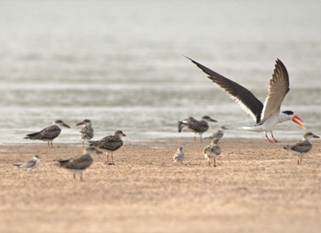
A major decision taken at the meeting was the approval of a new project aimed at conserving endangered bird species in the Ganga basin, particularly sandbar nesting birds such as the Indian Skimmer. The initiative focuses on protecting and restoring breeding habitats through long term monitoring, scientific assessment, and community participation. Nest monitoring activities will continue in the Chambal and Lower Ganga stretches and will be expanded to new locations including Bijnor, Narora, and Prayagraj. Trained local communities will be actively involved in safeguarding sensitive sandbars, reducing human disturbance, and supporting awareness and capacity building efforts. This project marks the first dedicated avifauna conservation initiative under the mission and complements ongoing efforts for the protection of dolphins, fishes, turtles, and other riverine fauna, thereby completing the biodiversity conservation framework for the river ecosystem.
The Executive Committee also accorded revised administrative and expenditure approvals for multiple projects to ensure smooth implementation and sustained momentum on the ground. These approvals are intended to address operational challenges, improve efficiency, and ensure optimal utilisation of resources. The projects facilitated through these decisions include a faecal sludge and septage treatment plant in Mirzapur, rehabilitation of sewerage infrastructure and renovation of the main sub station in Kanpur, and deployment of trash skimmers to maintain surface cleanliness of the Ganga in Varanasi. In Bihar, approvals covered interception and diversion and sewage treatment projects in Danapur, Phulwari Sharif, and Fatuha, while in Jharkhand a similar project in Phusro was cleared. Minor technical modifications were also approved for major pollution abatement projects at Garden Reach and Kooraapukur in West Bengal.
An important focus of the meeting was the promotion of innovative pollution abatement through nature based solutions. The Executive Committee approved projects for in situ treatment and rejuvenation of drains at Shastri Park, Gaushala, and Kailash Nagar and Ramesh Nagar in Delhi, which discharge into the Yamuna. These eco friendly interventions aim to treat raw sewage at the source using rock filters, stone masonry, and aquatic plants, reducing pollutant load before it enters the river and demonstrating scalable models for sustainable urban water management.
The meeting also endorsed a comprehensive master plan to restore the natural sanctity and cultural identity of the origin site of the Gomti River at Pilibhit in Uttar Pradesh. The plan integrates catchment area treatment, rejuvenation of water sources, nature based sewage treatment for Madho Tanda town, and development of supporting infrastructure. It includes creation of ghats and aarti platforms, rejuvenation of lakes, conservation of turtle habitats, and development of facilities such as a crematorium, Panchvatika, and yoga mandap to enhance the spiritual and cultural significance of the site.
Through these decisions, the Executive Committee reinforced the mission’s commitment to river rejuvenation by strengthening biodiversity conservation, mainstreaming nature based solutions, preserving cultural heritage, and ensuring timely execution of critical projects across the Ganga basin.