
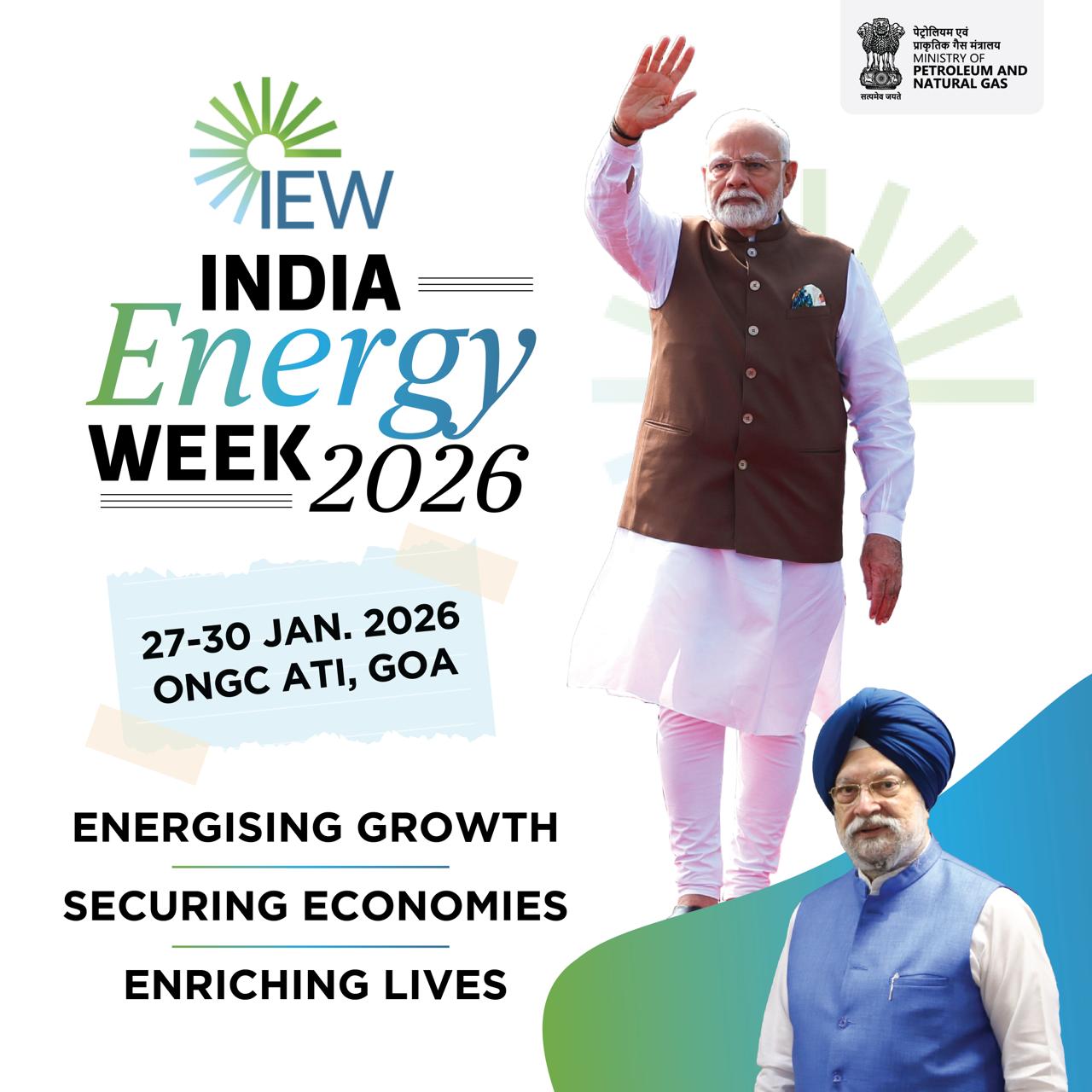
A high-level Leadership Panel at India Energy Week 2026 underscored the growing importance of natural gas and liquefied natural gas as central pillars of a pragmatic, secure and inclusive global energy transition. The discussion highlighted how natural gas can play a decisive role in reducing emissions, strengthening energy resilience and supporting economic growth at a time of heightened geopolitical uncertainty and volatile energy markets.
The panel, titled Repositioning Natural Gas and Energy Transformation Pragmatic Bridging Resource to Pivotal Destination Fuel, brought together senior global energy leaders including Shri Arvinder Singh Sahney, Chairman, IndianOil Corporation Limited; Shri Sandeep Kumar Gupta, Chairman and Managing Director, GAIL India Limited; Ms Fatema Al Nuaimi, Chief Executive Officer, ADNOC Gas; and Mr Steven Kobos, President and Chief Executive Officer, Excelerate Energy.
Panellists agreed that natural gas and LNG are no longer viewed solely as transitional fuels, but are increasingly being recognised as long-term, foundational components of modern and diversified energy systems. With global gas demand projected to rise by an estimated 30 to 35 per cent by 2050, speakers identified coal-to-gas switching as the most immediate and scalable pathway to achieve meaningful emissions reductions while maintaining grid stability and energy affordability.
From the Indian perspective, the discussion highlighted the country’s rapidly expanding gas ecosystem, supported by rising domestic production, diversified LNG sourcing strategies and sustained investments in pipelines, terminals and city gas distribution networks. Speakers noted that natural gas is expected to play a critical role across multiple sectors including fertilisers, industrial feedstock, transport fuels and urban household energy access, thereby contributing to both environmental goals and socio-economic development.
The panel reiterated that the global energy transition must be approached through the lens of energy addition rather than abrupt replacement. Properly abated gas-fired power generation, supported by efficiency improvements, methane emissions mitigation and emerging carbon management technologies, was identified as an essential complement to renewable energy. Such flexibility and dispatchability were described as crucial for balancing grids as electrification expands and renewable penetration increases.
Affordability emerged as a central theme during the discussion. Panellists acknowledged that high and volatile prices remain a barrier to wider adoption of natural gas, particularly in price-sensitive emerging markets. They stressed that gas and LNG must become more cost-competitive to effectively displace coal and to remain viable alongside renewables and alternative low-carbon fuels.
To address these challenges, the panel emphasised the importance of policy stability, predictable regulatory frameworks and access to long-term financing. Reduced infrastructure costs, the development of a liquid and transparent global gas market, and renewed upstream investment were identified as critical to bridging emerging supply gaps and ensuring reliable availability.
The discussion also highlighted the need to expand LNG import and regasification capacity, including floating storage and regasification units, pipeline networks and last-mile connectivity. Panellists noted that such infrastructure is essential to ensure that growing global gas supplies translate into accessible, affordable and secure energy for consumers and industries.
The session concluded with a shared view that natural gas, when deployed responsibly and supported by sound policy and investment, can serve as a cornerstone of a balanced energy transition. By combining emissions reduction with energy security and economic growth, gas and LNG were positioned as indispensable elements of the global pathway towards a more sustainable and resilient energy future.
India Energy Week continues to serve as a critical global platform for advancing dialogue, investment and collaboration across the energy value chain, bringing together policymakers, industry leaders and innovators to shape practical and inclusive solutions for the world’s evolving energy needs.