
India has taken a significant step towards sustainable marine transportation with the Technology Development Board under the Department of Science and Technology extending support to Vijai Marine Services Private Limited of Goa for the development of an electric passenger vessel under the Indo Canada Collaborative Industrial Research and Development Programme. The initiative reinforces the national commitment to clean mobility innovation technological self reliance and environmentally responsible growth in the maritime sector.
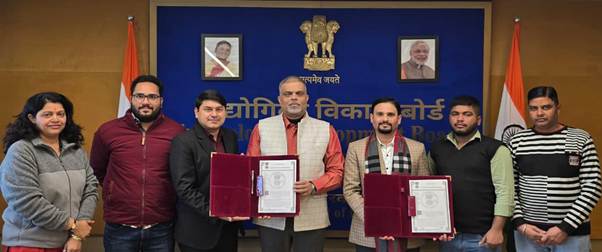
The agreement signed between the Technology Development Board and Vijai Marine Services Private Limited supports a project titled The Smart Sea Project by VACE. The programme is part of a structured bilateral cooperation between the Department of Science and Technology Government of India and the National Research Council Canada along with Global Affairs Canada. The collaboration is designed to promote joint industrial research leading to market ready technologies commercial deployment and long term societal benefit.
At the core of the project is the development and demonstration of a twenty passenger electric boat tailored for Indian inland and coastal waterways. The vessel is expected to contribute to reduced dependence on fossil fuels lower emissions and quieter operations while supporting sustainable tourism and clean transport solutions across rivers backwaters and near shore routes. The project aligns with national priorities of promoting green waterways and adopting energy efficient alternatives in the transport ecosystem.
Under the initiative Vijai Marine Services will design and construct a high strength low weight fibre reinforced plastic vessel conforming to Indian Register of Shipping standards. The vessel will integrate advanced electric propulsion systems battery packs and a digital console interface developed in collaboration with Canadian technology partner ACEL Power Incorporated. The joint development model combines Indian shipbuilding expertise with international electric propulsion innovation ensuring suitability for domestic operating conditions.
The project is expected to establish a scalable technology platform for clean marine mobility offering reduced noise minimal environmental impact and improved operational efficiency. The electric propulsion system will be optimised for feeder services water taxi operations and tourism linked transport in ecologically sensitive regions where conventional diesel vessels pose environmental risks.
Vijai Marine Services Private Limited which operates Vijai Marine Shipyards is an ISO certified Indian shipyard with a proven track record in the design construction commissioning and delivery of marine craft. Through this project the company aims to strengthen domestic capability in electric marine propulsion and advanced vessel construction techniques while contributing to India’s clean energy transition.
Key outcomes of the project include the development of electric boats suitable for water taxis eco tourism circuits and river based passenger movement support for responsible tourism through low noise non polluting vessels adoption of advanced construction methods such as carbon fibre reinforced plastics and vacuum infusion techniques and demonstration of endurance and reliability comparable to traditional diesel powered boats.
Speaking on the occasion the Secretary of the Technology Development Board highlighted that the Indo Canada collaborative programme is designed to encourage industry driven research that results in deployable solutions. The project was described as a meaningful step towards promoting green waterways strengthening marine engineering innovation and building domestic capacity in advanced mobility technologies.
Representatives of Vijai Marine Services noted that the support from the Technology Development Board would accelerate the deployment of commercially viable electric boats designed specifically for Indian conditions. They emphasised that the initiative would contribute to safer cleaner and more efficient water transport while opening new opportunities in sustainable tourism and inland navigation.
The project marks an important milestone in India’s efforts to modernise its maritime transport infrastructure through clean technology partnerships and reinforces the role of international collaboration in advancing sustainable industrial innovation.