
India is expanding its artificial intelligence ecosystem with indigenous models, large scale compute infrastructure and skill development initiatives under the IndiaAI Mission launched in March 2024. The programme aims to strengthen the country’s AI capabilities, improve access to technology and promote innovation focused on India specific challenges across sectors.
Information submitted in the Rajya Sabha on March 13 by Union Minister of State for Electronics and Information Technology Jitin Prasada said that multiple initiatives under the mission are now supporting AI innovation, research and application development while strengthening India’s position in emerging technologies.
One of the central pillars of the initiative is AIKosha, a national datasets and AI resources platform designed to provide access to models, development tools and datasets across sectors such as healthcare, agriculture and education. The platform functions as a shared repository of AI models that developers can use to build new applications and solutions.
AIKosha includes text to speech models in several Indian languages including Bengali, Gujarati, Kannada and Malayalam. Indigenous models being developed under the IndiaAI Mission, including those by Sarvam, are also available on the platform. The system provides secure API based access along with an AI sandbox environment where developers can train and experiment with models. The platform can be accessed through the website https://aikosh.indiaai.gov.in/home
.
Capacity building is also being expanded through the iGOT Karmayogi platform which offers more than 176 courses on artificial intelligence and emerging technologies created by academic institutions, organisations and subject experts. These courses cover a wide range of topics including AI governance, generative AI, cybersecurity, data analytics and digital transformation.
According to the information presented in Parliament, these courses have collectively recorded 72,99,149 enrolments and 53,79,235 completions from registered learners. The YUVA AI for All course developed under the IndiaAI Mission is also available on the platform in English and Hindi. Together the two versions have recorded 1,28,848 enrolments and 83,010 completions so far.
The government has also launched the IndiaAI Startups Global programme in collaboration with Station F in Paris and HEC Paris to help Indian startups expand internationally. Ten Indian AI startups have been selected under the programme and are being supported to access global innovation ecosystems and explore opportunities in the European market.
These startups are working on solutions in areas such as governance, smart cities, document intelligence and enterprise automation. Their development work reflects the growing maturity of India’s AI startup ecosystem and its capacity to build deployment ready solutions for real world applications.
Under the IndiaAI Mission, 30 AI based applications are also being developed to address India specific challenges in critical sectors including agriculture, healthcare, climate change and disaster management. Sector specific hackathons and innovation challenges have been organised in collaboration with the Indian Cybercrime Coordination Centre, Geological Survey of India, Ministry of Ayush, Ministry of MSME, National Financial Reporting Authority and National Cancer Grid to promote targeted AI solution development.
From these innovation initiatives, 10 startups have been identified for scaling up their solutions.
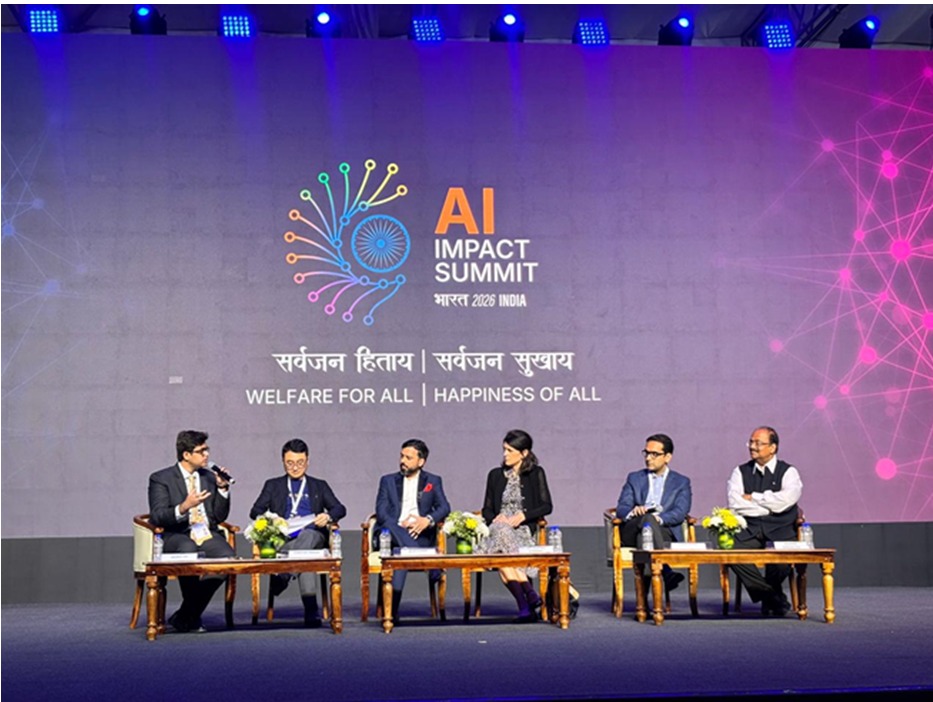
Work is also progressing on indigenous foundational AI models and large language models. Twelve teams have been shortlisted in the first phase of development. Models created by Sarvam AI, BharatGen, Gnani and Socket were launched during the IndiaAI Impact Summit 2026.
These models have shown strong performance on benchmarks for Indian languages and in some cases outperform leading frontier models for Indic language tasks. The models developed by Sarvam AI have demonstrated high accuracy in document understanding and processing of Indian languages.
To support AI research and development, the IndiaAI Mission has also created shared compute infrastructure that allows startups, researchers, academic institutions and government organisations to access high end computing resources.
More than 38,000 GPUs have been empanelled through 14 AI service providers to offer shared compute capacity. Data centres located in Mumbai, Navi Mumbai, Hyderabad, Bengaluru, Noida and Jamnagar are providing these services. Eligible users can access GPU resources through the IndiaAI Compute Portal at https://compute.indiaai.gov.in
.
The government considers compute infrastructure a public good necessary for inclusive AI development. In line with this approach, plans are underway to add another 20,000 GPUs under the mission to further expand computing capacity.
The Union Budget 2026–27 has also announced a long term tax holiday for investment in data centre and cloud infrastructure. During the IndiaAI Impact Summit 2026, investment commitments of around 250 billion dollars were announced for AI infrastructure, reflecting growing global confidence in India’s AI ecosystem.
Separately, the government informed Parliament that the country’s data centre capacity has expanded significantly in recent years. Capacity has increased from about 375 megawatts in 2020 to around 1500 megawatts by 2025.
To support AI workloads, 38,231 GPUs have been onboarded through 14 empanelled service providers under the AI compute capacity framework. These computing resources are being provided to startups, researchers and academic institutions at a subsidised average rate of 65 rupees per hour, which is roughly one third of the global average cost.
The rapid growth of AI infrastructure is expected to increase electricity demand from data centres to about 13.56 gigawatts by 2031–32. The government has stated that national transmission infrastructure is being expanded to meet this demand and ensure reliable power supply.
Parliament has also passed the Sustainable Harnessing and Advancement of Nuclear Energy for Transforming India Act to strengthen the nuclear energy ecosystem. The legislation is expected to support reliable power supply for emerging sectors including artificial intelligence and data centres through future deployment of small modular and micro nuclear reactors.
Water usage in data centres depends largely on cooling technologies. Groundwater extraction for industrial use is regulated under guidelines issued by the Ministry of Jal Shakti through notifications dated September 24, 2020 and March 29, 2023.
To reduce water consumption, the data centre industry is adopting advanced cooling systems including direct to chip liquid cooling, adiabatic cooling and immersion cooling. Operators are also deploying high density server racks to support high performance computing and AI workloads while improving energy and water efficiency.
The initiatives under the IndiaAI Mission and the expansion of data centre infrastructure are expected to play a significant role in building India’s domestic AI capabilities, promoting innovation and supporting large scale deployment of artificial intelligence technologies across sectors.
List of courses under the theme AI and Emerging Tech in Governance
AI Using Google Bard and ChatGPT for Beginners
Artificial Intelligence for Everyone
AI Essentials Leveraging Meta Bots for WhatsApp Automation
Artificial Intelligence AI
AI for Presentations
Introduction to Leveraging AI and ChatGPT
GenAI for Everyone
Evolution and Application of Artificial Intelligence
AI in Government Transforming Public Service Delivery
AI Ethics for Governance
Responsible AI in the Generative AI Era
The Role of Artificial Intelligence in Enhancing Cybersecurity
Governing Artificial Intelligence
Preventing Cybercrime AI based Threats and Measures
AI in Agri Food Systems
AI Applications in Governance
Basics of Artificial Intelligence AI
YUVA AI for All
Model Artificial Intelligence Law
DHFC Module 11 Application of AI and ML in Healthcare
Artificial Intelligence Technology Ethics and Impact
Artificial Intelligence L2
Gen AI and AR VR Fundamentals
Ensuring AI Governance of India
Adopting AI for Cyber Resiliency
AI Policies and Governance in India
GenAI Enhancing Public Sector Efficiency
Artificial Intelligence Enabling Education Outreach
Enhancing Microsoft Documents with Artificial Intelligence
Digital Transformation Building the Future with AI
Artificial Intelligence in Banking Financial Services and Insurance
Artificial Intelligence for Investments
Artificial Intelligence Driving Transformation at Speed and Scale
Introduction to Artificial Intelligence
Artificial Intelligence for Social Good
Artificial Intelligence in Finance
Foundations of Artificial Intelligence Applications and Ethics
Introduction to AI ML and Robotic Process Automation and Applications
Core Areas of Artificial Intelligence
AI in Infrastructure and Urban Development
Ethical AI Navigating Security and Privacy in the Digital Era
Artificial Intelligence Unlocking Potential and Securing Trust
Introduction to Blockchain Technology and Applications in Power Sector
Handling Data with Artificial Intelligence A Beginners Guide
Introduction to Artificial Intelligence and Machine Learning
Basics of Artificial Intelligence and Machine Learning in Defence
Generative AI in Public Policy and Governance
AI Applications in Government
Artificial Intelligence AI for Good Innovate Empower and Transform
Introduction to Robotic Process Automation RPA and AI Based Automation
Responsible AI in Action
AI Regulatory Policies and Implementation Considerations
Fundamentals of Generative Artificial Intelligence
Artificial Intelligence Chatbots and Agentic AI
Artificial Intelligence and Digital Public Infrastructure Stack
Process of Recoupment in Indian Railways
Artificial Intelligence for Accessibility and Inclusion
Artificial Intelligence Integration in Microsoft Office 365
Artificial Intelligence for Public Governance
Artificial Intelligence in Heritage Preservation
AI for Social Sector Transformation
Blockchain Basics
Sovereign Artificial Intelligence Models for India
Emerging Tech and Security in Indias Supply Chain Revolution
ChatGPT and Generative AI tools for Government Officials
AI led Digital Transformation in Urban Governance
AI led Digital Transformation in Agriculture
AI led Digital Transformation in Education
AI led Digital Transformation in Rural Development
Introduction to Emerging Technologies
Introduction to Emerging Technologies Hindi
ChatGPT and Generative AI tools An Introduction
AI for Digital Transformation Machine Learning and Deep Learning
AI led Digital Transformation in Healthcare
AI for Digital Transformation Computer Vision
Data Storytelling Narratives and Artificial Intelligence for Impact
Core Areas of Artificial Intelligence
Fundamentals of Generative Artificial Intelligence
Introduction to Artificial Intelligence
Generative AI in Public Policy and Governance
Advanced Prompt Engineering for Everyone
Advanced Data Analysis with Generative AI
AI for Energy and Biomedical Applications
AI for Education Intermediate
AI For Medical Treatment
AI for Medical Prognosis
AI for Medical Diagnosis
Build and Execute an Organisational AI Strategy
Blockchain Architecture Intermediate Concepts
Stay Safe in Cyber Space
Cyber Security Best Practices for an Organization
Cyber Security Basics
Cyber Vigilance What Every Digital Citizen Must Know
Cybersecurity
Cyber Security and Strategy
Cybercrime Investigation
Cybersecurity Basic Level
Awareness and Prevention of Cyberattacks
Cybercrime and Digital Forensics
Network and Telecom Security Cyber Security Ecosystem
Staying Safe in Cyberspace
The Role of Artificial Intelligence in Enhancing Cybersecurity
Digital Crime Scene Investigation in Cybercrime
Preventing Cybercrime AI based Threats and Measures
Cyber Shikshaa Fundamentals
Cyber Security
Cyber Security Intermediate level
Cyber Contraventions and Cyber Offences
Cybersecurity and E Governance Risks
Cyber Security Audit
Cyber Threats Facing the Nation Creating a Cyber Surakshit Bharat
Information Security Cyber Crimes Data Security Data Mining
Cybersecurity Fundamentals for Government Personnel
Operation Secure Bharat Responding to A Cyber Crisis
Understanding Cyber Security and Digital Privacy
Cyber Security Guide for Government Officials
Foundation Course on Cyber Security
Cyber Torts Cyber Contravention and Adjudicating Authorities
Cyber and CDR Analysis
A discussion on the Telecommunication Cybersecurity Rules 2024
Fundamentals of Cybersecurity
Integrated Digital Services and Cybersecurity
CERT In and Fundamentals of Cyber Hygiene
Jurisdictional Issues in Cyberspace
Introduction to Cyber Security
Baseline Cybersecurity Controls for MSMEs
Adopting AI for Cyber Resiliency
The Evolving Role of the CISO in light of Cyber Crime
Cybersecurity Phishing and Pharming Protecting Yourself
Cybersecurity Fundamentals for Leaders
Introduction to Cybersecurity Incident Response
Capital Market Cyber Resilience Lessons from BSE and ICCL
Future of Cyber Security Strategic Preparedness
Cyber Hygiene Essentials
AI Adoption and Cybersecurity in Banking
Cyber Resilience in Critical Infrastructure Systems
Strategic Procurement Law Cybersecurity and Emerging Threats
Cyber Crime Investigation Basic Course
TRINETRA End to End Cyber Security Solution
Digital Infrastructure and Cybersecurity Growth and Protection
Cyber security and Data Privacy Ethical and Legal Considerations
Cybercrime Investigation Fundamentals
Zero Trust Architecture and Strategic Cybersecurity Frameworks
Investigation of Cybercrime with a Focus on Women and Children
Building Resilient Cybersecurity Systems
Resilience in Banking Strategies and Cybersecurity
Cybersecurity Masterclass Managing Information and Risk
Cyber Resilience for Bharat
Digital Transformation with Cyber Secure Governance
Understanding Data Protection Rights and Cyber Threat Response
Introduction to Networking for Cyber Professionals
NotebookLM
Quantum Technologies
Deep Tech and India
Introduction to R and Python Programming
Data Science for Policy Makers Part 1
Data Analysis and Decision Making I
Data Analysis and Decision Making II
Data Analytics for Public Policymakers and Administrators
Advanced Concepts in SQL
Data Analysis and Visualization
Data Analysis using R
Database Design and Introduction to MySQL
R Programming
Tableau L2
Data Storytelling
Design Thinking for Data Professionals
Introduction to Smart Grids Information Technology Applications
Introduction to Smart Grid Technologies Operational Technology
Introduction to Blockchain Technology and Applications in Power Sector
Digital Technologies for Climate Resiliency
Introduction to Semiconductor Nanofabrication Technology
Foundations of Cybersecurity
Leading with Generative AI
Advanced Data Analysis with Generative AI
YUVA AI for All Hindi
Shortlisted AI solutions under the IndiaAI Application Development Initiative
Promoting regenerative agriculture practices for a sustainable future using AI
Krishi SahAIyak Farming Copilot
Kadalcompass
KissanCopilot Multilingual Multimodal personalized AI Assistant
Rapid chemical free soil testing solution using NIR Spectroscopy and AI ML models
AI deep tech driven quality assessment of Maize
AI Driven Live Fish Logistics and Mortality Reduction in Aquaculture
QScan
Heatwave Resilience Integrating AI based Advanced Forecasting for Extreme Heat Events
Multi Hazard Susceptibility Mapping
DeepFlood Rapid flood inundation mapping using Vision Transformers and Satellite Data
Moskeet Climate impact on mosquito borne diseases
End to End AI Cloud Platform for Radiology Diagnosis
NIDAAN Integrated lung health screening and tuberculosis detection through AI at national scale
Impactful AI solution preventing preventable blindness for socio economic transformation
AI Powered Wearable Technology for Detection and Diagnosis of Musculoskeletal Joint Health Pain
VoxelBox
Development of Ocellux An AI Based Solution for Enhanced Early Diabetic Eye Screening in India
Revolutionizing healthcare using doctor led AI
AI ML enabled MafPro device platform for cancer staging localization and margins
Readabled Online Dyslexia Training
Voice fusion AI
ScreenPlay digital game based screening tool for autism and related disorders
Jiveesha
Adaptive Learning and Detection for Specific Learning Disabilities
Special Educator AI
ConvoZen AI by NoBroker Technologies
AI contact center
Adalat AI AI solutions for Courts
Gov Civis Vote