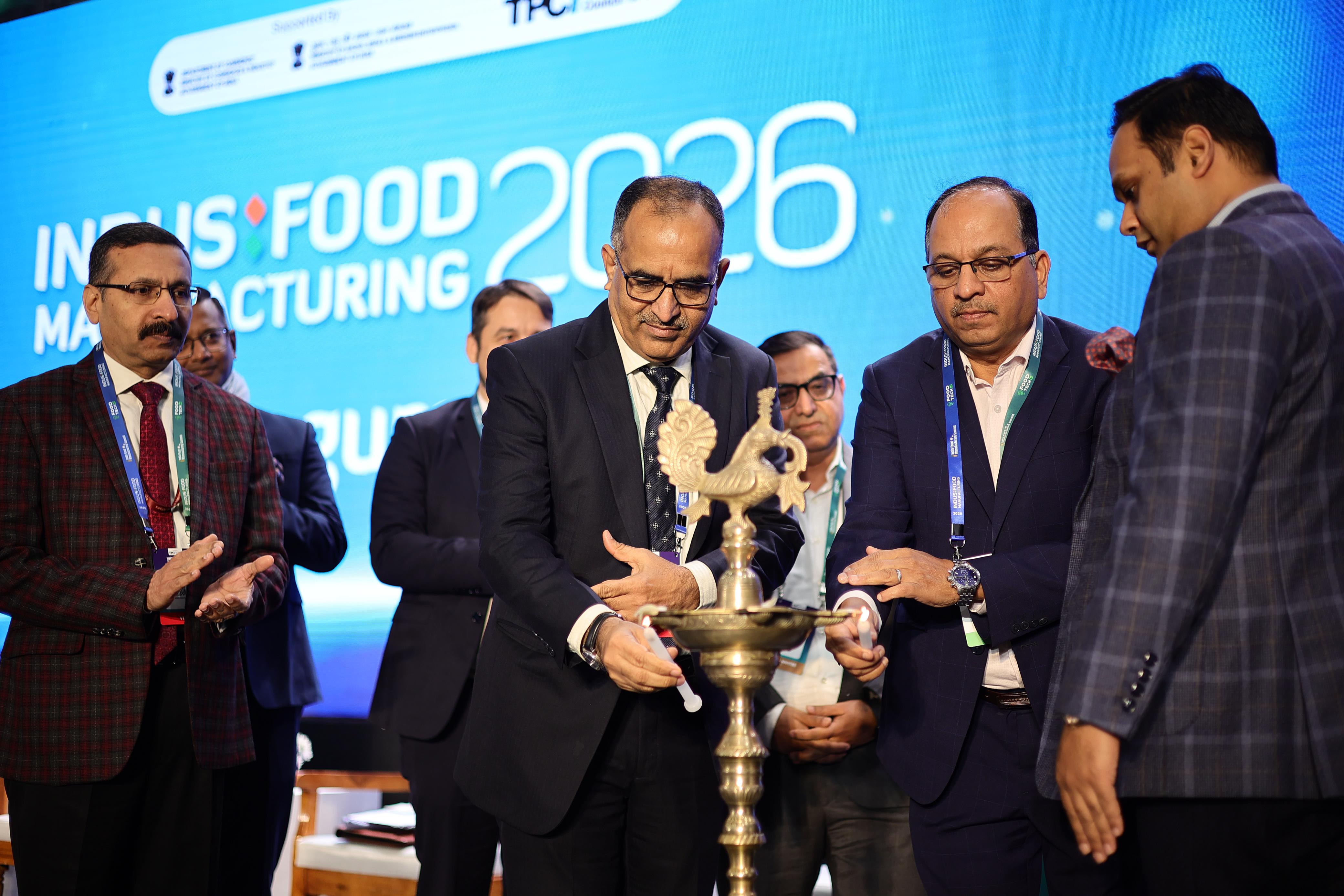

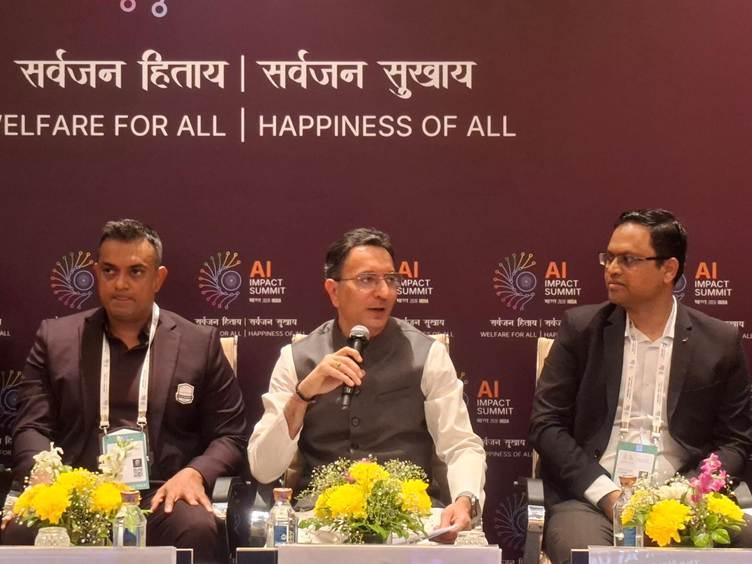
The inaugural day of the India AI Impact Summit 2026 brought together global policymakers, multilateral institutions, technology leaders, innovators and industry representatives, setting the stage for India’s ambitious vision to shape the future of artificial intelligence for both domestic and global benefit.
From responsible governance to mass skilling and digital sovereignty, the Day 1 deliberations reflected a coordinated push to transition from policy frameworks to institutional design and scalable infrastructure planning. The discussions reinforced India’s positioning not merely as a technology consumer but as a creator of responsible and economically transformative AI solutions.
AI For India And The World
Addressing the Summit, Shri Jitin Prasada, Union Minister of State for Electronics and Information Technology and Commerce and Industry, affirmed India’s global outlook on artificial intelligence. He said, “It’s AI not only for India, but for the whole world. India will be that service provider for the whole world. We have to contribute to the developing world as well as the Global South in development.”
His remarks underscored India’s intention to play a leadership role in shaping inclusive AI pathways, particularly for emerging economies and the Global South.
Hardware Rooted Sovereignty And Affordable Compute
In a session titled Hardware Rooted Sovereignty Verifiable Safe and Trusted AI Infrastructure for the Global South, Shri S Krishna, Secretary, MeitY, outlined India’s infrastructure strategy. He said the government has encouraged private sector investment in data centres and AI compute infrastructure, while choosing to subsidise access rather than directly fund hardware creation.
“We have underwritten the market and ensured that researchers, innovators, small and medium enterprises, and students all have access to AI compute at reasonable prices. Today in India, you can get access to AI compute at about a third of what you would pay elsewhere in the world,” he stated.
The approach aims to democratise high performance computing and reduce entry barriers for startups, researchers and educational institutions.
India AI Impact Buildathon Culminates
A major highlight of the opening day was the culmination of the India AI Impact Buildathon, a nationwide initiative designed to democratise AI learning and innovation. The campaign began with 48 pre Summit workshops across 21 cities, engaging over 10,000 students. It then expanded into a pan India hackathon involving 40,000 learners and professionals from 100 cities.
Participants, including those from non technical backgrounds, completed four foundational AI courses to ensure baseline readiness. From this pool, 850 finalists formed 200 teams, with the top six teams three student teams and three professional teams presenting live AI driven solutions to combat financial and digital fraud. Their innovations were evaluated by a jury comprising representatives from industry, government and academia.
Shri Abhishek Singh, Additional Secretary, MeitY; CEO, IndiaAI Mission; and DG, NIC, emphasised the transformative potential of collective innovation. He said, “The real power and the real strength of India is in all of you who are here to build something impactful, something that can create a difference and touch lives at scale.”
He also highlighted India’s established digital public infrastructure, noting that platforms such as Aadhaar and UPI have transformed governance and payments. “For this Summit, we received RBI approval to enable UPI access for foreign delegates, allowing them to experience seamless digital payments through the One World Wallet,” he added.
Trustworthy AI And Regulatory Balance
The session on Trustworthy AI Balancing Innovation and Regulation focused on ensuring that technological progress and regulatory frameworks evolve together. Experts discussed transparency, explainability, accountability mechanisms and the necessity of human oversight in AI systems.
In the session Operationalising Open Source AI Pathways to Sovereignty, panellists examined digital sovereignty as extending beyond ownership of AI models to encompass autonomy across the entire AI stack, including compute infrastructure, governance standards and auditability mechanisms.
Speakers highlighted the global concentration of digital power and called for resilience across critical layers, from semiconductor hardware to interoperable governance frameworks. The consensus stressed that sovereignty must be operationalised through infrastructure strategy, regulatory clarity and strong indigenous ecosystems.
Workforce Transformation And Economic Mobility
A high level panel on Workforce Transformation and Economic Mobility examined the structural shifts required in response to the AI revolution. Discussions centred on formalising labour markets, ensuring skill portability and promoting gender inclusion in the evolving workforce.
Panellists advocated outcome based measurement of skilling initiatives, linking training programmes directly to productivity gains and income enhancement. The discussion reinforced the view that AI readiness must be embedded within national employment and economic strategies rather than treated as a standalone objective.
Open Data And Institutional Capacity
The session AI as an Opportunity for More Impactful Open Data explored the reciprocal relationship between open data and AI innovation. Experts noted that open datasets strengthen model training, while AI tools enhance access to public information.
The discussion emphasised the importance of AI ready datasets characterised by clear provenance and interoperable standards. Panellists also called for strengthening the institutional capacity of National Statistical Offices to manage data flows effectively and ensure that public data supports both innovation and governance.
Global Hub For Responsible AI
Across sessions spanning frontier AI models, enterprise transformation, safety, startup ecosystems, investment trends and cross border collaboration, the first day of the Summit reinforced India’s aspiration to become a global AI hub.
By combining infrastructure access, regulatory foresight, workforce development and public private collaboration, the Summit set a forward looking agenda anchored in trust, transparency and inclusive growth.