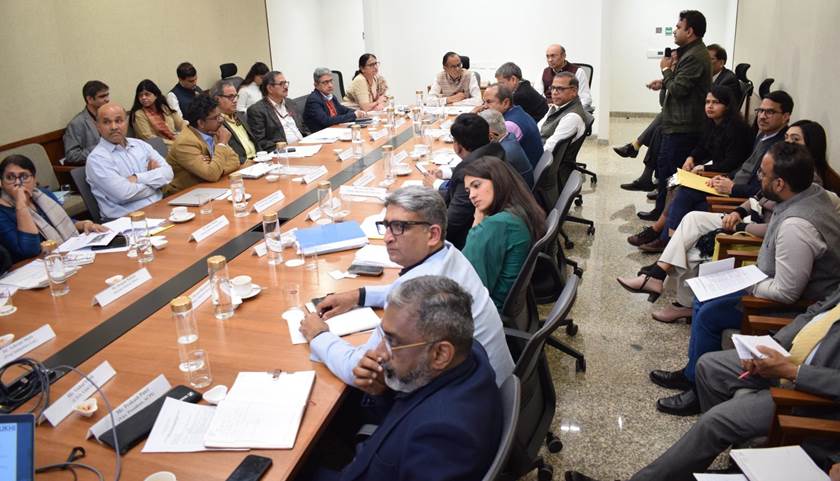

The Indian Council of Agricultural Research and the Borlaug Institute for South Asia jointly organised the Review Workshop of National Innovations in Climate Resilient Agriculture and the launch cum use case workshop of the Atlas of Climate Adaptation in Indian Agriculture in New Delhi on January 23, 2026. The workshop was inaugurated by M L Jat, Secretary Department of Agricultural Research and Education and Director General of Indian Council of Agricultural Research.
The high level workshop marked fifteen years of implementation of the National Innovations in Climate Resilient Agriculture programme and aimed to synthesise learnings from across regions, assess India’s progress in climate resilience, and chart a convergent and data driven roadmap for strengthening climate resilient agri food systems through integrated science, policy alignment and targeted investments.
Addressing the gathering on the occasion of Basant Panchami, Dr Jat said the day symbolising knowledge and renewal was fitting for reflecting on India’s climate resilience journey and for launching key national knowledge platforms. He formally launched the Akasha Atlas and NICRA digital portals and stated that the programme has reached a critical juncture that demands clear strategic direction and a long term vision. Despite repeated climatic stresses, he noted, Indian agriculture particularly in rainfed regions has demonstrated strong resilience and productivity gains, validating the impact of climate resilient technologies, enabling policies and institutional convergence.
Dr Jat underlined that India’s climate resilience is anchored in an integrated ecosystem comprising science, policy support, technological innovation, safety nets, human capital and coordinated implementation. He cited initiatives such as NICRA, the Pradhan Mantri Fasal Bima Yojana and national livestock and fisheries missions as complementary efforts that have enhanced adaptive capacity and improved farmer livelihoods. Looking ahead, he called for deeper synthesis of data, learnings and investments into a unified national climate action platform supported by a whole of government and whole of society approach and a centralised data ecosystem. He added that India’s experience offers a strong global narrative on science led and policy aligned solutions, positioning NICRA as a potential global model for climate resilient agriculture.
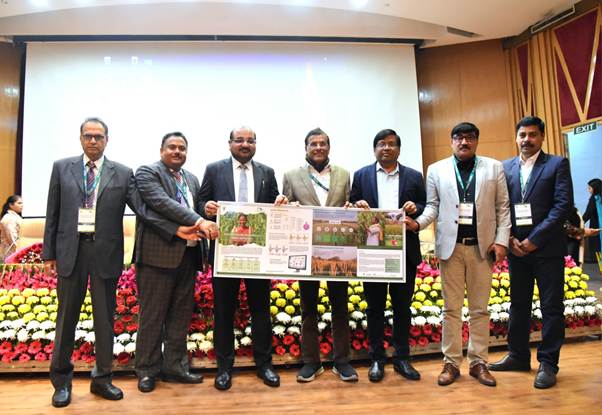
On the occasion, Dr Jat also launched the Atlas of Climate Adaptation in Indian Agriculture, a web enabled digital platform developed by the ICAR led National Agricultural Research and Education System in collaboration with the Borlaug Institute for South Asia and CIMMYT. The platform is designed to support location specific and data driven climate adaptation planning across agro ecological regions.
The inaugural session was attended by senior leaders from ICAR and partner institutions, including A K Nayak, Deputy Director General Natural Resource Management, Rajbir Singh, Deputy Director General Agricultural Extension, B Venkateshwarlu, Chairman of the NICRA Expert Committee, V K Singh, Director ICAR Central Research Institute for Dryland Agriculture Hyderabad, and P K Aggarwal, Regional Program Leader BISA CIMMYT.
Speaking at the workshop, Dr Rajbir Singh emphasised that the forum was critical for advancing climate science at scale and for adopting a holistic approach to climate action. He stressed the need to prioritise robust and credible carbon credit methodologies as an important focus area for future climate investments. Dr A K Nayak highlighted the global relevance of the workshop, noting that it brought together science, data and practical insights essential for strengthening climate resilience across international agri food systems.
The workshop also reviewed NICRA’s on ground progress, noting that the programme is currently implemented across more than 200 locations in 151 highly climate vulnerable districts. Participants observed that strengthening NICRA’s contributions will be central to India’s journey towards Viksit Bharat by 2047. Deputy Directors General and senior officials from ICAR attended the inaugural ceremony, underscoring institutional commitment to scaling climate resilient agriculture.