
India marked World Braille Day on 4 January by reaffirming its commitment to inclusive education dignity and equal participation for persons with visual disabilities through a robust policy legal and institutional framework that has steadily expanded access to Braille across the country.
World Braille Day is observed annually to highlight Braille not merely as a reading and writing system but as a gateway to education independence and social participation. In India Braille has evolved from a literacy aid into a recognised public accessibility norm embedded within a rights based governance ecosystem. The Braille script was first introduced in the country in 1887 and in 1951 India adopted Bharati Braille as a single national standard to harmonise Braille codes across Indian languages. According to the 2011 Census more than 50 lakh persons in India live with visual impairment many of whom continue to face barriers in education healthcare employment and access to information.
Recognising these challenges India has anchored Braille access within landmark reforms such as the Rights of Persons with Disabilities Act 2016 and the National Education Policy 2020. These frameworks position Braille as both a literacy tool and a public accessibility requirement ensuring that persons with visual disabilities can fully participate in social economic and civic life.
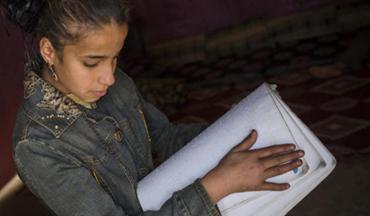
Braille is a tactile reading and writing system based on a six dot cell arranged in two columns. Different combinations of raised dots represent letters numerals punctuation and symbols allowing users to read through touch. Named after its inventor Louis Braille it is not a language but a code that enables multiple languages to be read and written in tactile form. For persons with visual impairment Braille remains central to literacy independence and empowerment.
As a State Party to the United Nations Convention on the Rights of Persons with Disabilities India is committed to ensuring access to education and information in accessible formats including Braille. This commitment is reflected in a comprehensive policy and programme ecosystem spanning education social welfare skill development and digital accessibility.
The legal foundation of this ecosystem is the Rights of Persons with Disabilities Act 2016 which mandates inclusive education and accessible infrastructure in government funded and recognised institutions. The Act explicitly supports Braille and appropriate modes of communication for students who are blind or deafblind and provides for free learning materials and assistive devices for children with benchmark disabilities up to the age of 18.
A major milestone in standardisation was achieved with the formal recognition of Bharati Braille as India’s unified Braille script for multiple Indian languages. Under the Department of Empowerment of Persons with Disabilities and the National Institute for Empowerment of Persons with Visual Disabilities a Standard Bharati Braille Code with Unicode mapping was published on 4 January 2025 following public consultation. This has ensured consistency across Indian languages and enabled digital compatibility through screen readers Braille displays and accessible software applications.
Bharati Braille harmonises previously disparate scripts into a single consistent code allowing learners to transition between languages without relearning different Braille systems. Unicode mapping has been crucial in integrating Braille into digital platforms supporting accessible publishing education and online services.
To further strengthen technological integration the National Institute for Empowerment of Persons with Visual Disabilities has validated revised Bharati Braille standards and prepared Draft Bharati Braille 2.1 after nationwide consultations and workshops. The draft has been placed in the public domain on World Braille Day 2026 inviting feedback from educators experts publishers researchers technology developers and persons with visual disabilities. The institute has also conducted regional language training programmes including Tamil Malayalam and Odia Braille to build grassroots capacity.
Accessibility has also been advanced through the Accessible India Campaign launched in 2015 which addresses barriers in the built environment transportation and information and communication technologies. Under this initiative public infrastructure including more than 2000 railway stations has been equipped with Braille signage while national guidelines for website accessibility have strengthened digital inclusion.
The National Education Policy 2020 has further reinforced Braille integration by mandating language appropriate and accessible teaching learning materials including Braille and large print textbooks. The National Council of Educational Research and Training plays a key role in developing curricula and producing accessible school textbooks aligned with these principles.
In higher education government supported digital libraries and institutional mandates are enabling universities to move from ad hoc accommodations to structured accessibility systems. The Project on Financial Support for Development of Accessible Learning Materials provides free Braille books to students with visual impairment pursuing school and higher education. Since 2014 the project has distributed accessible learning materials to more than 1.69 lakh students nationwide.
Sugamya Pustakalaya has emerged as a cornerstone of digital accessibility. Developed through collaboration between the National Institute for Empowerment of Persons with Visual Disabilities Tata Consultancy Services and the Daisy Forum of India it offers a comprehensive digital library of accessible books in multiple languages including digital Braille. Institutions are required to search convert and upload accessible materials to avoid duplication and expand availability for learners with print disabilities.
Capacity building remains central to sustaining Braille literacy. The Rehabilitation Council of India regulates and standardises rehabilitation education and training ensuring quality and uniformity in services for persons with disabilities. It recognises institutions prescribes minimum standards maintains a central register of professionals and promotes research and continuing professional development.
Key delivery institutions include the Braille Library Service of the Delhi Public Library which provides Braille books magazines and periodicals at the national level and the Braille Resource Centre at Bangalore University which supports transcription accessible study materials and academic assistance for visually impaired students. Braille presses and resource centres across the country further strengthen manpower development under the Ministry of Social Justice and Empowerment.
World Braille Day underscores the fundamental link between access to information and access to opportunity. India’s evolving Braille ecosystem rooted in law reinforced by institutions and aligned with international rights based frameworks is transforming constitutional principles into lived accessibility. Through standardisation digital integration and sustained investment in learning materials and professional capacity Braille is increasingly recognised not as a niche accommodation but as a vital bridge to equality participation and dignity for persons with visual disabilities.