
The Ministry of Jal Shakti marked World Water Day with the digital release of the Operational Guidelines for Jal Jeevan Mission 2.0, as the 15-day Jal Mahotsav 2026 concluded with strong nationwide participation and renewed focus on sustainable rural drinking water systems.
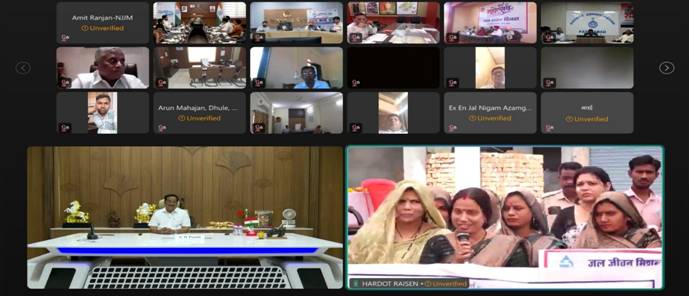
The culmination event, held alongside the fifth Sujal Gram Samvad, was attended virtually by Union Minister for Jal Shakti C R Patil and Minister of State for Jal Shakti V Somanna, along with senior officials of the Department of Drinking Water and Sanitation. The release of the Jal Jeevan Mission 2.0 guidelines follows Cabinet approval for the extension of the mission till December 2028, signalling a strategic shift from infrastructure expansion to long-term service delivery, governance reforms and sustainability.
Addressing the gathering, Union Minister C R Patil said Jal Jeevan Mission has evolved beyond a scheme for tap water connections into a transformative national initiative that has improved dignity, health and ease of living, particularly for women and children in rural India. He emphasised that while the first phase focused on rapid infrastructure creation, the second phase prioritises functionality, accountability and sustained service delivery to ensure that every rural household receives regular, adequate and safe drinking water.
He highlighted that Jal Jeevan Mission 2.0 introduces structural reforms aimed at strengthening governance at the State, district and Gram Panchayat levels, with clearly defined performance standards and accountability frameworks. The Minister underlined that the mission will now operate with a service delivery approach, ensuring long-term reliability through source sustainability, water conservation and community ownership.
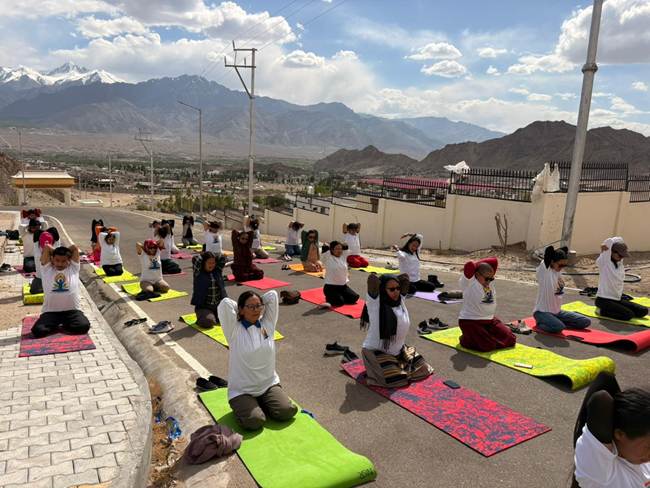
C R Patil further stated that the Prime Minister has encouraged initiatives such as Jal Utsav and Nadi Utsav to transform water conservation into a people-led movement. Jal Mahotsav 2026, observed from March 8 to March 22, successfully translated this vision into action, with large-scale community participation, awareness campaigns and the symbolic Jal Arpan of water assets to Gram Panchayats across the country.
Highlighting cooperative federalism, the Minister informed that Reform Linked Memoranda of Understanding are being signed with States to ensure effective implementation of Jal Jeevan Mission 2.0. So far, nine States have signed these agreements during Jal Mahotsav 2026, reaffirming their commitment to sustainable and accountable rural water service delivery. He stressed that coordinated efforts among States, districts and Gram Panchayats will be critical to achieving tangible outcomes on the ground.
Minister of State for Jal Shakti V Somanna said the Jal Mahotsav evolved into a nationwide Jan Bhagidari movement, with widespread participation through community meetings, school engagement programmes, awareness drives and water conservation activities. He emphasised that water management must become a continuous collective responsibility rather than a time-bound campaign.
He reiterated that safe drinking water has emerged as a national priority under the leadership of the Prime Minister and that Jal Jeevan Mission 2.0 will further strengthen governance, sustainability and community ownership. He highlighted the importance of initiatives such as Sujal Gram Samvad in bringing grassroots experiences to the national platform and fostering participatory water management systems.
In his opening remarks, Secretary, Department of Drinking Water and Sanitation, Ashok K K Meena, noted that Jal Mahotsav witnessed extensive activities including cleaning of water sources, water tanks and widespread water quality testing using field test kits. He said the scale of participation reflects growing awareness and a shift towards making water conservation a mass movement.
He added that the Jal Jeevan Mission 2.0 guidelines provide a comprehensive roadmap for strengthening rural drinking water governance, focusing on assured service delivery, clear institutional accountability and long-term sustainability through measures such as source protection, rainwater harvesting, grey water management and aquifer recharge.
A key highlight of the event was the fifth Sujal Gram Samvad, which brought voices from five villages across five States onto a national platform, demonstrating how community-led water management is being implemented at the grassroots level.
From Village Hatnur in Pauri Garhwal, Uttarakhand, community representatives shared their experience of a 24×7 gravity-based water supply system. Local stakeholders including the Sarpanch, Anganwadi Worker and students highlighted regular water quality testing, prompt maintenance and improved hygiene outcomes.
In Village Tepla, Ambala, Haryana, interactions with villagers and officials revealed that universal household tap connections have been achieved through a tube well-based system, supported by regular chlorination, user charges for maintenance and active Village Water and Sanitation Committees. District Magistrate Ajay Singh Tomer emphasised strong monitoring systems ensuring reliable service delivery.
From Village Salhebhat in Kondagaon district of Chhattisgarh, community members reported full coverage of tap water connections across households, schools and Anganwadi Centres. District Magistrate Nupur Rashi Panna highlighted the role of technology-based monitoring and community participation in overcoming geographical challenges.
In Village Bhanagan, Kendrapara district of Odisha, discussions led by officials and local representatives highlighted improved health outcomes, reduced burden on women and better school attendance among girls due to reliable water access. District Magistrate Raghuram R Iyer underlined the importance of continuous monitoring and institutional coordination.
From Village Hardot in Raisen district of Madhya Pradesh, stakeholders reported significant progress in tap water coverage, supported by user charges, water quality testing by trained women and conservation measures. District Magistrate Arun Kumar Vishwakarma highlighted the role of Jal Mahotsav in strengthening water conservation as a mass movement.
Additional Secretary and Mission Director Kamal Kishore Soan said the convergence witnessed during Jal Mahotsav 2026 reflects alignment from national to grassroots levels and that the release of Jal Jeevan Mission 2.0 guidelines marks a critical step in ensuring sustained delivery of safe drinking water.
The Ministry of Jal Shakti called upon all stakeholders to carry forward the spirit of Jal Sanchay se Jan Bhagidari, ensuring that every village evolves into a Sujal Gram and contributes to the vision of Har Ghar Jal and Viksit Bharat 2047.