
The Office of the Principal Scientific Adviser organised a national exhibition cum technical event under Mission सह SANKALP at Dr Ambedkar International Centre, bringing together policymakers, scientists, industry leaders and grassroots practitioners to advance the role of science and technology in strengthening sustainable livelihood systems across the country.
The event was inaugurated by Ajay Kumar Sood, Principal Scientific Adviser to the Government of India, and witnessed participation from senior officials representing key central ministries and institutions including the Department of Biotechnology, Department of Science and Technology, Ministry of Micro Small and Medium Enterprises, Ministry of Rural Development, Council of Scientific and Industrial Research, Indian Council of Agricultural Research and Ministry of Panchayati Raj, along with academic institutions, financial organisations, development partners and industry stakeholders.
In his keynote address, Ajay Kumar Sood emphasised the urgent need to bridge the gap between technological innovation and its application at the grassroots level. He noted that while India has a strong science and innovation ecosystem, the primary challenge lies in ensuring that technologies are accessible, adoptable and capable of delivering measurable impact for communities.
He highlighted the role of initiatives such as the Rural Technology Action Group, RuTAG Smart Village Centres and the Manthan platform in fostering demand driven innovation and enabling collaborative problem solving across sectors. These initiatives, he said, are critical in linking scientific research with real world challenges faced by rural communities.
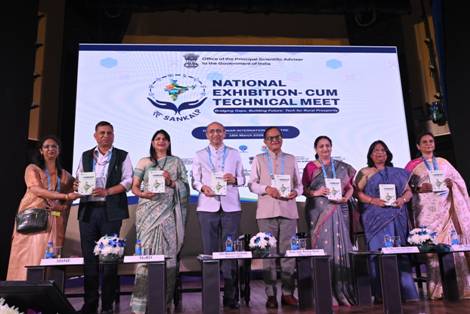
A key highlight of the event was the unveiling of the Mission सह SANKALP logo and the release of a comprehensive resource book on science and technology interventions for sustainable livelihoods. The publication serves as a national repository featuring more than 350 ready to deploy technologies developed by various ministries and scientific institutions.
Designed as a practical implementation tool, the resource book is expected to assist state governments, implementing agencies and development partners in identifying and scaling context specific solutions across livelihood programmes.
In a parallel initiative to expand access, an online repository titled Technology for Livelihoods Bridging Innovation and Impact was launched. The platform provides open access to curated technology solutions and enables stakeholders to explore adoption pathways, facilitating digital dissemination and wider outreach.
The event also featured a special session involving secretaries from participating ministries, who discussed strategies for integrating science and technology into India’s broader livelihood architecture. The discussions underscored the importance of convergence among flagship government programmes, strengthening institutional frameworks and fostering cross sector collaboration.
Three panel discussions brought together a diverse group of stakeholders to examine key dimensions of livelihood transformation. The first panel focused on designing science based interventions to enhance resilience, sustainability and inclusivity. The second explored mechanisms for scaling innovations from pilot stages to national level implementation, highlighting the need for robust financing models and institutional support systems. The third panel examined the role of partnerships, innovation platforms and community participation in ensuring long term sustainability.
An exhibition showcasing more than 100 technologies formed a central component of the event. The technologies spanned both farm and non farm sectors, offering solutions aimed at improving productivity, enhancing value addition and promoting sustainable practices. The exhibition enabled direct interaction between innovators, implementing agencies and development partners, facilitating knowledge exchange and potential collaborations.
In her concluding remarks, Parvinder Maini, Scientific Secretary at the Office of the Principal Scientific Adviser, stressed the importance of convergence, locally relevant and affordable technologies, and community centric approaches. She noted that the discussions reinforced the need for strong institutional partnerships and sustained collaboration to translate scientific innovations into scalable solutions that can improve livelihoods.
She highlighted that Mission सह SANKALP aims to create a collaborative ecosystem that connects science with society, enabling inclusive and technology driven livelihood transformation at scale. The mission focuses on bridging the gap between innovation and adoption through structured deployment of technologies, enhanced institutional coordination and direct engagement between innovators and end users.
Mission सह SANKALP, a flagship initiative recommended by the Prime Minister Science Technology and Innovation Advisory Council, adopts a demand oriented and convergence driven approach to develop scalable and locally relevant solutions. It seeks to strengthen India’s livelihood systems by integrating scientific innovation with grassroots needs, thereby supporting sustainable and inclusive development.