
The Government has launched a fully digital and free-of-cost Access Pass system to enable Indian fishing vessels to operate in the country’s Exclusive Economic Zone, marking a major step toward expanding offshore fishing and strengthening the Blue Economy.
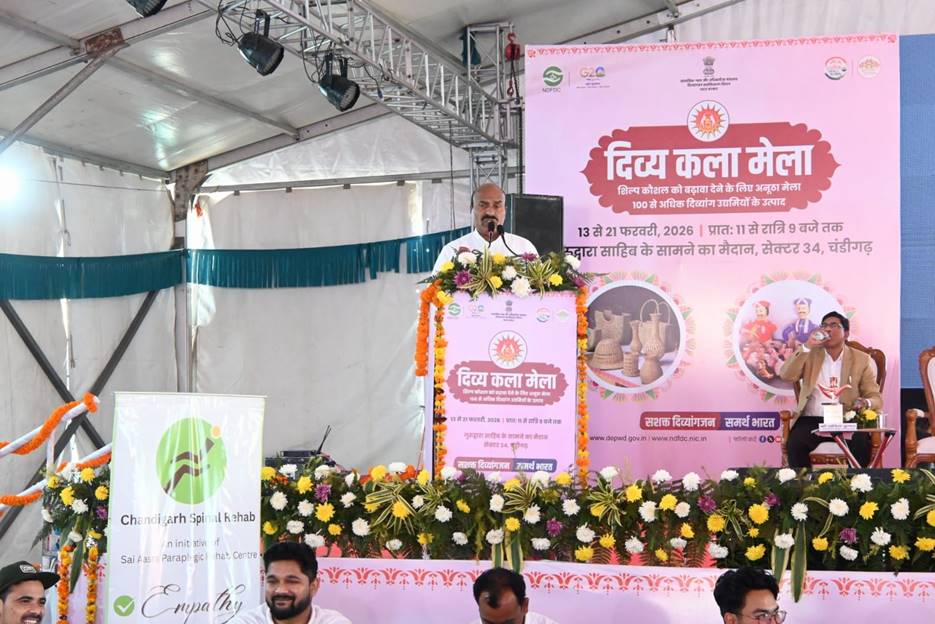
Rajiv Ranjan Singh, Union Minister for Fisheries, Animal Husbandry and Dairying and Panchayati Raj, launched the Access Pass for fishing in India’s Exclusive Economic Zone at KCC Ground in Veraval, Gujarat. The event was attended by S. P. Singh Baghel, Minister of State for Fisheries, Animal Husbandry and Dairying and Panchayati Raj; George Kurian, Minister of State for Fisheries, Animal Husbandry and Dairying and Minority Affairs; Abhilaksh Likhi, Union Secretary, Department of Fisheries; and Arunkumar Solanki, Additional Chief Secretary, Government of Gujarat.
Representatives of 24 fisheries cooperatives from all coastal States and Union Territories participated in the programme, with more than 2,000 attendees present physically and stakeholders joining online from over 500 locations across the country.
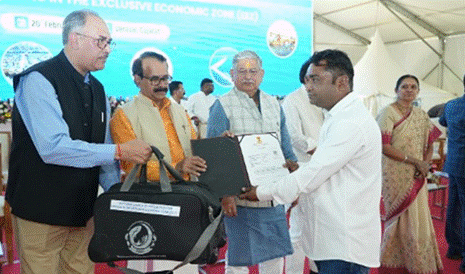
During the launch, Rajiv Ranjan Singh handed over Access Passes to 37 fishermen representing 24 fisheries cooperative societies from all coastal States and Union Territories. Safety kits comprising life jackets, high-beam torches and GPS devices were also distributed to enhance safe navigation during offshore fishing operations. Additionally, a grant of Rs 2 lakh each was provided to newly formed fisheries cooperative societies in Gujarat.
The Access Pass system has been introduced as a transparent, technology-driven mechanism to regulate and promote fishing in India’s Exclusive Economic Zone. The initiative aims to expand offshore fishing, improve traceability, enhance fisher incomes and ensure responsible utilisation of marine resources. It aligns with the national objective of building a resilient and inclusive Blue Economy.
Rajiv Ranjan Singh stated that the Exclusive Economic Zone framework was drafted after extensive consultations with fishermen associations, cooperatives, States and scientific institutions to ensure a transparent and future-ready governance model. He informed that applications have already been received on the RealCraft portal and that Access Passes will be issued in accordance with the notified guidelines over the coming month.
He urged fishermen to organise into cooperatives, apply for the Access Pass and benefit from the new rules. He noted that fish catch by Indian vessels in the Exclusive Economic Zone and high seas has been made duty-free as per the Union Budget 2026 announcement. He also highlighted ongoing investments in welfare schemes, safety systems including transponders for real-time tracking and Potential Fishing Zone advisories that improve productivity and reduce risks at sea. A Joint Working Group with the Ministry of Cooperation has been formed to strengthen fisheries cooperatives and expand opportunities in deep-sea fisheries.
S. P. Singh Baghel emphasised that the Access Pass system is simple, transparent and fully digital, providing authorised Indian vessels clarity and confidence to operate in offshore waters. He highlighted that the rules strictly prohibit entry of foreign fishing vessels into the Indian Exclusive Economic Zone, safeguarding marine resources and expanding opportunities for Indian fishermen in deep-sea fisheries.
George Kurian described the launch as a step towards advancing marine fisheries development and achieving the vision of Viksit Bharat 2047. He noted that Veraval has been designated as a Fishing Harbour Cluster under the Pradhan Mantri Matsya Sampada Yojana, which is expected to boost efficiency and enable economies of scale in the fisheries sector.
Abhilaksh Likhi stated that Access Passes will be issued through a seamless and transparent digital portal. He observed that India’s Exclusive Economic Zone remains significantly under-utilised despite scientific assessments indicating strong potential, particularly for high-value oceanic resources such as tuna and tuna-like species that command premium prices in global markets. He stressed that the Department of Fisheries is focused on sustainable growth, strengthening cooperatives and Fish Farmer Producer Organisations, capacity building across coastal States and infrastructure development, including the smart integrated harbour at Jakhau under the Pradhan Mantri Matsya Sampada Yojana.
B. K. Behera, Chief Executive, National Fisheries Development Board, outlined various interventions in the fisheries and aquaculture sector in Gujarat under schemes of the Department of Fisheries.
The programme was attended by Sneha Bhapkar, In-charge Collector, Gir Somnath; Jaydip Singh Jadeja, Superintendent of Police, Gir Somnath; Rajesh Aal, RAC, Gir Somnath; Vijaykumar Kharadi, Commissioner of Fisheries; Pallaviben Jani, President, Veraval Patan Joint Municipality; Manjulaben Muchhar, President, District Panchayat, Gir Somnath; senior officials of the Department of Fisheries and State fisheries departments; representatives from National Fisheries Development Board, Marine Products Export Development Authority, National Bank for Agriculture and Rural Development, National Cooperative Development Corporation, Export Inspection Council; fisheries cooperatives; Fish Farmer Producer Organisations; and local fishers.
India’s Exclusive Economic Zone spans nearly 24 lakh square kilometres and holds substantial potential for marine fisheries development, livelihood generation and export expansion. At present, most Indian fishing activity is confined within 40 to 50 nautical miles from the coast. The deeper waters of the Exclusive Economic Zone remain under-utilised despite scientific assessments indicating significant availability of high-value oceanic species.
To unlock this potential, the Government earlier notified the Sustainable Harnessing of Fisheries in the Exclusive Economic Zone 2025 Rules on November 4, 2025, in line with the Union Budget 2025-26 announcement. The launch of the Access Pass system operationalises these rules and is expected to promote regulated expansion of offshore fishing, improve income security for fishers and enhance India’s position in global marine exports.