
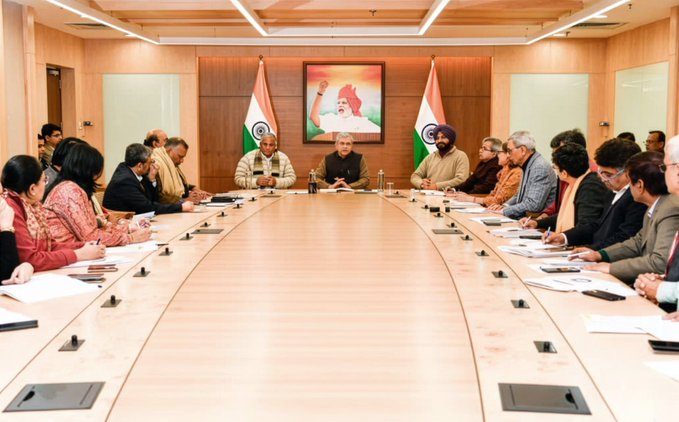
Indian Railways has launched a comprehensive, time bound reform programme aimed at delivering a safer, more reliable and passenger centric rail network, following a seven hour high level workshop held at Rail Bhawan in New Delhi on 8 January 2026.
The workshop was chaired by Union Minister for Railways, Information and Broadcasting and Electronics and Information Technology Ashwini Vaishnaw and attended by senior railway officials. The discussions focused on passenger centric reforms, service quality, system responsiveness and overall citizen experience. The minister heard detailed presentations from officials and stressed a consultative and participative approach to improving railway services.
At the centre of the transformation agenda is the “52 Weeks, 52 Reforms” framework, under which one major reform will be implemented every week with clearly defined timelines and execution plans. The sequential rollout is designed to ensure stability, close monitoring and measurable outcomes, with scope for continuous review and course correction. The roadmap has been shaped through extensive consultations across the railway system to ensure reforms are grounded in operational realities.
A key pillar of the initiative is capacity enhancement. Indian Railways has undertaken unprecedented network expansion to address long standing capacity constraints and rising passenger and freight demand. Nearly 35,000 kilometres of new tracks have been constructed, equivalent to the entire railway network of Germany, significantly easing congestion and strengthening national connectivity.
Railway manufacturing capacity has also been scaled up sharply over the past three years. Large scale wagon procurement and higher locomotive production have positioned India among the world’s leading rail manufacturing hubs, with output in some segments matching or exceeding the combined capacity of the United States and the European Union.
Safety remains a central focus of the reform programme. Consequential railway accidents have already been reduced by nearly 90 percent, from about 170 earlier to around 12. Building on this progress, the next reform milestone targets a 95 percent reduction, with the aim of bringing accident numbers into single digits. This will be supported by continued investment in safety infrastructure, workforce training and advanced technologies, including wider deployment of the Kavach safety system.
Passenger services form another core pillar of the initiative. Improved planning and operational preparedness enabled Indian Railways to manage peak festive travel during Diwali, Chhath and Christmas, with zero complaints reported during Christmas operations. Reforms are being directed at improving maintenance quality, vendor accountability, cleanliness, onboard experience, reliability and system efficiency.
Station redevelopment is being accelerated with a strong emphasis on facilities for the common citizen, alongside a renewed cleanliness drive across trains and stations. Measures such as Aadhaar based verification are being introduced to strengthen system integrity and prevent misuse, while passenger access policies continue to prioritise women, children, senior citizens and persons with disabilities, especially during periods of high demand.
Expansion of Vande Bharat services, coupled with basic fare rationalisation, is also being pursued to improve affordability and provide a competitive alternative to air travel, encouraging a gradual shift towards rail while ensuring equitable access.
The reform drive reflects Indian Railways’ commitment to modernisation, safety and passenger satisfaction, with the objective of building a future ready, citizen focused rail system capable of meeting the demands of a growing economy.