
Tribes Art Fest 2026, a 12 day national celebration of India’s tribal visual culture, was inaugurated in New Delhi on March 2, 2026 by Jual Oram, Minister of Tribal Affairs, at Travancore Palace on K G Marg. The festival features more than 75 tribal artists, over 1,000 artworks and representation from more than 30 tribal art traditions, making it one of the most comprehensive showcases of tribal creativity in the country.
Organised by the Ministry of Tribal Affairs in collaboration with the Federation of Indian Chambers of Commerce and Industry and the National Gallery of Modern Art, the festival runs from March 2 to March 13, 2026. It aims to combine cultural preservation with structured economic empowerment for tribal communities.
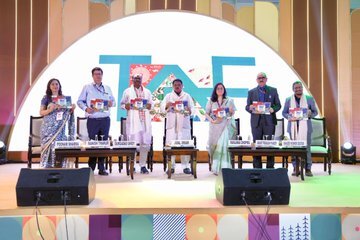
The inaugural ceremony opened with an invocation of Vande Mataram by Sangeet Natak Akademi. The official TAF Catalogue, documenting participating artists and art traditions, was formally unveiled, along with the TAF Launch Video outlining the scale and vision of the festival. Khmih Creative Society from Shillong, Meghalaya, presented a musical performance blending tribal rhythms and instruments with patriotic and contemporary expressions.
Addressing the gathering, Jual Oram said the Ministry is pursuing an integrated approach to tribal empowerment that links preservation of cultural heritage with socio economic development. He highlighted key initiatives including PM JANMAN for Particularly Vulnerable Tribal Groups, DAJGUA for benefit saturation, expansion of Eklavya Model Residential Schools and strengthened market linkages through TRIFED. He stated that platforms such as Tribes Art Fest go beyond symbolic celebration by creating structured market ecosystems that connect artists with collectors, galleries, corporates, design institutions and citizens, transforming heritage into sustainable livelihoods.
Durgadas Uikey, Minister of State for Tribal Affairs, noted that such festivals provide authentic platforms for tribal communities to present their heritage and artistic excellence on their own terms. He emphasised that reciprocal engagement between artists and institutions enhances cultural confidence, visibility and dignified livelihood opportunities rooted in community ownership.
Ranjana Chopra, Secretary, Ministry of Tribal Affairs, said the festival translates policy into practice by anchoring tribal art promotion in equity, dignity and sustainability. She underlined that tribal communities preserve unique art traditions reflecting ecological wisdom, knowledge systems and intergenerational continuity, and that the festival strengthens both national recognition and economic opportunity.
Other dignitaries present included Manish Thakur, Additional Secretary, Ministry of Tribal Affairs; Anant Prakash Pandey, Joint Secretary, Ministry of Tribal Affairs; Sanjeev Kishor Goutam, Director General, National Gallery of Modern Art; and Poonam Sharma, President, FICCI FLO and Director, Ayurvedant Pvt Ltd.
The exhibition showcases diverse traditions including Warli from Maharashtra, Gond from Madhya Pradesh, Bhil from Madhya Pradesh, Rajasthan and Gujarat, Dokra from West Bengal, Chhattisgarh and Odisha, Sohrai from Jharkhand, Koya from Telangana and Andhra Pradesh, Kurumba from Tamil Nadu, Saura from Odisha, Bodo from Assam and the North East, Oraon from Jharkhand and Chhattisgarh, Mandana from Rajasthan and Madhya Pradesh, Godna from Bihar, Madhya Pradesh and Chhattisgarh, bamboo crafts from the North East and several others.
Recognising that tribal art embodies sustainability and harmony, the festival also features contemporary expressions and collaborative works between tribal and contemporary artists, with strong participation from the North East.
Beyond the exhibition, the programme includes panel discussions on themes such as Tribal Art Revival and Sustainable Futures, Tribal Art in Contemporary Spaces and Livelihoods and Market Linkages. Participatory workshops, illustrated talks, storytelling sessions and live demonstrations form part of the immersive experience. More than 100 tribal students pursuing art from across India are attending curated walkthroughs, mentorship sessions with senior artists and exposure to live creative processes.
A special highlight is Project Khum Rooted in Creativity, conceptualised by Jai Madan along with tribal artists. Khum, meaning flower in Kokborok, symbolises blossoming and creative vitality. Designed as a participatory installation, tribal women artists collaboratively transform a shared visual framework into a vibrant artwork. Presented in the spirit of International Women’s Day, the installation foregrounds women’s creativity, leadership and cultural memory.
The festival also includes daily cultural performances featuring tribal music and dance traditions and a dedicated programme on International Women’s Day spotlighting leadership and entrepreneurship among tribal women artists. Inclusive workshops for visitors, including sessions for persons with special needs, aim to broaden community participation.
Open to the public from March 3, 2026, Tribes Art Fest 2026 aligns with the national vision of Viksit Bharat 2047 and reinforces the Government’s commitment to inclusive growth, cultural preservation and sustainable economic empowerment of tribal communities.