
The introduction of Global Positioning System devices has significantly transformed the lives and livelihoods of fishing communities in Car Nicobar, enhancing safety at sea, increasing daily fish catch and improving household incomes and nutrition.
Fishing remains the traditional backbone of Nicobarese communities, whose skills are shaped by generations of experience. However, unpredictable weather conditions, shifting sea patterns and the absence of precise navigation tools have often limited productivity. In several instances, boats have lost direction during weather disturbances, leading to reduced catch and, at times, endangering lives.
To address these challenges, the Central Island Technological Research Institute introduced GPS devices tailored to local marine conditions and traditional fishing practices. The initiative was implemented under the SEED Division programme of the Department of Science and Technology.
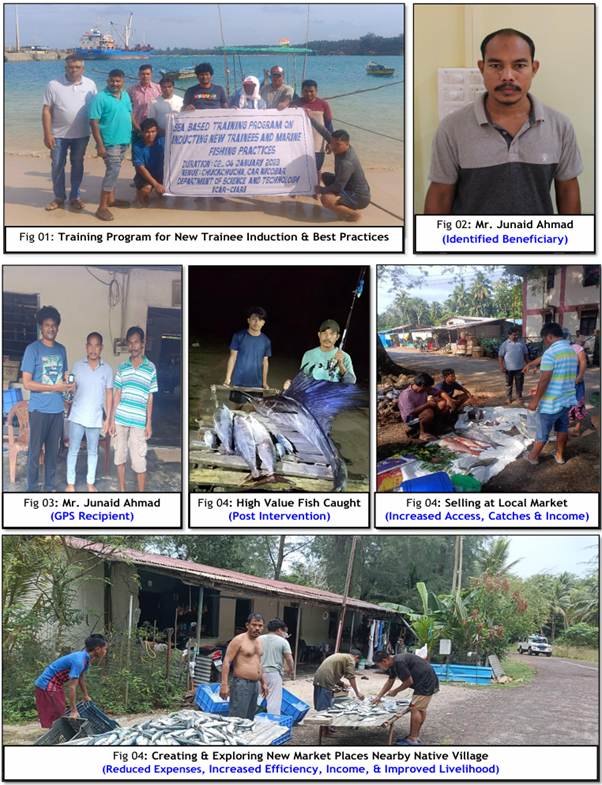
As part of the intervention, surveys were conducted to assess the needs and operational challenges faced by fishermen. Training sessions were organised to familiarise them with GPS navigation and modern fishing techniques. Adoption of the technology was facilitated through engagement with the Tribal Council to ensure community level participation and acceptance.
A Coastal Fisheries Information Hub has also been established on Car Nicobar Island to support the initiative. Five GPS devices were distributed directly to tribal fishermen, while another five were kept for common use to ensure wider accessibility within the community.
The impact has been substantial. Fishermen are now able to precisely identify and mark productive fishing grounds, reducing time spent at sea while improving efficiency. According to field assessments, daily catch volumes have increased by an average of approximately 168 percent. With more accurate navigation, fishermen can reach optimal fishing zones faster and return safely.
The improved catch has translated into higher availability of fresh fish within households, strengthening access to vital proteins and nutrients. Some fishermen, including Junaid from Teetop village and Abdul Sattar from Chuchucha village, have begun selling surplus catch in local markets, generating additional income for their families.
The increased earnings have enabled better access to diverse food sources, contributing to improved nutrition and overall well being within the community.
The integration of GPS technology with traditional fishing knowledge demonstrates how targeted scientific interventions can enhance livelihoods, strengthen food security and promote sustainable development in remote island regions.