

India’s bioenergy sector has the potential to grow significantly faster than the country’s overall energy demand and emerge as a key pillar of energy security, emissions reduction and rural development, Neeraj Mittal, Secretary, Ministry of Petroleum and Natural Gas, said on the third day of India Energy Week 2026 in Goa.
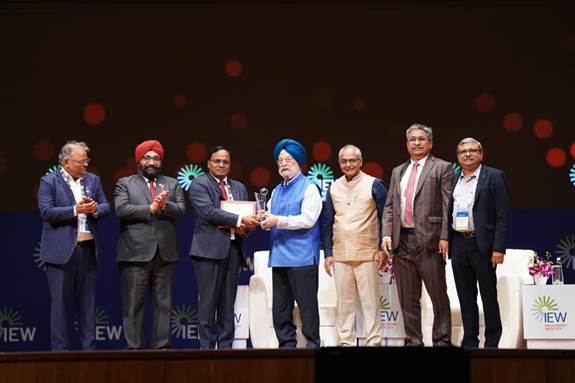
Speaking at the Global Energy Conclave during the release of the IEA India Bioenergy Market Report Outlook for Liquid and Gaseous Biofuels to 2030 and the fifth edition of the PPAC Journal Ensuring Energy Security Role of State Energy Policies, Mittal emphasised the urgency of scaling sustainable and indigenous energy solutions to meet India’s rapidly rising demand.
He said India’s per capita energy consumption remains in the lower half globally, but the growth rate of energy demand is nearly twice the world average. Over the next decade, India’s energy demand growth could outstrip global growth by a factor of two or more, making bioenergy an essential component of a balanced and resilient energy transition.
Highlighting policy-driven outcomes, Mittal cited the ethanol blending programme as a global benchmark. He noted that ethanol blending has increased from 1.4 percent in 2014 to nearly 20 percent today, and that India already has sufficient domestic ethanol capacity to move beyond current levels as technology and national vision evolve. He added that similar blending and scale-up targets have been set for biodiesel, compressed biogas and sustainable aviation fuel, reflecting India’s commitment to low-carbon growth and energy self-reliance.
The India Bioenergy Market Report released during the session by the International Energy Agency presented a strong growth outlook for liquid and gaseous biofuels through 2030. Presenting key findings, Paolo Frankl, Head of the Renewable Energy Division at the IEA, said India has already tripled its consumption of modern bioenergy since 2020. This growth has been driven by blending mandates, targeted incentives, research support and supply-chain development.
Frankl said that with enhanced policy implementation, India could double bioenergy deployment again by 2030, positioning itself among the fastest-growing bioenergy markets globally. He highlighted compressed biogas as a particularly strong opportunity, given India’s vast availability of agricultural residues and organic waste, and stressed the importance of efficient feedstock aggregation, proximity to infrastructure and stable offtake mechanisms.
Complementing the IEA report, the Petroleum Planning and Analysis Cell released the fifth edition of its biannual technical journal. P Manoj Kumar, Director General, PPAC, said the edition focuses on the critical role of state-level energy policies in ensuring availability, affordability and resilience. He added that contributions from states, policymakers and institutions underline the importance of cooperative federalism and evidence-based policymaking in strengthening India’s energy security.
Contributing to the panel discussion, Charlotte Morton, Chief Executive of the World Biogas Association, highlighted biogas as a multi-benefit solution supporting waste management, rural livelihoods, emissions reduction and decentralised energy systems. She called for a cohesive national framework with stronger coordination across policy, finance and markets to unlock the full potential of biogas in India.
India Energy Week is the country’s flagship global energy platform, bringing together government leaders, industry executives and innovators to advance a secure, sustainable and affordable energy future through policy alignment, investment and technological collaboration.