
India’s artificial intelligence trajectory took centre stage at the India AI Impact Summit 2026, where global industry leaders outlined a future shaped by autonomy, resilient infrastructure and large scale empowerment rather than narrow technological dominance.
Prime Minister Narendra Modi inaugurated the summit at Bharat Mandapam, New Delhi, noting that 140 crore Indians are eager to embrace new technologies. On behalf of the country, he extended a welcome to Heads of Governments, global AI leaders and innovators participating in the summit, positioning India as both a market and a maker in the emerging AI era.
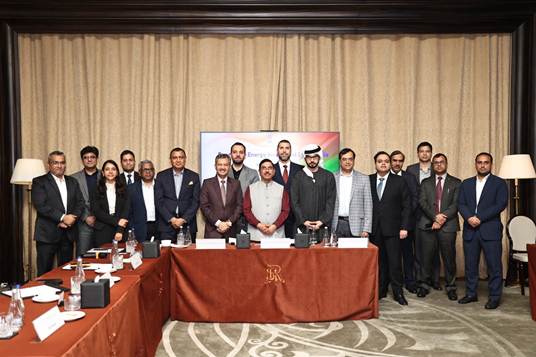
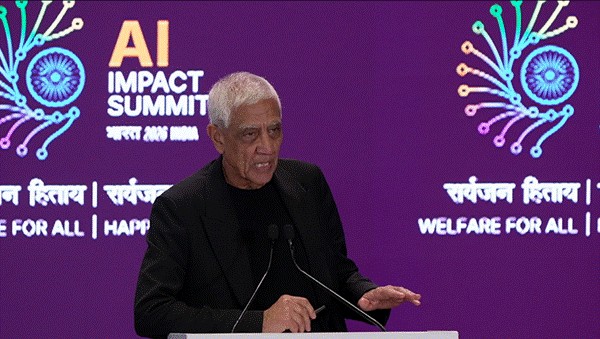
On the sidelines of the summit, keynote addresses by Arthur Mensch, CEO and Co founder of Mistral AI; Rajesh Subramaniam, CEO of FedEx; Jeet Adani, Director of Adani Digital Labs; and Vinod Khosla, Founder of Khosla Ventures, examined how artificial intelligence is reshaping sovereignty, commerce, infrastructure and access to essential services. Across sectors, the emphasis was clear: the next phase of AI must combine openness, ownership and equitable impact.
Arthur Mensch made a strong case for AI autonomy and open innovation. Advocating decentralisation and digital self reliance, he said, “AI should be a tool for empowerment, not for dominance. Countries and regions must own their AI destiny, it is not a privilege, but a necessity for preserving digital autonomy.”
He cautioned against excessive concentration of technological power. “We do not want a world where three or four enormous companies own access to intelligence. The future must be built by the many, and for the many,” he said. Mensch underscored that open models and distributed ecosystems are essential to ensuring that AI strengthens democratic systems rather than centralising control.
Rajesh Subramaniam positioned AI as foundational infrastructure for the next industrial era, particularly in global supply chains. Reflecting on the transformation underway in logistics and commerce, he stated, “AI is no longer a trend — it is the next industrial system. Intelligence is not an asset, it is infrastructure.”
He emphasised predictive analytics, automation and intelligent orchestration as key drivers of resilience in global trade networks. “Over the next 50 years, our differentiation will come from orchestrating the intelligence that governs modern commerce, predicting disruption, optimising flows and building resilient supply chains,” he said. The message underscored that AI’s value lies in its integration into operational backbones rather than isolated digital applications.
Jeet Adani framed AI through the lens of national capability and strategic sovereignty, outlining three defining pillars: energy sovereignty, compute sovereignty and services sovereignty. “AI is written in code, but it runs on electricity. If a nation’s energy systems are fragile, its intelligence systems are fragile,” he said.
He announced major investments in green and sovereign AI infrastructure, highlighting the interdependence between digital ambition and physical capacity. “The question is no longer whether India will participate in the AI century. The question is whether the AI century will carry India’s imprint, in its infrastructure, its intelligence and its values,” he added. His remarks underscored that compute power, data centres and clean energy networks are strategic assets in the AI era.
Vinod Khosla shifted attention to the transformative social applications of AI, focusing on universal access. He advocated AI tutors, AI doctors and AI agronomy services that could reach every citizen, especially underserved populations. “Unless AI benefits the bottom half of India’s population, we will not see its true impact,” he said.
Highlighting the declining cost of advanced models and compute, he added, “The future is here today. What once required hundreds of billions of dollars can now be delivered at scale, cheaply — multiplying access to education, healthcare and expertise for every Indian.” His intervention stressed that AI’s legitimacy will ultimately depend on its reach and inclusivity.
Collectively, the leaders articulated a shared conviction that AI’s next chapter will be defined not merely by technical sophistication, but by who owns it, who powers it and who benefits from it. The convergence of open source autonomy, sovereign infrastructure, intelligent supply chains and mass digital services signals a shift from experimentation to systemic transformation.
The discussions placed India at a decisive inflection point. With a large technology workforce, expanding digital infrastructure and a young population ready to adopt innovation, the country is positioned to architect AI systems that are resilient, inclusive and globally influential. The summit reinforced a central theme: AI must be designed as a public good aligned with national values and global responsibility.