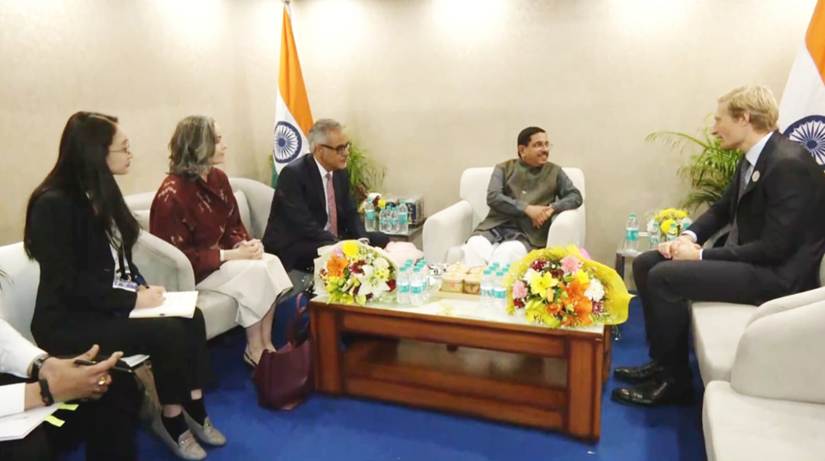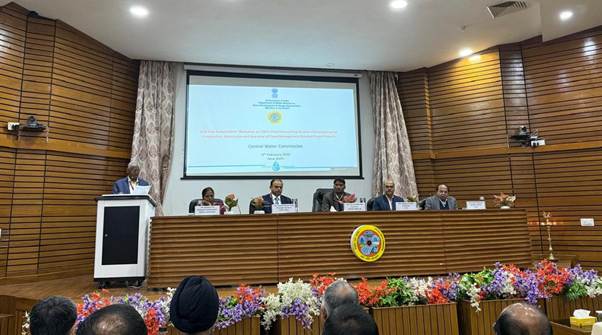

The second day of India Energy Week 2026 underscored India’s growing influence in shaping the future of global energy systems, with affordability, robust infrastructure, technology driven innovation and policy alignment emerging as central themes for a secure, sustainable and inclusive energy transition.
High level panels and discussions throughout the day focused on critical pillars of India’s energy journey, including liquefied natural gas affordability, expansion of City Gas Distribution networks, electrification and long term energy demand outlooks. Speakers highlighted that India’s scale, growth trajectory and policy momentum position it as a key driver of global energy demand and transition pathways.
Addressing the Leadership Panel on Managing Global LNG Supply and Demand Dynamics, Akshay Kumar Singh, Managing Director and Chief Executive Officer of Petronet LNG, emphasised that affordability will determine the pace of natural gas adoption in India. He noted that LNG prices in the range of six to seven dollars per million British thermal units are essential to drive consumption across transport, power generation and city gas distribution, and to ensure stable and predictable long term demand.
The Leadership Panel on Establishing Global Models for City Gas Distribution Networks examined strategies to expand CGD infrastructure across the country. Goutom Chakraborty, Chief Executive Officer of GAIL Gas Limited, stressed the importance of integrated planning between trunk pipelines and city networks to achieve scale, operational efficiency and cost effectiveness. He underlined that coordinated infrastructure development is critical to ensuring reliable and affordable gas supply.
Sharing perspectives from mature CGD markets, Abhilesh Gupta, Managing Director and Chief Executive Officer of Indraprastha Gas Limited, highlighted the role of piped natural gas and compressed natural gas expansion, safety standards and consumer trust in sustaining long term adoption. Suresh Manglani, Executive Director and Chief Executive Officer of Adani Total Gas Limited, called for stronger alignment between policymakers and industry, suggesting a transition from access to sustained usage of cleaner fuels through a model similar to the Pradhan Mantri Ujjwala Yojana.
In a detailed presentation on the World Oil Outlook 2025, Abderrezak Benyoucef, Head of the Energy Studies Department at OPEC’s Research Division, projected India as the single largest contributor to global energy demand growth through 2050. According to the outlook, India is expected to add 8.2 million barrels per day of oil demand by 2050, driven by rising transportation needs, industrial growth and petrochemical expansion. India’s primary energy demand is projected to nearly double, with oil, gas and renewables complementing each other in a balanced energy mix.
The outlook also highlighted India’s central role in global economic growth and demographic expansion, reinforcing the need for sustained investment across upstream, midstream and downstream energy infrastructure to support future demand.
The Leadership Panel on Transitioning to an Electrostate focused on the expanding role of electricity in India’s growth, energy security and decarbonisation efforts. Panelists including Ahmed Al Kaabi of the United Arab Emirates, Naveen Srivastava of Power Grid Corporation of India, Ghanshyam Prasad of the Central Electricity Authority, Suman Chandra of the Ministry of New and Renewable Energy and Prince Dhawan of REC Limited discussed electrification, grid expansion and digitalisation as key enablers of a resilient and clean energy system.
Ahmed Al Kaabi highlighted the importance of partnerships, innovation and decentralised energy solutions in strengthening grid resilience. Prince Dhawan detailed reforms in India’s power distribution sector under the Revamped Distribution Sector Scheme, noting that result linked investments, smart metering and governance reforms are improving the financial and operational health of distribution companies and enabling the development of smarter, more resilient grids.
India Energy Week continues to serve as the country’s flagship global energy platform, bringing together policymakers, industry leaders and innovators to accelerate progress towards a secure, sustainable and affordable energy future through investment, policy coordination and technological collaboration.