
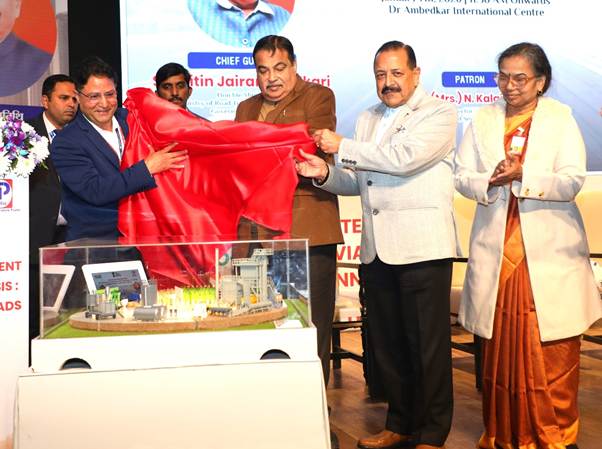
India marked a major shift towards sustainable infrastructure on 7 January 2026 with the successful technology transfer of an indigenous innovation titled Bio Bitumen via Pyrolysis From Farm Residue to Roads, developed jointly by the Central Road Research Institute New Delhi and the Indian Institute of Petroleum Dehradun under the Council of Scientific and Industrial Research.
Addressing the technology transfer ceremony in New Delhi, Union Minister of State for Science and Technology and Vice President of CSIR Jitendra Singh said the development signalled the beginning of an era of clean and green highways in the country. He said India’s highways are transitioning from fossil fuel dependency to bio driven, regenerative and circular economy solutions, with roads built using this technology requiring lower budgets, offering longer sustainable lifespans and avoiding environmental pollution hazards.
The Minister described the initiative as a whole of science, whole of government and whole of society effort, reflecting the whole of nation approach envisioned for building a developed India. He said bio bitumen exemplifies how scientific research can directly serve national missions such as cleanliness, self reliance and economic growth, while stressing the importance of effective communication to enable wider adoption of innovation.
Highlighting the waste to wealth approach, Jitendra Singh said bio bitumen addresses multiple challenges simultaneously, including crop residue management, environmental protection and reduction of imports. He noted that India currently imports nearly half of its bitumen requirement and that large scale adoption of bio bitumen could replace imports worth an estimated 25000 to 30000 crore rupees annually, significantly strengthening domestic capabilities.
The event showcased the industrial scale technology transfer of bio bitumen produced through pyrolysis of farm residue. The process involves collection of post harvest rice straw, palletisation, pyrolysis to generate bio oil and blending it with conventional bitumen. Extensive laboratory validation has demonstrated that 20 to 30 percent of conventional bitumen can be safely replaced without compromising performance. The technology has undergone detailed physical, rheological, chemical and mechanical testing, including assessments for rutting, cracking, moisture damage and resilient modulus.
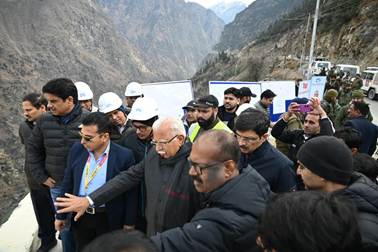
Field level feasibility has already been established with a 100 metre trial stretch laid successfully on the Jorabat Shillong Expressway on National Highway 40 in Meghalaya. A patent for the technology has been filed and multiple industries have been onboarded for commercial deployment.
Director General of CSIR and Secretary of the Department of Scientific and Industrial Research N Kalaiselvi called the occasion a proud moment for Indian science, noting that India has become the first country to take bio bitumen technology to industrial and commercial scale within the same year. She said biomass pyrolysis produces multiple value streams including road binders, energy efficient gaseous fuel, bio pesticide fractions and high grade carbon suitable for batteries, water purification and advanced materials, making the process emission free, cost effective and future ready. She also proposed policy level blending of bio bitumen to enable nationwide adoption.
The ceremony was attended by senior leadership from CSIR CRRI and CSIR IIP, former directors, scientists, industry partners and media representatives, underlining strong collaboration between science, government and industry. The technology transfer reinforced India’s commitment to sustainable infrastructure, indigenous innovation and a bio driven economic future, firmly positioning the country on the path towards clean, green and self reliant highways.