
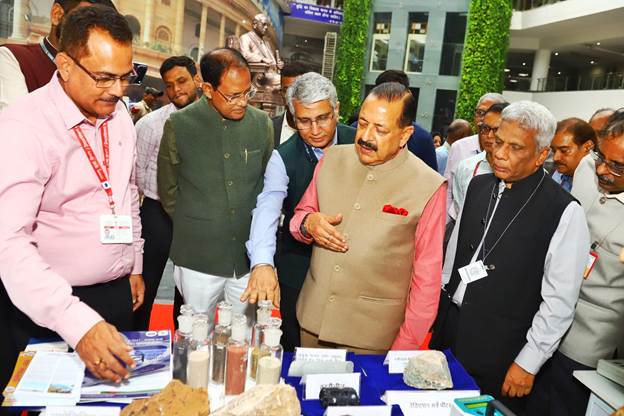
India is rapidly emerging as a robust pharmaceutical economy poised to drive future growth and significantly enhance its contribution to the national GDP, Union Minister of State Independent Charge for Science and Technology, Earth Sciences and Minister of State PMO, Personnel, Public Grievances, Pensions, Atomic Energy and Space Jitendra Singh said on Saturday.
Delivering the keynote address at a Healthcare Summit organised by a leading English media house, the Minister highlighted that India’s pharmaceutical and medical technology ecosystem is undergoing a structural transformation, anchored in the twin pillars of Made in India and quality. He said the country is steadily positioning itself as a global hub for affordable and high quality healthcare solutions.
Jitendra Singh noted that over the past decade, India has transitioned from a largely import dependent healthcare system to one driven by indigenous capabilities. He recalled that earlier, critical medical devices, implants and advanced drugs were predominantly imported, making treatment costly and less accessible. Today, India is developing its own antibiotics, vaccines and advanced therapies, reflecting a decisive shift towards self reliance.
Referring to India’s response during the COVID 19 pandemic, he said the country not only developed indigenous vaccines but also supplied them globally, reinforcing its credibility as a reliable healthcare partner. He added that this progress underscores India’s growing strength in both therapeutic and preventive healthcare.
The Minister highlighted advancements in cutting edge technologies such as gene therapy, including successful trials in haemophilia, and innovations targeting diseases like sickle cell anaemia. He said Indian institutions are increasingly contributing to globally recognised research, with publications in leading international medical journals.
Emphasising quality standards, Jitendra Singh said domestically manufactured healthcare products are now aligned with global benchmarks, supported by strengthened regulatory systems and streamlined approval processes. Indigenous medical devices including stents, ventilators and diagnostic equipment are now ensuring safety, efficacy and affordability.
On policy initiatives, he referred to the Promotion of Research and Innovation in Pharma MedTech scheme with an outlay of 5000 crore rupees, aimed at shifting India from low cost manufacturing to high value innovation. He also highlighted targeted support for the medical devices sector through investments in common infrastructure, testing facilities and research and development clusters.
He further pointed to initiatives such as the Anusandhan National Research Foundation and the Maha MedTech Mission, which are strengthening the research ecosystem by linking laboratories with clinical applications. The MedTech Mitra platform, he said, is helping innovators navigate regulatory pathways and access clinical trial networks more efficiently.
Jitendra Singh noted that India currently accounts for around 1.5 percent of the global medical device market but is working towards expanding its share under the National Medical Device Policy 2023. He said the country aims to become a leading global manufacturing hub in the sector, reducing import dependence while boosting exports.
Highlighting the importance of collaboration, the Minister said that partnerships between industry, academia and government institutions have been institutionalised across sectors, including biotechnology, space and healthcare. This integrated approach, he said, is critical in driving innovation in an increasingly interdisciplinary environment.
He concluded that with sustained policy support, increased private sector participation and a focus on innovation driven manufacturing, India is well positioned to become a preferred global destination for affordable and high quality healthcare solutions while strengthening its role in the global bioeconomy.