
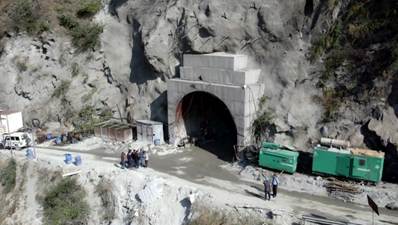
A major infrastructure upgrade in Jammu and Kashmir is set to transform travel along one of India’s most challenging highway stretches, with the Digdol Panthyal Twin Tube Tunnel project on National Highway 44 nearing completion.
For decades, the Ramban Digdol Panthyal stretch, often referred to locally as Khooni Nallah, was marked by frequent landslides, falling rocks, heavy rainfall and fatal accidents that routinely disrupted traffic for hours and sometimes days. The upcoming four lane twin tube tunnels are now poised to replace this uncertainty with safe and seamless connectivity.
Part of the four laning of the Ramban Banihal section of NH 44 under the Ministry of Road Transport and Highways, the project is designed to significantly improve all weather connectivity between Jammu and Srinagar. The corridor holds critical importance as it connects the Kashmir Valley with the rest of the country and supports civilian movement, logistics and strategic operations.
Residents in the region are already witnessing tangible improvements. Ratan, a resident of Digdol, recalled how travellers earlier remained stranded for days due to landslides and road blockages. He said that with the tunnel nearing completion, travel time between Digdol and the Ramsoo Magarkote side has reduced to just five minutes.
Similarly, Naresh, another local resident, highlighted the daily challenges faced earlier due to accidents and traffic congestion. He noted that long travel times affected school going children, who returned home exhausted with little time for studies. With improved connectivity, he said, travel to Ramban now takes only a few minutes, allowing children to return earlier and focus better on their education.
The Digdol Panthyal Twin Tube Tunnel project, located in the Ramban Banihal section, includes northbound tunnel stretches of 2.6 kilometres and 0.619 kilometres, and a southbound tunnel of 3.08 kilometres. The project has been developed at a cost of 866.37 crore rupees and has achieved 87.2 percent physical progress.
Constructed using the New Austrian Tunnelling Method, the project addresses the complex geological conditions of the Himalayan terrain. Excavation has been carried out through a combination of heading and benching techniques to ensure structural stability and safety.
Once operational, the tunnels will route traffic through the mountains instead of along landslide prone slopes, significantly reducing the risk from shooting stones and weather related disruptions. This is expected to ensure reliable year round connectivity and enhance safety for commuters.
The project will also reduce travel time between Jammu and Srinagar, benefiting goods transporters, tourists, local residents and security forces. Faster and more efficient movement along this corridor is expected to strengthen logistics, reduce transportation costs and improve emergency response capabilities.
With parallel development of tunnels and bridges across the Ramban Banihal section, the transformation of this vital highway corridor is becoming increasingly visible. What was once a hazardous and unpredictable journey is set to become a safer, faster and more dependable route, bringing lasting benefits to both local communities and the wider region.