
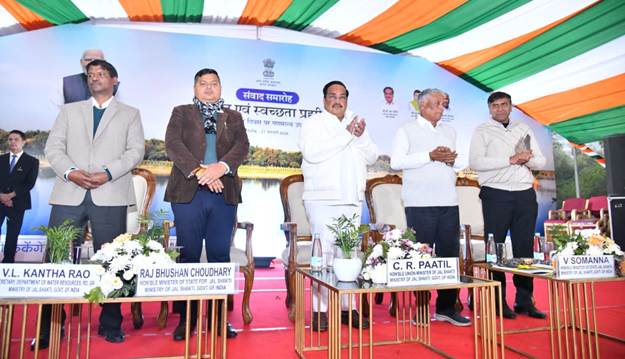
The Ministry of Jal Shakti organised a Samvad Samaroh and recognition programme for WaSH Warriors at the PSOI, New Delhi, honouring grassroots leaders who have made significant contributions to water conservation, sanitation and hygiene through community-led efforts across the country.
As part of this national recognition, 58 WaSH Warriors nominated by States and Union Territories under the Jal Jeevan Mission participated in the programme and had earlier attended the Republic Day Parade at Kartavya Path on 26 January 2026 as Special Guests. The initiative recognised individuals who have worked closely with local communities to address drinking water and sanitation challenges by promoting inclusive, equitable and sustainable solutions rooted in Jan Bhagidari.
The WaSH Warriors represented Swachh Sujal Gaon villages, including rural households, poor and marginalised communities, Scheduled Caste and Scheduled Tribe majority villages, and vulnerable tribal groups. A Swachh Sujal Gaon is a village that is Har Ghar Jal certified under the Jal Jeevan Mission and ODF Plus Model verified under the Swachh Bharat Mission Grameen. The participants showcased community-driven progress in drinking water, sanitation and hygiene across rural India.
During the Samvad Samaroh, the WaSH Warriors interacted with Union Minister for Jal Shakti C R Patil in the presence of Ministers of State for Jal Shakti V Somanna and Raj Bhushan Choudhary. The event was also attended by senior officials of the Ministry, including V L Kantha Rao, Secretary, Department of Water Resources, River Development and Ganga Rejuvenation, and Rajeev Kumar Mital, Director General, National Mission for Clean Ganga, among others.
Several WaSH Warriors shared first-hand accounts of transformation at the village level. Motilal from Bijrakchhar village in Chhattisgarh spoke about the hardships faced before the Jal Jeevan Mission, when access to drinking water was limited and time-consuming. He highlighted how the availability of clean tap water in every household has improved health outcomes, saved time and brought meaningful changes in daily life, particularly for women. He also spoke about his efforts to spread awareness on water conservation and safe water practices within the community.
Amrutbhai Parmar from Timbachudi village in Gujarat shared experiences of developing sustainable systems under the Jal Jeevan Mission, including model wells to ensure long-term water availability. He highlighted community participation in water supply initiatives and the recognition received for these efforts at the district level.
Lentsothsi from Tutheyo village in Nagaland described how access to clean tap water transformed her daily routine. Earlier, she would wake up at dawn to fetch water and manage household chores. With tap water connections, she now has more time at home, and children’s health has improved significantly, including a reduction in water-borne diseases.
Nijuma Devi from Kendukuchi village in Assam spoke about WaSH-related initiatives in her village, noting that improved access to clean water has led to better health outcomes and reduced the burden on women. She highlighted her work in promoting sustainable habits among children and the wider community, including cleanliness, water conservation and long-term maintenance of water infrastructure.
Addressing the gathering, the Union Minister congratulated the WaSH Warriors for their leadership and commitment, encouraging them to continue adopting innovative practices in water management, conservation and sanitation. He emphasised that cleanliness and water security are collective responsibilities and integral to daily life. Highlighting the impact of the Jal Jeevan Mission, he noted that the programme has benefited more than 9.5 crore women by reducing the burden of fetching water and saving an estimated 4.5 crore hours of women’s time, contributing to improved well-being and safety.
The Minister also spoke about youth engagement initiatives such as Youth for Ganga and Youth for Yamuna, which aim to build awareness on water conservation among students and young citizens. He stressed the importance of Jal Sanchay and responsible water use through collective action.
On the occasion, a Jal Jeevan Mission booklet titled “Peyjal Jan Shakti Ki Abhivyakti Volume Two” was released, documenting the stories and grassroots leadership of WaSH Warriors in ensuring safe and sustainable drinking water.
As part of their visit, the Special Guests had earlier toured the Pradhanmantri Sangrahalaya on 25 January 2026 and interacted with senior officers of the Department of Drinking Water and Sanitation, led by Kamal Kishore Soan, Additional Secretary and Mission Director, National Jal Jeevan Mission, at Pandit Deendayal Antyodaya Bhawan in New Delhi.
The recognition through the Republic Day invitation and the Samvad Samaroh reaffirmed the vital role of rural communities and local leadership, reinforcing Jan Bhagidari and community engagement as central pillars of India’s national development journey.