
Education is the seed of sustainability-where it nurtures ethical awareness, critical thinking and green skills to power the Green Economy
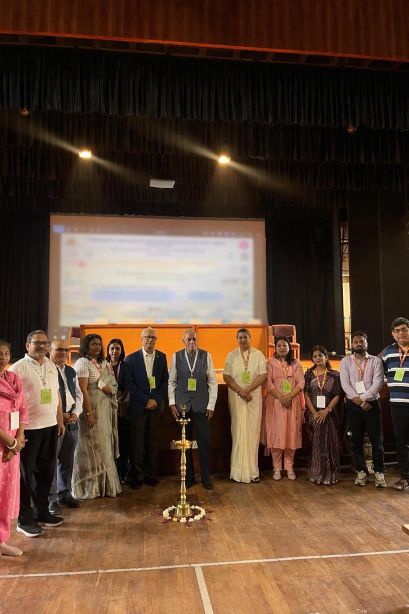
The Green Agenda for Disaster Risk Resilience has evolved from ISDCRI-2026 (International Conference on Innovations in Sustainability Education for a Disaster and Climate Change Resilient India: Delhi as a Study Model-Fostering Green Skills in Youth). The event was organised by Jesus and Mary College, University of Delhi (24-25 March, 2026, New Delhi). The conference took the global environmental movement for disaster and climate change resilience forward with youth at the centre.
National Green Forum: Nature Based Solutions with Green Student Entrepreneurs in the international Conference Podcast
Startups from JMC (current and former students) led by Fiona Anthony (Green Crochet Designer Entrepreneur), Shilpa Ann Thomas (MA in International Economics Geneva Graduate Institute, Specialization: Climate Finance, International Economics) and Sharanya Verma (MBA, Indian School of Business) were part of the panel on Green Jobs Chaired by Prof. Bindhy Wasini Pandey, Co-Chaired by Prof. Reena Marwah and moderated by Ajit Kumar, Founder Khushigram Foundation with eminent experts Arpit Sharma, CEO, Skill Council for Green Jobs (SCGJ) and Prof. Jugal Kishore, Director, Vardhman Mahavir Medical College, Safdarjung Hospital explained the involved challenges disproportionately affecting vulnerable populations and demand and community-centred responses.
Chief guest of the programme, Prof. K. K. Aggarwal, President, South Asia University, New Delhi explained the importance of sustainable Information and Communication Technology in Disaster Management in prediction, preparedness, response and recovery enabling faster communication, strengthened coordination & decision making and most importantly nature-based mitigation measures. Sustainable utilization of ICT focuses on reducing negative impacts like energy consumption and E-Waste generation while maximizing social and economic benefits.
Prof. Jugal Kishore, Director, Vardhman Mahavir Medical College, Safdarjung Hospital, a well known expert in public health in Disaster Management invoked youth towards healthy lifestyle for disease prevention, also described the importance of mental health support in community resilience. He highlights “Disaster Management begins in the community practices, not in just control rooms”.
Prof. Sr. Molly K.A., Principal, JMC emphasised the need of sustainability and environmental ethics, taking education beyond theory and promote sustainable learning by coordinated efforts across all the institutions, policy makers, youth, societies and communities, in her inaugural speech. The conference becomes a platform for brainstorming on innovations in sustainability education, policy-dialogue, capacity-building component with central ideas as Disaster and Climate Change Mitigation, Urban Resilience; Youth towards Green Skills and community participation; Policy recommendations; Research, ethics, and technology integration; Capacity building of youth & institutions; Replicability beyond Delhi and Community-level impact.
Moving forward, an integrated and collaborative approach is essential. Meaningful partnerships across sectors—including government bodies, academic institutions, industries, entrepreneurs, civil society organizations, and policy-makers—are crucial to driving impactful and scalable change. Innovation, supported by policy frameworks and community participation, can accelerate the transition towards a green economy. Furthermore, fostering global dialogue, knowledge exchange, and cross-cultural collaboration will strengthen collective efforts to address environmental challenges.
Prof Vinod Kumar Sharma Vice Chairman, Sikkim State Disaster Management Authority and Subash Chandra Bose Awardee on Disaster Management delivered the Keynote address. He emphasised on the need of youth engagement and sustainability education to transform climate challenges into opportunities, building resilient cities, inclusive societies, for Viksit Bharat.
Prof. Bindhy Wasini Pandey described climate change risks including heat waves, air pollution, urban flooding, water stress, and solid waste crises in global megacities.
Prof. Reena Marwah explained the involved challenges disproportionately affecting vulnerable populations and demand and community-centred responses.
Ajit Kumar, Founder Khushigram Foundation put forward the need of Youth engagement in the lucrative sustainable framework of green jobs is facilitated by Environmental Education. He pointed that sustainable development framework required integration of technology and environmental research, along with cultural, religious, historical and philosophical perspectives for a holistic and inclusive approach. “Traditional knowledge systems, when combined with modern scientific advancements, can offer innovative and locally viable solutions to disasters and climate change.”
Launch of a Green Project: “Miniature Ecosystem Model of Aravalli Hills to Combat Heat Stress in Delhi”
Dr. Divya Agarwal, Assistant Professor, Jesus and Mary College developed and presented miniature ecosystem model of Aravalli Hills (Ara means Rock), unique to Jesus and Mary College, in the inaugural session of the international conference.
The speakers from Jesus and Mary college said that steps will be taken to develop miniature model ecosystem of Aravalli Hills, which will be a unique initiative. The architect has left a huge rock of Aravalli Hills as design in the college. Various birds are also sighted in and around the region e.g. Rufous Treepie, Yellow-footed Green Pigeon, Sunbirds, Paraqueets, and Asian Koel. We will be growing smaller native plant species of this region, which will further attract various species owing to habitat, food, and water security. These steps of eco restoration will be a boon to biodiversity conservation. As well the developed model will help students understand and appreciate the knowledge of ecosystem, biodiversity developing a connection with nature. Students will be motivated to initiate butterfly conservatory, medicinal plants conservatory and house sparrow conservatory at their residential places, bringing a change in society.”